Why Starting Small Actually Works
Most people who abandon gardening do so because they started too big. They tilled a large patch, bought a dozen varieties of transplants, and then watched everything struggle while the cost added up. A more reliable approach - and a more affordable one - is to begin with two or three crops in a small, manageable space.
Starting small also means your mistakes are cheap. If a single pot of lettuce fails, you've lost a handful of seeds and a few weeks. That's a useful lesson, not a financial setback. As you develop a feel for how your space handles light, drainage, and temperature, you scale up with confidence rather than guesswork.
This guide covers the four variables that determine whether a budget garden succeeds: soil, plants, containers, and light. Get these right and the cost largely takes care of itself.
Getting Soil Right Without Spending Much
Soil is where most beginners underinvest. Seeds and containers get the attention, but plants live and die by what's in the mix around their roots. For containers, standard garden dirt from the ground is usually a poor choice - it compacts and drains badly. A basic potting mix, often available in small bags, is a better starting point.
To stretch potting mix further and improve its nutrient content, blend it with homemade compost. Kitchen scraps - vegetable peels, fruit cores, coffee grounds, crushed eggshells - can be composted in a bucket with a lid in as little as 6 to 8 weeks using a simple layering method. This reduces how much bagged material you need and improves soil structure over time.
Potting mix
A lightweight soil blend formulated for containers, designed to drain well and support root growth without compacting.
Compost
Decomposed organic matter - such as food scraps and yard waste - used to improve soil structure and add nutrients.
Open-pollinated variety
A plant variety that produces seeds true to the parent plant, meaning saved seeds will grow plants with the same characteristics next season.
Propagation
Growing new plants from a piece of an existing plant - such as a stem cutting - rather than starting from seed.
Direct sun
Unobstructed sunlight that falls directly on a plant, as opposed to filtered or reflected light through shade or windows.
If in-ground planting is an option for you, the tradeoffs between that and raised beds are worth understanding before you dig. Our guide on raised beds vs. in-ground planting walks through the cost and soil considerations for both approaches.
Seeds, Cuttings, and Free Plants
A single seed packet typically costs $2-$4 and contains enough seed to plant a full season of one crop - often with seeds left over. Compare that to a six-pack of transplants at $5-$8, and seeds win on volume almost every time. The trade-off is that seeds require a few extra weeks and a bit more attention early on, but the savings are substantial across even one season.
Beyond seeds, two methods can reduce your plant cost close to zero. The first is propagation from cuttings - many herbs (basil, mint, rosemary) and some vegetables root readily in a glass of water before being potted up. Our article on propagating plants from cuttings covers which species work well and how to avoid common failures.
The second is seed saving. At the end of the season, open-pollinated varieties produce seeds you can dry, store, and replant the following year. That single investment in a seed packet can effectively repeat itself indefinitely. See our guide on seed saving for practical storage advice.
For a shortlist of plants that produce reliably with minimal effort, the low-maintenance edibles guide is a useful companion.
Containers: What You Already Own Will Often Work
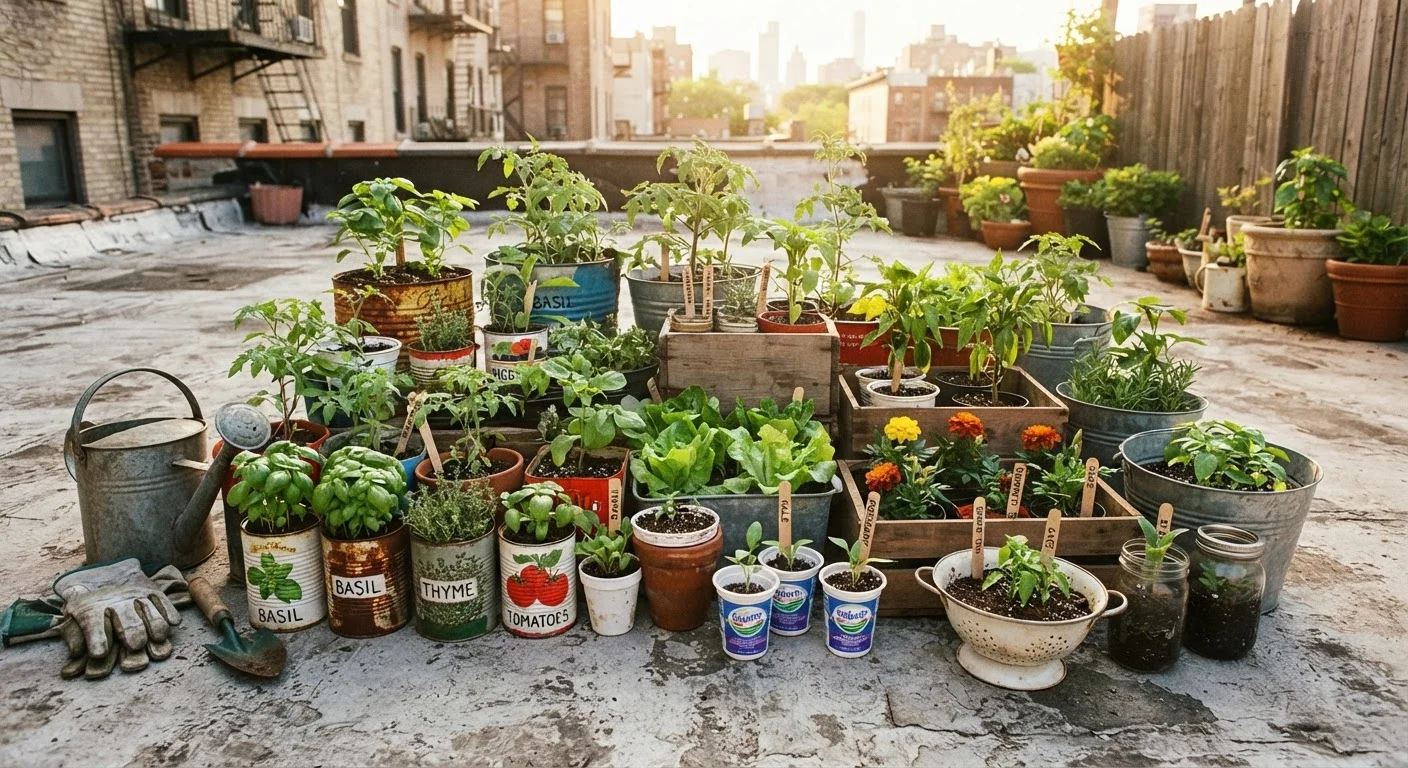
Almost any watertight container with drainage holes added can work as a planter. Five-gallon buckets, old colanders, nursery pots kept from previous purchases, wooden crates lined with burlap - all are functional and cost nothing if you already have them. The critical requirement is drainage: without holes in the bottom, roots sit in standing water and rot.
Container size matters more than material. Leafy greens and herbs do fine in 6-8 inch pots. Tomatoes, peppers, and squash need at least a 5-gallon volume to develop properly. Matching the container to the plant avoids wasted soil and stunted growth.
Make Drainage Holes Before Filling
Drill or punch drainage holes in the bottom of any repurposed container before adding soil. Once a container is full of wet soil, creating holes is much harder. Aim for at least three holes in the bottom of any pot 8 inches or larger to ensure adequate drainage.
For a deeper look at container options and how vessel choice affects root health and water retention, see our guide on budget container gardening. If you're working with a balcony or small elevated space, the balcony gardening guide covers weight limits and wind exposure specific to that setup.
Light: The One Thing You Can't Substitute
You can amend bad soil, improvise a container, and source free seeds - but you cannot replace inadequate sunlight with any budget workaround. Most edible plants require a minimum of 6 hours of direct sun per day. Before choosing what to grow, observe your space honestly at different times of day and note where and for how long direct sun falls.
South-facing spots in the US receive the most consistent light. East-facing gets gentler morning sun, and west-facing gets afternoon sun, which is more intense in summer. North-facing areas are generally unsuitable for edibles.
If your best spot gets only 4-5 hours, stick to leafy greens and herbs - they are more tolerant of partial shade than fruiting crops. Attempting to grow tomatoes or peppers in a shaded spot typically results in poor yield regardless of how well everything else is managed.
Keeping Costs Near Zero as You Grow
The long-term cost of a home garden is largely determined by a few habits: saving seeds, propagating from existing plants, and managing water efficiently. Overwatering is one of the most common - and costly - beginner mistakes, since it wastes water and kills plants. Learning to read soil moisture before watering is a skill that pays off quickly. Our article on watering smarter covers the timing and depth principles that make the biggest difference.
Growing food at home can also offset grocery spending over time, though results vary by crop, location, and season. For context on building an affordable diet that complements home-grown produce, see our article on eating well on a tight budget.
Keep records of what you planted, what succeeded, and what failed. Even a simple notebook makes the next season more efficient and prevents repeating avoidable mistakes. A garden that costs almost nothing to start can stay that way as long as you build on what works.
Cooperative Extension Seed Libraries
Many US county cooperative extension offices and public libraries offer free seed lending programs. Borrowers take seeds, grow plants, save seeds at season's end, and return them - a genuinely zero-cost way to access a wide variety of locally adapted varieties.
Home Composting Guide (EPA)
The US Environmental Protection Agency publishes accessible guidance on setting up a backyard or indoor compost system. It covers what materials to use, how to manage moisture, and how to troubleshoot common problems.
USDA Plant Hardiness Zone Map
Knowing your hardiness zone helps you select plants suited to your local climate, reducing the chance of buying seeds or transplants that won't survive your winters or summers.