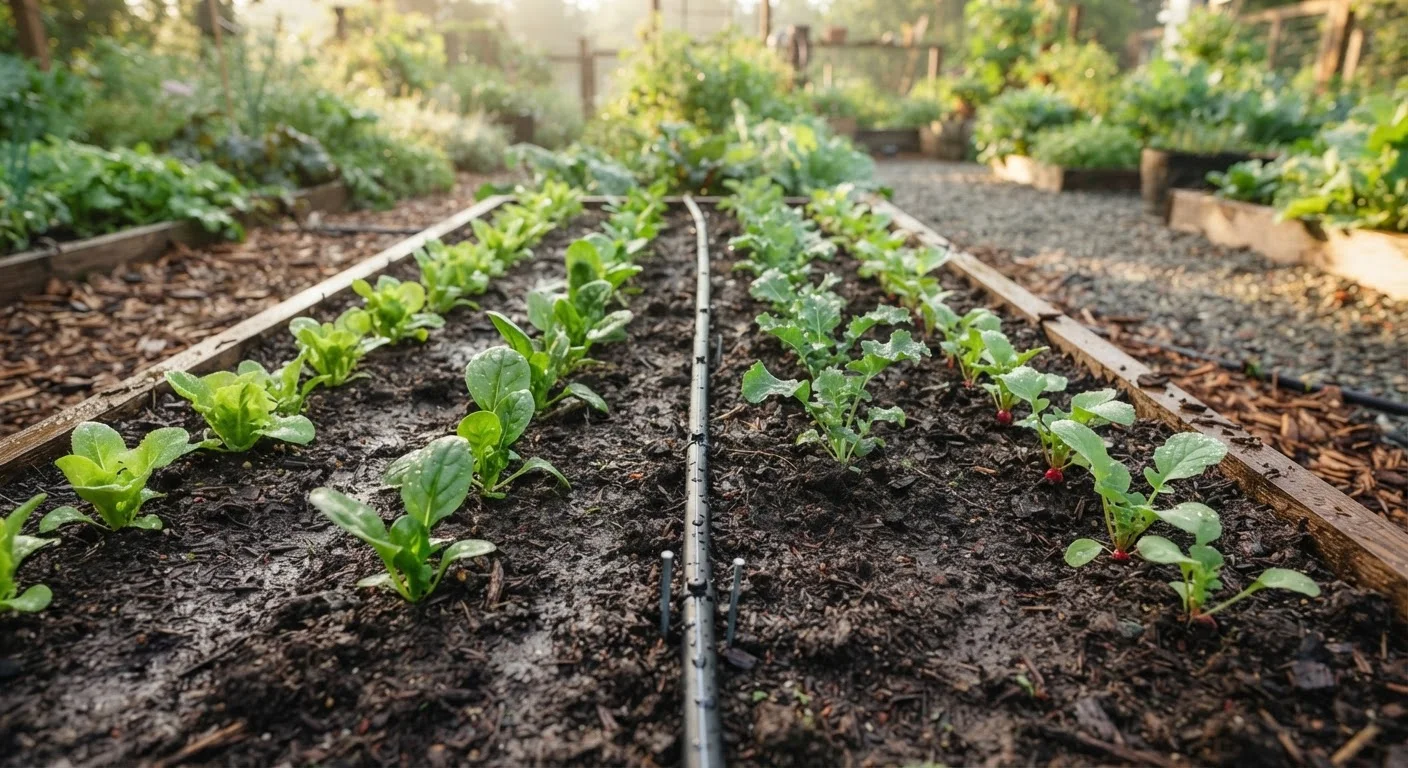
Why Watering Habits Have a Real Cost
Water bills are a real budget line, especially in summer. Overwatering doesn't just waste money - it can rot roots, invite fungal disease, and leach nutrients out of the soil. Underwatering stresses plants, stunts growth, and, in the worst cases, kills them before harvest. Neither outcome is cheap.
The good news is that smarter watering isn't about buying an expensive automated system. It's about understanding a few basic principles and applying them consistently. If you're just getting started, our guide on starting a garden from zero covers the foundational setup that makes efficient watering easier from day one.
Core Practices for Water-Efficient Gardening
These practices apply to most home gardens in the US, whether you're growing in the ground, in raised beds, or in containers. Apply them based on your specific setup and climate conditions.
Test soil moisture with your finger before reaching for the hose
Many gardeners water on a fixed daily schedule regardless of what the soil actually needs. Soil retains moisture longer than it appears to, and watering already-moist soil promotes root rot and fungal problems. A simple finger test - push one to two inches into the soil - gives accurate, free information about whether water is actually needed.
Water deeply and infrequently rather than shallowly and often
Frequent shallow watering trains roots to stay near the surface, where they're vulnerable to heat and drought. Deep watering - soaking the soil to a depth of 6 inches or more for most vegetables - encourages roots to grow downward, making plants more resilient. You'll water less often overall, reducing both time and water cost.
Direct water at the base of plants, not over the foliage
Overhead watering puts moisture on leaves, where a significant portion evaporates before reaching the roots. Wet foliage also increases the risk of fungal diseases like powdery mildew. Watering at soil level - using a watering can with a long spout, a soaker hose, or drip line - delivers water where the roots can actually use it.
Group plants with similar water needs together
Mixing drought-tolerant herbs with thirsty vegetables forces you to compromise - either the herbs get too much water or the vegetables too little. Grouping by water needs lets you water each zone only as much as required, avoiding waste on plants that don't need it.
Collect and reuse water wherever practical
Rainwater collection is one of the most straightforward ways to offset garden water costs. Even modest rainfall can fill a barrel that covers several watering sessions. Check local regulations first - most US states permit residential rainwater collection, though a few have restrictions.
Timing, Mulch, and Soil: The Supporting Details
Getting the fundamentals right matters more than any gadget. Two areas worth focusing on are when you water and what your soil is doing between waterings.
Morning is the best watering window. Temperatures are lower, wind is usually calmer, and foliage dries quickly - all of which reduce evaporation and fungal risk. Evening watering leaves wet leaves overnight, which encourages mold and mildew on susceptible plants.
Mulch is one of the highest-return actions in budget gardening. A 2-3 inch layer of organic mulch - wood chips, straw, or shredded leaves - acts as insulation for the soil, significantly slowing moisture loss. It also suppresses weeds that compete for that moisture. For a deeper look at how mulch compares to other soil amendments, see the real difference between compost, mulch, and garden soil.
Container plants are a special case. Pots dry out dramatically faster than in-ground beds, especially unglazed terracotta or small volumes. If you're growing in containers, check moisture daily in hot weather. Our article on choosing the right containers explains how vessel material and size directly affect how quickly water drains away.
Use a Screwdriver to Gauge Watering Depth
After watering, push a long screwdriver straight down into the soil. It will slide easily through moist soil and stop when it hits dry soil. This tells you how deep the water actually penetrated - you're aiming for at least 6 inches for most vegetables. It costs nothing and is more reliable than guessing from the surface.
Quick Wins You Can Apply Today
You don't need to overhaul your whole garden setup. A few immediate changes can cut water use noticeably within a week.
For readers thinking about expanding their garden next season, our guide to low-maintenance edibles flags which crops are naturally more drought-tolerant and forgiving of irregular watering - useful if you want to reduce garden labor overall.