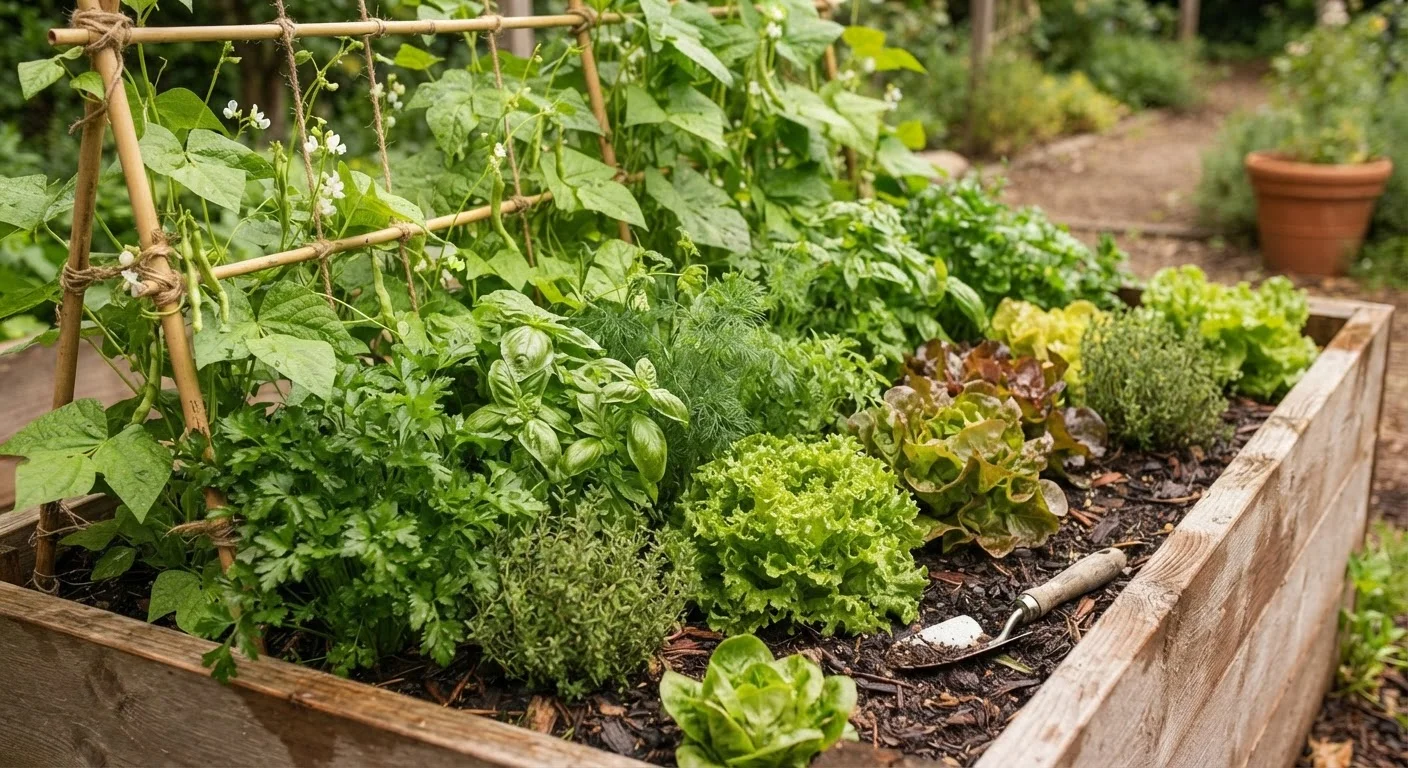
How to Use This Guide
This is a reference you can scan before buying seeds or transplants. Each plant below is evaluated on four dimensions: water needs, feeding requirements, pest pressure, and typical yield reliability. If you're just getting started, see our beginner's guide to gardening on almost nothing first.
"Low maintenance" here means the plant tolerates inconsistent watering, requires little or no supplemental fertilizer in reasonably decent soil, and doesn't collapse at the first sign of a common pest. It does not mean zero effort. Every edible needs some attention.
| Fastest-maturing crop | Radishes (25-30 days from seed) |
| Most drought-tolerant herb | Thyme (established plants need minimal irrigation) |
| Best perennial leafy green | Chives (return annually with no replanting) |
| Highest yield per plant | Zucchini (one plant can produce 10+ lbs per season) |
| Nitrogen fixer | Bush beans (reduce need for added fertilizer) |
| Most shade-tolerant | Lettuce and Swiss chard (3-4 hours of sun workable) |
Leafy Greens and Salad Crops
Lettuce is one of the most forgiving crops you can grow. It germinates quickly from direct-sown seed, tolerates partial shade (which actually reduces bolting in summer heat), and can be harvested by cutting outer leaves repeatedly rather than pulling the whole plant. Water needs are moderate but consistent - let it dry out completely and quality drops fast. No feeding required in average garden soil.
Swiss chard outperforms lettuce in heat and handles light frost, making it a longer-season option. One packet of seeds sown in spring can provide harvests well into fall in most US climates. Pest pressure is generally low, though leaf miners can appear. Remove affected leaves and the plant rebounds without intervention.
Kale is arguably the most durable leafy green for new growers. It improves in flavor after a light frost, handles drought better than lettuce, and rarely needs fertilizer after an initial compost amendment. Cabbage worms are the main pest; hand-picking is effective at small scale. You can also save kale seed at the end of the season to avoid buying packets next year.
Bolting
When a plant shifts from leaf or vegetable production to flowering and seed-setting, often triggered by heat or long daylight hours. Bolted lettuce becomes bitter and is no longer palatable.
Succession sowing
Planting the same crop in small batches every few weeks rather than all at once, spreading the harvest over a longer period and avoiding a glut.
Nitrogen fixer
A plant that hosts soil bacteria in its roots capable of converting atmospheric nitrogen into a form usable by plants. Legumes like beans are common examples, reducing the need for added fertilizer.
USDA Hardiness Zone
A standard geographic designation used in the US to indicate the average annual minimum winter temperature in a given area, helping growers select plants likely to survive their local climate.
Perennial
A plant that lives for more than two years, typically dying back in winter and regrowing in spring. Perennials save money because they don't need to be replanted each season.
Herbs That Thrive on Neglect
Chives are essentially set-and-forget. Plant a clump once and it returns each spring, requires almost no water once established, and rarely attracts pests. Divide the clump every few years to keep it productive. Both the leaves and flowers are edible.
Mint is similarly low-demand but spreads aggressively if planted in open ground. Grow it in a container to contain it - which also makes it ideal for balcony setups. See our balcony gardening guide for container-specific strategies.
Thyme prefers lean, well-drained soil and actually performs worse if overfed or overwatered. It's drought-tolerant once established and perennial in USDA zones 5 through 9. A single plant can supply a household for years. Skip fertilizer entirely.
Basil is the exception here - it's an annual that needs warmth and consistent moisture. Include it because the yield-per-square-foot value is high and it pairs well with the other plants in this guide. It does not tolerate cold. Start seeds indoors or buy transplants after your last frost date. You can also regrow basil from grocery store stems in a glass of water before potting up.
Vegetables With a Strong Return on Effort
Green beans (bush variety) are direct-sown, grow fast, and produce heavily without staking or trellising. They fix their own nitrogen, so fertilizer is rarely needed. One planting takes about 50-60 days to harvest. Succession-sow every three weeks for a continuous supply.
Zucchini has a reputation for overproducing, which is a real advantage for a budget garden - one or two plants typically yield more than a household needs. Water deeply but infrequently once plants are established. The main issue is powdery mildew late in the season; it slows the plant but rarely kills it before the season ends.
Radishes are the fastest crop on this list, ready in as little as 25 days from seed. They work well as a gap-filler between slower-maturing plants and help break up compacted soil. No feeding needed. Use them to mark rows of slower-germinating seeds like carrots.
Before adding any of these to your garden, run through our pre-purchase checklist to confirm they suit your specific space and climate. And once you have thriving plants, consider propagating from cuttings to expand your garden at no extra cost.