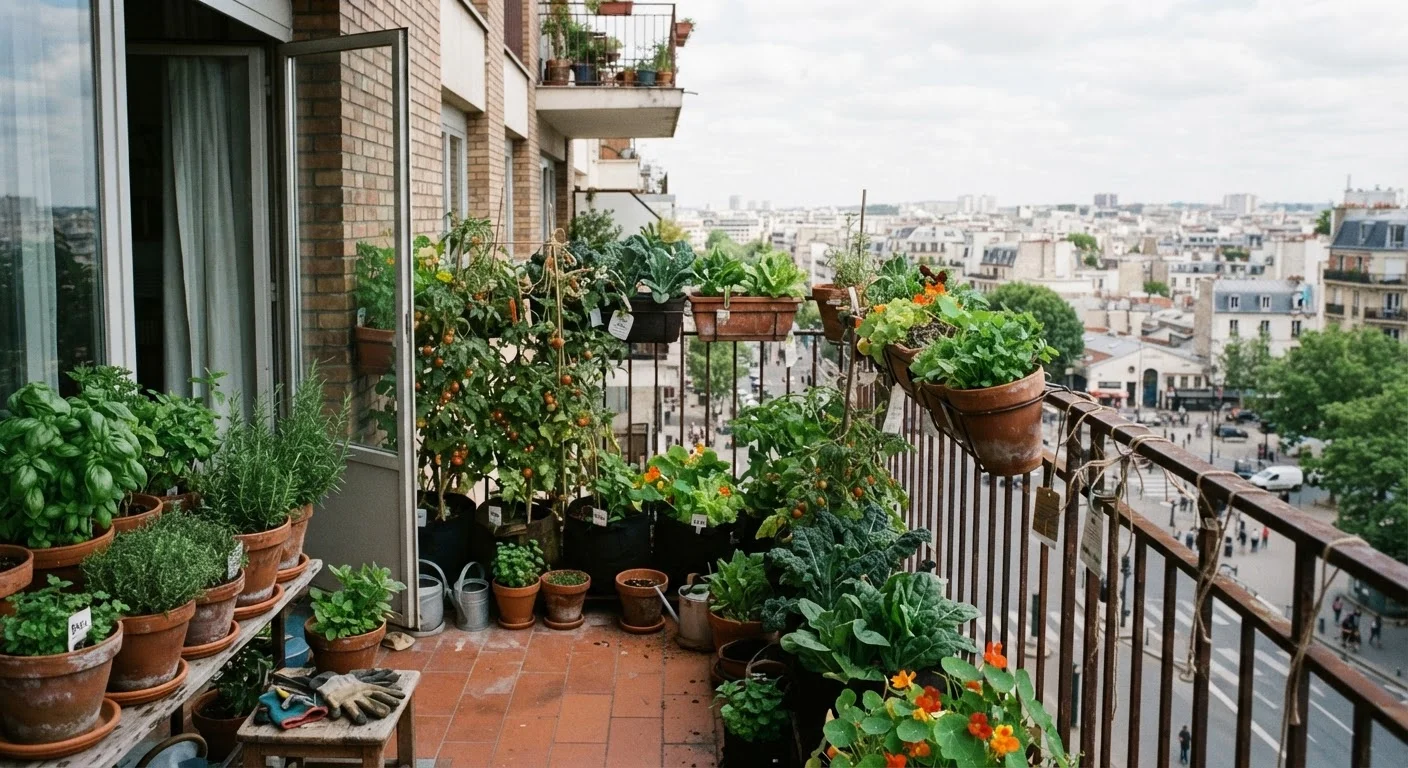
Know Your Balcony Before You Plant Anything
The single most useful thing you can do before buying a single seed packet is to spend a day observing your balcony. Track where direct sun falls, and for how long. South-facing balconies in the US typically get the most light; north-facing ones may only support shade-tolerant herbs and greens. East-facing spots get cooler morning sun, while west-facing balconies can bake in afternoon heat - useful for peppers, less so for lettuce.
Also note wind patterns. Upper-floor balconies are often exposed to stronger and more consistent wind than ground-level ones, which dries out soil fast and can physically damage plants. A simple observation - where do leaves or papers tend to collect? - tells you a lot about airflow direction.
If you're weighing balcony gardening against other options, see our comparison in growing food indoors vs. outdoors before committing either way.
Weight Limits: The Constraint Most Balcony Gardeners Ignore
Balconies are engineered with a maximum load per square foot - commonly cited between 40 and 60 pounds per square foot in residential construction, though this varies significantly by building age and design. A single large ceramic planter filled with wet soil can weigh over 100 pounds. Stack several together and you're applying real stress to a structure you don't own and likely can't inspect.
Structural Safety Is Not Optional
Overloading a balcony is a genuine safety risk, not just a building-management concern. Balcony structural failures, though uncommon, do occur - often linked to corrosion, overloading, or deferred maintenance. Do not rely on rough estimates; if your building is older or you plan to add significant weight, consult your property manager and request documentation of the balcony's rated load capacity before setting up your garden.
To stay safe: concentrate weight near the load-bearing wall or floor joists rather than at the railing edge. Use smaller, lighter containers distributed across the space rather than a few heavy ones grouped together. If you're uncertain about your building's rated capacity, contact your building manager or a structural engineer before proceeding - this is not an area to guess.
Wet soil is substantially heavier than dry, so factor in your heaviest possible load (after watering). Lightweight potting mixes - those containing perlite, vermiculite, or coco coir - reduce weight compared to dense garden soil, and they're generally better for containers anyway.
Containers That Make Sense in Small Spaces
On a balcony, container choice matters for three reasons: weight, drainage, and space efficiency. Fabric grow bags are worth considering - they're lightweight, fold flat for storage, promote healthy root structure through air pruning, and tend to cost less than comparable ceramic or terracotta pots. Repurposed food-grade plastic buckets (5-gallon size) work well for tomatoes or peppers at a fraction of the cost of purpose-made planters.
Vertical growing structures - wall-mounted pocket planters, tiered shelving, or stacked containers - let you use wall and railing space rather than floor space alone. This is particularly valuable when floor square footage is limited. Just confirm with your landlord before drilling into walls or attaching anything permanent to railings.
For a deeper look at container trade-offs, our guide on choosing containers that won't drain your budget covers drainage, root health, and cost considerations in detail.
What to Actually Grow on a Balcony
Not everything that grows in a backyard garden translates to a balcony. Space, root depth, and wind tolerance all filter the list. Here's what tends to work reliably:
- Herbs: Basil, chives, parsley, cilantro, and mint do well in small containers. Mint spreads aggressively, so keep it in its own pot.
- Leafy greens: Lettuce, spinach, arugula, and kale are shallow-rooted and fast-growing - ideal for compact containers. They also tolerate partial shade better than fruiting plants.
- Compact tomatoes: Determinate or patio varieties bred for containers produce usable harvests without sprawling growth. They need at least 6 hours of direct sun and consistent watering.
- Radishes and green onions: Fast-maturing and shallow-rooted - good for impatient growers or anyone testing the space.
- Flowers: Marigolds deter some pests and tolerate heat; nasturtiums are edible, fast-growing, and thrive in poor soil.
See the plant-by-plant guide to low-maintenance edibles for more on yield expectations and care requirements. You can also cut costs further with kitchen scraps that regrow on a windowsill - green onions and lettuce are good candidates.
Position your heaviest containers directly over load-bearing walls or concrete beams rather than cantilevered sections near the railing.
Weight distributed closer to structural supports puts less stress on the balcony's overall load-bearing capacity, which is often weakest at the furthest point from the wall.
Water balcony containers in the early morning rather than midday - it reduces evaporation and gives foliage time to dry before nightfall, lowering the risk of fungal issues.
Wet foliage overnight in warm weather creates conditions favorable to powdery mildew and other common plant diseases, especially in lower-airflow spaces.
Managing Wind, Heat, and Watering
Wind is the underrated difficulty of balcony gardening. It accelerates soil moisture loss, physically stresses stems, and can knock over containers. Staking taller plants early helps, as does grouping containers together so they provide mutual shelter. A simple fabric windbreak or a row of dense plants along the exposed edge can reduce the impact meaningfully.
Heat reflection is also a factor on balconies with concrete floors or light-colored walls. Containers can overheat their root zones in direct afternoon sun. Lighter-colored pots or pot covers reduce heat absorption. Elevating containers slightly off hot concrete with trivets or slats allows air circulation underneath.
Balcony plants - especially in summer - may need watering daily or even twice daily. Consistent moisture matters more than volume; check soil by pressing a finger an inch into the mix rather than guessing by surface appearance. Self-watering containers with built-in reservoirs can extend intervals between watering, which is particularly helpful if you travel or work long hours.
Keeping Costs Realistic
Starting from seed is the most reliable way to keep balcony gardening affordable. A packet of seeds typically costs less than a single transplant and produces many more plants. Focus first on seeds for herbs, lettuce, and radishes - all are easy to germinate without special equipment.
Potting mix is a recurring cost. Buying a larger bag tends to cost less per volume than small bags. Store unused mix in a sealed container and reuse it next season by refreshing with a small amount of compost or slow-release fertilizer - potting mix doesn't wear out quickly.
If you're starting from scratch, our guide starting a garden from zero with almost no money walks through the minimum viable setup for new growers. And before adding anything new to your space, run through the plant and tool purchase checklist to avoid impulse buys that don't fit your conditions.
Balcony gardening won't replace a grocery budget, but even a few pots of herbs and greens can meaningfully reduce what you spend on fresh produce - and give you something to tend that doesn't cost much to maintain once established.