The Core Trade-Off: Control vs. Cost
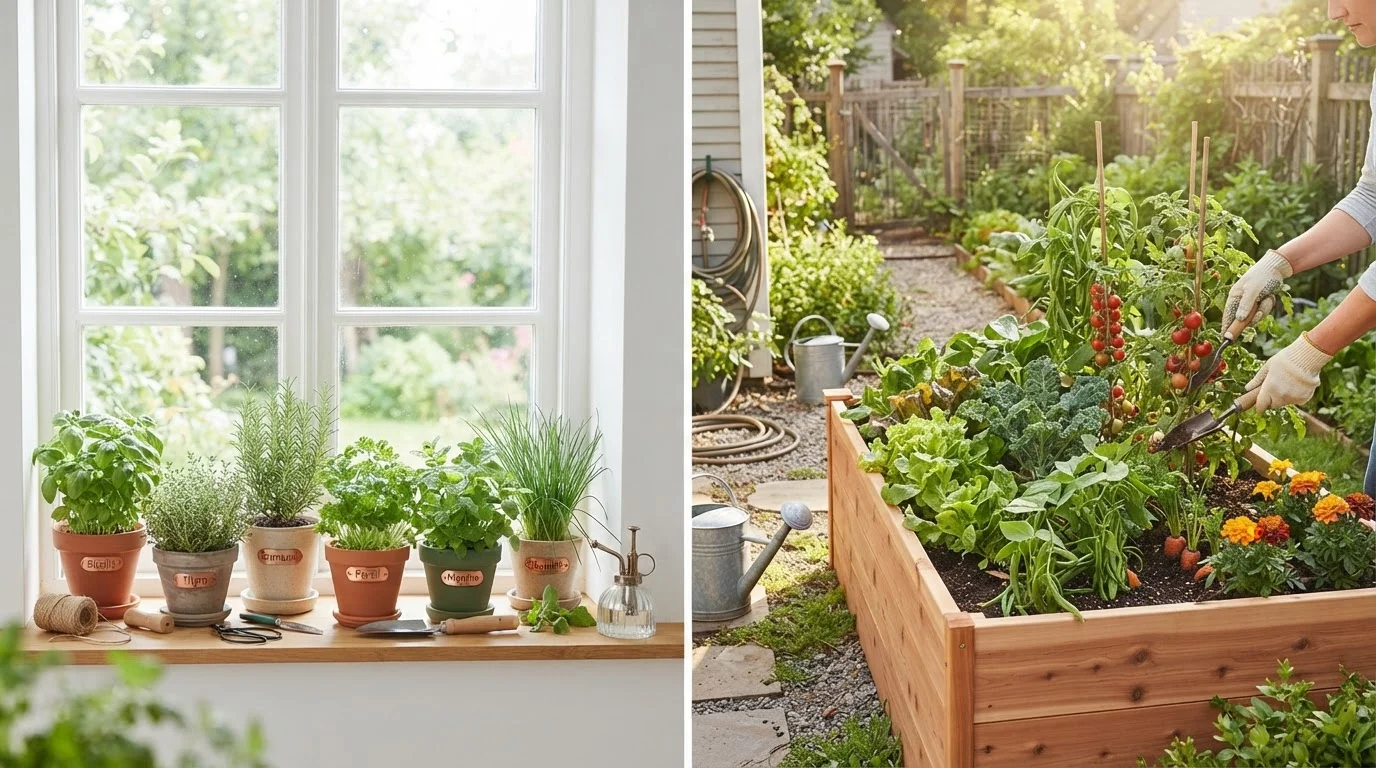
Indoor growing gives you control over temperature, pests, and season length. Outdoor growing gives you sunlight, rain, and scale - essentially for free. The question isn't which is objectively better; it's which fits your actual situation.
If you're growing food on a budget, the honest starting point is this: outdoor growing almost always produces more food per dollar. Soil, sun, and rainfall are either free or very cheap. Indoor growing trades those natural inputs for paid substitutes - grow lights, potting mix, and water you meter and pay for. That trade can make sense, but only when the alternatives genuinely aren't available to you.
Before choosing, ask yourself three questions: Do I have any outdoor space at all? How much direct sunlight does that space get? Am I renting, and do I have lease restrictions? Your answers narrow the decision quickly.
What Outdoor Growing Actually Costs
A basic outdoor setup - seeds, a bag of compost, and simple hand tools - can cost under $30 for a first season if you already have ground access. Costs rise if you're building raised beds or amending poor soil, but even then, the infrastructure pays for itself over multiple seasons. See our comparison of raised beds vs. in-ground planting for a detailed breakdown of those upfront differences.
The main ongoing costs outdoors are water (if you're in a dry climate and relying on irrigation) and occasional soil amendments. Neither is expensive. Sunlight - often the single biggest input for plant growth - costs nothing.
Outdoor growing does carry weather risk. Frost, drought, pests, and poor soil can all reduce yields. These aren't reasons to avoid outdoor growing; they're factors to plan around. Choosing low-maintenance crops suited to your climate makes a significant difference. Our plant-by-plant guide to low-maintenance edibles covers which crops give the most reliable results for new growers.
| Indoor Growing | Outdoor Growing | |
|---|---|---|
| Upfront cost | Low to moderate (containers, mix, optional lights) | Low (seeds, compost, basic tools) |
| Ongoing costs | Electricity, potting mix top-ups, water | Water (if irrigating), occasional soil amendments |
| Light source | Natural window light or paid grow lights | Free sunlight |
| Yield potential | Limited - herbs and leafy greens most viable | Higher - wider crop variety possible |
| Pest and weather risk | Low - controlled environment | Moderate - frost, drought, insects |
| Space requirement | Counter or windowsill space only | Ground, raised bed, or balcony needed |
| Best crops | Herbs, lettuce, microgreens | Tomatoes, beans, squash, root vegetables |
What Indoor Growing Actually Costs
Indoor growing without supplemental lighting is limited to whatever natural light reaches your windows - typically enough for herbs like basil, chives, and mint, and some lettuce varieties if you have a south-facing window. This setup costs very little beyond containers and potting mix. For budget-friendly container options, see our guide to containers that won't drain your budget.
Once you add grow lights, the calculus changes. A basic LED grow light setup costs $40-$100 or more to purchase, plus ongoing electricity. Running a single grow light for 14-16 hours daily can add a meaningful amount to your monthly electricity bill depending on your rate and the wattage used. That cost is real and should be factored honestly against what you're likely to harvest.
For most budget-focused growers, indoor setups make the most financial sense when limited to herbs and leafy greens that don't require deep soil or intense light, and when grow lights are avoided or kept minimal.
Situational Fit: Matching Method to Reality
If you have any usable outdoor space - even a balcony - outdoor growing is likely the more cost-effective path. Our balcony gardening guide covers what's genuinely workable in compact urban spaces, including weight limits and wind exposure that affect container choices.
If you're in a northern climate with a short frost-free window, a combined approach often makes the most sense: start seeds indoors 4-8 weeks before your last frost date, then transplant outdoors. This extends your effective growing season without committing to a full indoor setup year-round.
If you're renting with no outdoor access and want fresh food, a small indoor herb setup near your brightest window is a practical starting point. Keep expectations realistic - you won't replace your grocery bill, but you can reliably cut your herb spending.
Before adding equipment to either setup, run through a quick gut-check on whether the purchase actually fits your space and goals. Our pre-purchase checklist for plants and tools helps avoid common impulse buys that don't pay off.