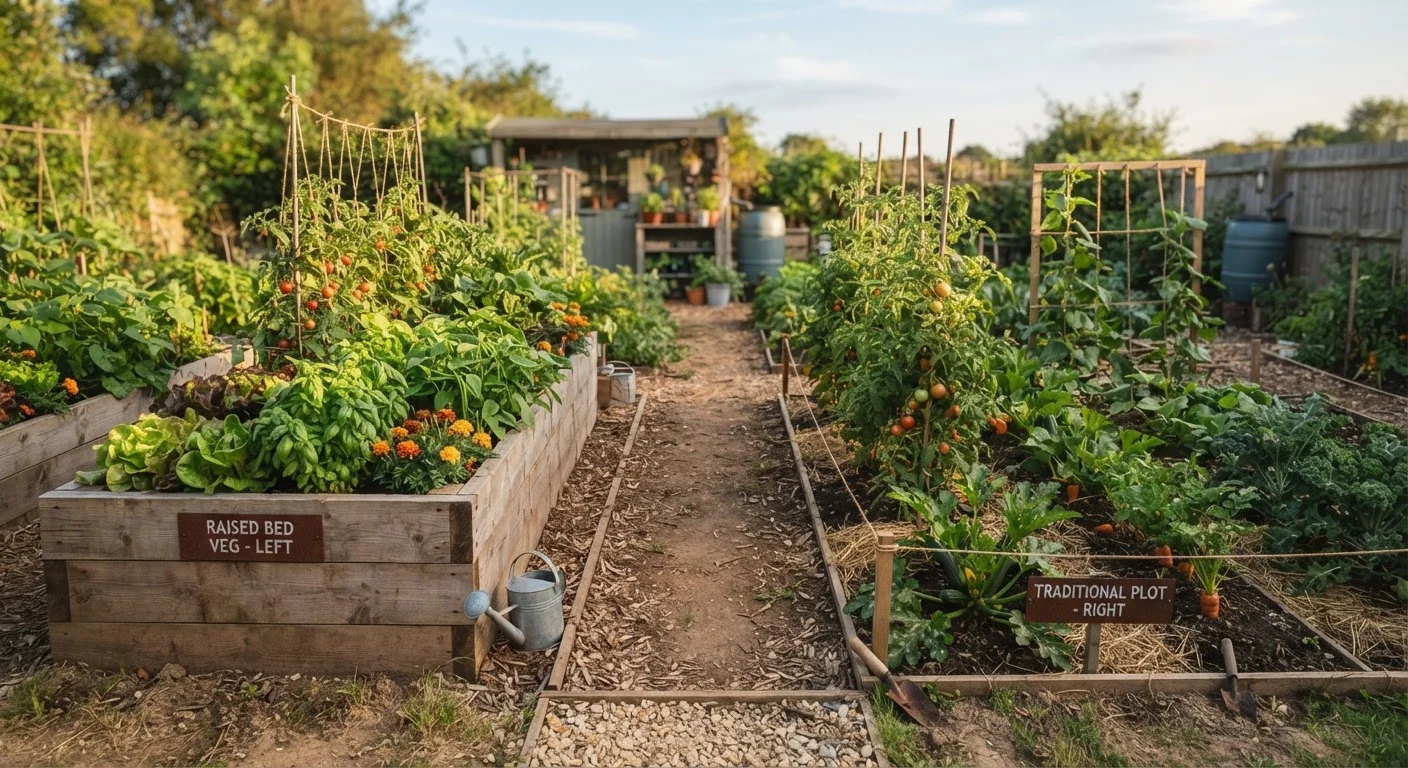
The Real Cost Difference
For budget-conscious gardeners, the first question is simple: what does each method cost to get started? In-ground planting wins here without much competition. If your existing soil is even marginally workable, you can begin planting with little more than seeds and a hand trowel. Adding a bag or two of compost to improve structure is often enough to get started - and compost can eventually be made for free. See our guide to starting a garden with almost no money for a full breakdown of low-cost entry points.
Raised beds carry genuine upfront costs. Lumber, cinder blocks, or galvanized steel - whichever material you choose - add up. A modest 4×8-foot bed built from untreated pine boards typically runs $40-$80 in materials alone, and that's before filling it. Quality fill mix (a common blend is topsoil, compost, and a perlite or coarse sand component) can cost another $50-$150 depending on volume and sourcing. Reusing salvaged wood or cinder blocks can reduce costs significantly, but even a frugal build rarely comes in under $30-$50.
That said, raised beds are a one-time structural cost spread across many growing seasons. A well-built cedar or composite bed can last 10-20 years. Amortized across seasons, the annual cost drops considerably - but only if you actually continue gardening in that spot.
| Criterion | Raised Beds | In-Ground Planting |
|---|---|---|
| Upfront cost | $30-$300+ depending on materials | Near zero if soil is workable |
| Soil control | Full control over fill mix | Dependent on native soil quality |
| Drainage | Fast-draining; may need more watering | Varies; better moisture retention in loam |
| Weed pressure | Lower if filled with clean mix | Higher; existing weed seed bank |
| Season length | Warms faster in spring | Slower to warm in cooler climates |
| Contamination risk | Isolated from ground contamination | Risk if soil has contaminants |
| Long-term soil health | Requires ongoing amendment | Benefits from natural soil ecology |
| Accessibility | Easier to build at comfortable height | Requires bending at ground level |
Soil Control and Drainage Trade-offs
One of the clearest advantages of raised beds is the ability to control exactly what your plants grow in. If you're gardening on urban ground that may carry lead, arsenic, or other contaminants (common near older homes or former industrial sites), raised beds with a solid base or barrier layer effectively isolate your crops. This isn't a minor concern - the U.S. Environmental Protection Agency has documented soil contamination risks in many urban residential areas, and edible plants can absorb certain contaminants through their roots.
Even without contamination, heavy clay or rocky soil discourages many vegetables. Raised beds sidestep this entirely. In-ground gardening on poor soil isn't hopeless - consistent compost additions improve structure over time - but it's a multi-year project. Our article on why potting mix quality matters covers what to look for when filling any planting container or bed.
Drainage works both ways. Raised beds drain faster, which is ideal for root vegetables and in regions with heavy rainfall or clay-dominated soil. But faster drainage also means more frequent watering - a real cost if you're on metered water. In-ground gardens, particularly in loamy or silty soil, tend to retain moisture longer. In drier climates, this can actually favor in-ground planting from a water-use standpoint. Our piece on watering smarter is worth reading before committing to either method in a hot or arid area.
What Small-Space Gardeners Should Actually Weigh
For gardeners working with a small yard, patio edge, or narrow strip of land, the practical differences narrow further. Raised beds make excellent use of defined, compact areas - a 4×4-foot square is manageable, productive, and easy to reach from all sides without stepping on soil. In-ground planting in a small area can suffer from compaction if you're working in tight quarters, since foot traffic around plants degrades soil structure over time.
If your space is a balcony or rooftop, neither raised beds nor in-ground planting applies cleanly - containers or grow bags become the relevant comparison. Our balcony gardening guide covers what actually works in those constrained environments. For those weighing containers as a third option alongside beds, container gardening vessel choices offers honest cost comparisons.
Before committing to a significant material purchase for either method, it's worth running through a practical checklist. Our article before you buy any new plant or tool gives you a structured way to assess whether a garden investment fits your actual space and budget - a useful step before spending on lumber or amendment materials.
Ultimately, neither method is universally superior. Raised beds solve specific problems at a real cost; in-ground planting is lower-barrier but soil-dependent. Match the method to what your soil and budget actually look like, not to what looks appealing in a magazine.