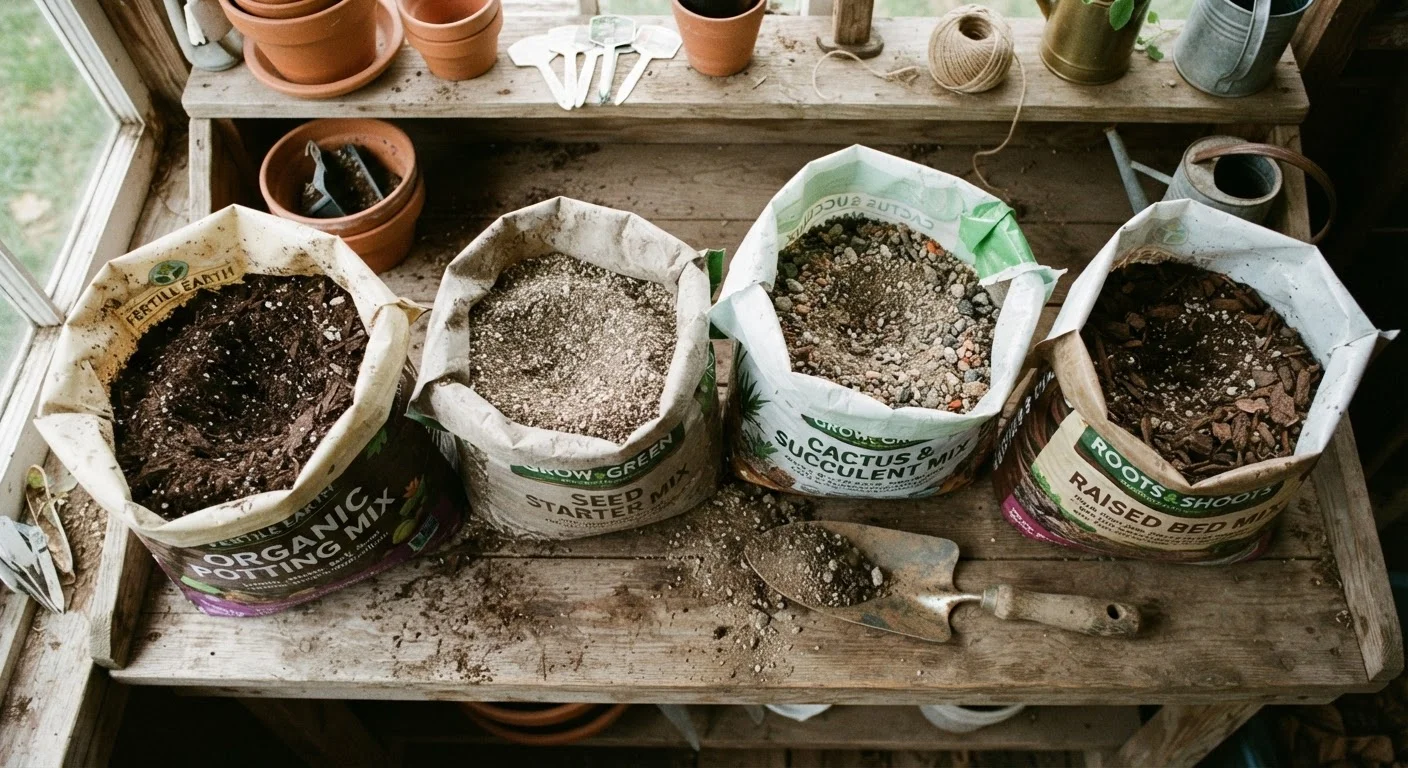
What You're Actually Buying When You Grab the Cheapest Bag
Potting mix is one of those purchases where the gap between the cheapest and a mid-range option can be surprisingly small in absolute dollars - but the difference in performance is often dramatic. A $4 bag and a $9 bag may look identical on the shelf, but what fills them can vary widely.
Budget mixes tend to rely heavily on peat or low-grade composted material with little or no added perlite, bark, or coir. These fillers compact within a few weeks of watering, squeezing out the air pockets roots need to absorb oxygen and nutrients. Once compaction sets in, drainage slows, water pools at the bottom of pots, and root rot becomes a real risk. You end up replacing plants - or the mix itself - far sooner than expected.
Understanding what goes into a bag helps. For a deeper look at how soil amendments differ, see our guide on compost, mulch, and garden soil - it covers why using the wrong material in the wrong spot costs money and stunts growth.
Common Mistakes Budget Gardeners Make With Potting Mix
The mistakes below follow a predictable pattern: a purchase that feels frugal upfront creates extra spending down the road. Recognizing them is the first step to avoiding them.
Buying based on price per bag without checking volume or ingredients.
Why it happens: Bags are often similar sizes at a glance, and shoppers assume cost reflects quality. A $4 bag that's only 8 quarts may cost more per quart than a $7 bag that holds 16.
Reusing old potting mix season after season without refreshing it.
Why it happens: It feels wasteful to discard mix that still looks like soil. But after a season, organic matter has broken down, structure has collapsed, and nutrients are depleted.
Using garden soil or in-ground soil in containers as a money-saving shortcut.
Why it happens: Backyard soil is free, so filling pots with it seems like an obvious savings. In practice, garden soil compacts severely in containers, drains poorly, and often introduces pests or pathogens.
Ignoring water repellency in dry, heavily peat-based mixes.
Why it happens: Peat-heavy mixes are common in budget products. When peat dries out completely, it becomes hydrophobic - water runs down the sides of the pot and drains out before the roots absorb any.
Assuming all potting mixes work equally well for all plant types.
Why it happens: General-purpose labeling implies universal suitability. In reality, cacti, orchids, and vegetables have very different moisture, pH, and drainage needs that a single cheap all-purpose mix rarely meets.
If you're gardening in containers, the mix you choose is even more critical because plants can't extend roots into surrounding ground. Our article on choosing containers on a budget explains how vessel choice interacts with soil quality - both affect drainage and root health together.
How to Spend Smarter Without Overspending
The goal isn't to always buy the priciest bag - it's to get reliable structure and nutrition at the lowest effective cost. A few practical approaches tend to work well for budget-conscious gardeners:
- Stretch a mid-range mix with amendments. Buying a modestly priced mix and blending in a handful of perlite per gallon of mix improves drainage significantly. Perlite is inexpensive in bulk and one bag lasts multiple seasons.
- Add homemade or bagged compost. Compost improves both water retention and microbial activity. Even a small amount stirred into a marginal mix can raise its performance noticeably.
- Read the ingredient list, not the marketing copy. Words like "enriched" or "professional formula" on cheap bags often mean very little. Look for listed components: perlite, coir, bark fines, or mycorrhizae.
- Buy larger bags when you have storage. Per-quart cost drops considerably in larger formats, and a sealed bag stored in a cool, dry spot retains quality for a full season.
These same principles - paying attention to what's actually in a product rather than its price point - apply across many home purchases. Our piece on why cheap décor often looks cheap explores a similar dynamic in a completely different category.
~30%
Volume lost to compaction in first season
Horticultural extension research suggests low-structure potting mixes can lose roughly a quarter to a third of their original pore volume within one growing season due to organic matter breakdown.
2-3×
Replacement frequency for cheap mixes vs. quality ones
Gardening educators commonly note that bargain mixes often need complete replacement every season, while well-structured mixes can be refreshed and reused for two to three seasons before replacement.
For readers gardening in raised beds, soil economics shift somewhat - see raised beds vs. in-ground planting for a cost comparison that factors in soil volume requirements.