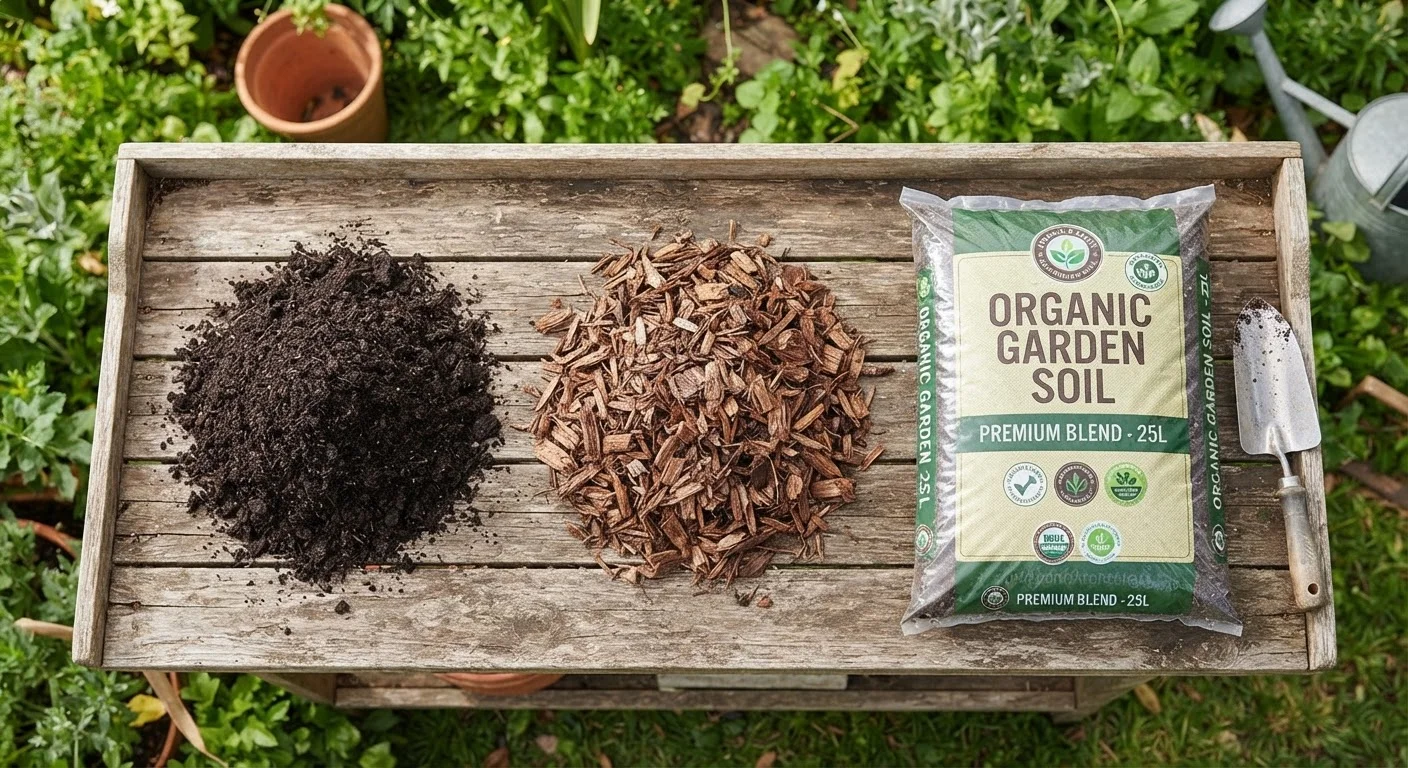
What Compost Actually Is - and What It Does
Compost is organic matter - kitchen scraps, yard waste, leaves - that has been broken down by microbes, fungi, and invertebrates into a stable, dark, crumbly material sometimes called humus. Its primary job is to feed soil biology and improve nutrient availability for plants.
When you work compost into garden soil, you're introducing beneficial microorganisms, improving drainage in clay-heavy soil, and helping sandy soil retain moisture longer. It also adds a slow, gentle release of nutrients over time - not a quick fertilizer spike. If you want to go deeper on DIY soil nutrition, see free and low-cost ways to feed your garden.
The key word with compost is incorporate. It belongs mixed into the top 4-6 inches of your planting area, not sitting on the surface in a thick layer. Making your own from kitchen scraps and yard waste costs almost nothing beyond a bin and a little time - that's the budget win here.
Start a Simple Compost Pile for Nearly Free
You don't need a fancy bin to compost. A simple pile in a corner of your yard - alternating 'green' materials (vegetable scraps, grass clippings) with 'brown' materials (dry leaves, cardboard) - can produce usable compost in a few months. Turning it occasionally speeds things up. This eliminates the recurring cost of buying bagged compost each season.
What Mulch Does (and Doesn't Do)
Mulch is a surface covering, not a soil amendment in the traditional sense. Organic mulches - wood chips, straw, shredded leaves, grass clippings - break down slowly over time and add a modest amount of organic matter to the soil. But that's a secondary benefit, not the main event.
The primary jobs of mulch are: slowing moisture evaporation from the soil surface, moderating soil temperature swings, suppressing weed germination, and reducing soil erosion. A 2-4 inch layer around plants (kept away from stems) can meaningfully reduce how often you need to water - which matters for both plants and your water bill. For more on efficient water use, see watering smarter in your garden.
Inorganic mulches - gravel, landscape fabric, rubber - don't break down or add organic matter. They have specific uses (paths, certain perennial beds) but won't improve your soil over time the way organic options can.
What Garden Soil Is (and When You Actually Need It)
Bagged garden soil is a blended product intended to serve as or supplement a growing medium. It typically contains some combination of topsoil, compost, bark, and other materials to produce a workable texture. It is not compost, and it is not mulch - it is the stuff your plants actually root into.
You typically reach for bagged garden soil when your native ground is too compacted, rocky, or nutritionally poor to support good plant growth - or when you're filling a raised bed and need volume. For a breakdown of how soil decisions play into raised bed versus in-ground growing, see raised beds vs. in-ground planting.
One budget caution: bargain bagged soils can compact quickly or have inconsistent nutrient content. Understanding what's on the ingredient label matters more than price per bag - for detail on that, see why cheap potting mix often costs more.
2-4 inches
Recommended mulch depth for most garden beds
This range is widely cited by cooperative extension services across the US as effective for moisture retention and weed suppression without smothering plant crowns.
~25-30%
Potential reduction in soil moisture loss with mulch
Research from university extension programs suggests organic mulch can meaningfully reduce evaporation, though exact figures vary by climate, mulch type, and soil conditions.
1-2 inches
Compost layer to incorporate each growing season
Most home garden guidance recommends this amount worked into the top few inches of soil annually to maintain organic matter levels.
Putting It Together: The Right Product for Each Job
The practical rule is simple once you understand the roles. Before buying anything, ask what problem you're actually trying to solve:
- Soil is poor or compacted? Add compost - work it in.
- Weeds overwhelming a bed? Moisture evaporating fast? Add mulch on the surface.
- Starting a new planting area or filling a raised bed? Garden soil (blended with compost for best results).
Buying a bag of mulch and working it into your soil like compost, or dumping compost on top as a mulch substitute, won't deliver the results you're paying for. These are different materials with different mechanisms - and once you see them that way, the purchase decision gets a lot clearer. Before adding any product to your garden, it's worth running through a quick checklist for new garden purchases to make sure the spend actually fits your garden's needs.