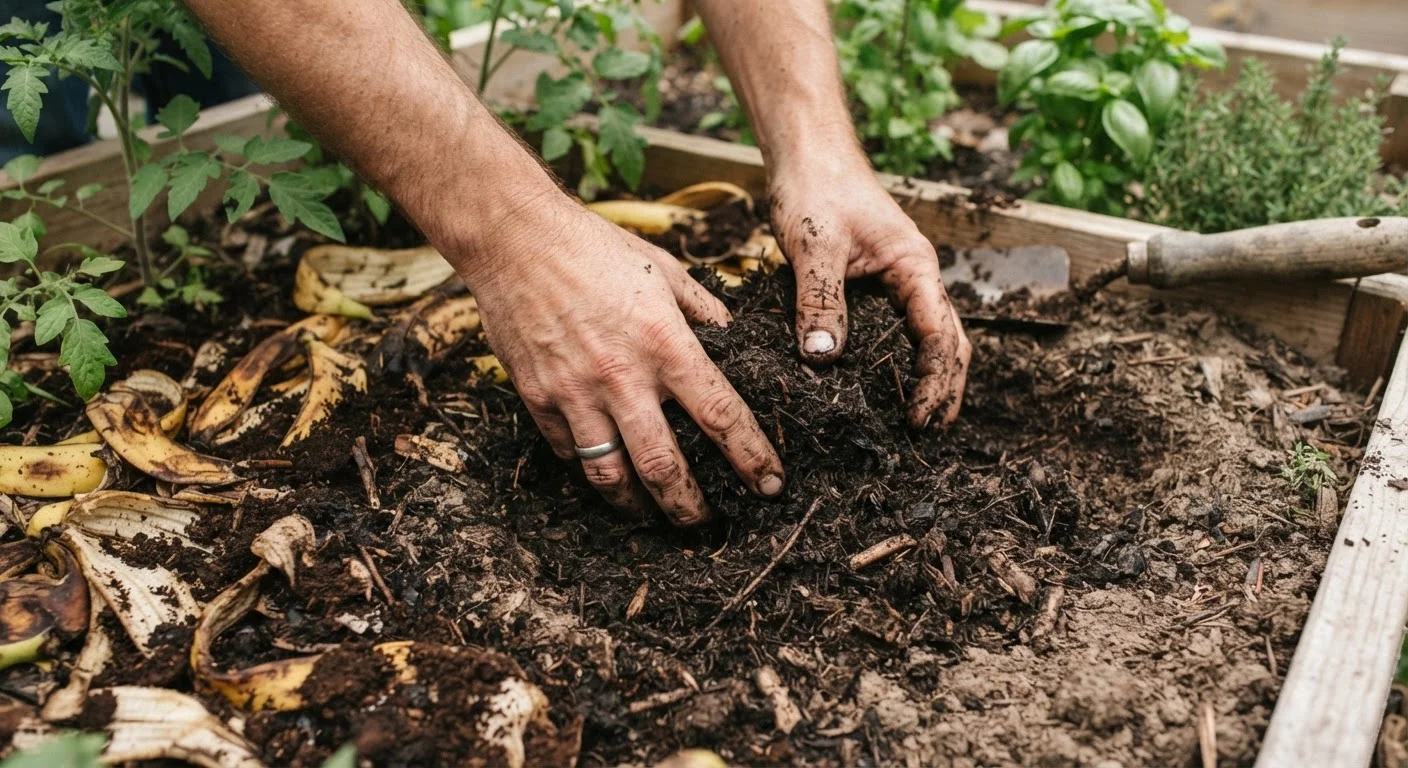
Why DIY Soil Feeding Makes Sense - Up to a Point
Skipping the fertiliser aisle entirely is an appealing idea, especially when you're starting a garden on a tight budget. Kitchen scraps, yard waste, and a little patience can genuinely replace a portion of what store-bought fertilisers do. But the internet has inflated the reputation of several DIY methods well beyond what the evidence supports.
The truth is more nuanced: some zero-cost amendments provide real, measurable nutrition; others offer trace benefits at best; and a handful can actively harm your plants if misapplied. Knowing which is which saves you time, effort, and the cost of replacing stressed plants.
Understanding what your soil actually needs is the starting point. Nutrient-dense compost added to already-fertile soil is far less valuable than the same compost worked into depleted ground. A basic home soil test kit - typically a few dollars at hardware stores - tells you where you stand before you add anything. See our guide on the difference between compost, mulch, and garden soil to understand what each amendment actually does.
Common Myths About Free Garden Fertilisers
The following myth-and-fact pairs cover the most widely circulated claims about DIY soil feeding - from the genuinely useful to the genuinely oversold.
Myth
Burying banana peels near plants gives them a significant potassium boost.
Fact
Banana peels do contain potassium, but the nutrient only becomes available after substantial decomposition - which takes far longer than most gardeners realise.
Fresh or recently buried banana peels don't release potassium quickly. Studies on fruit peel decomposition show that meaningful nutrient release into surrounding soil can take many weeks to months depending on soil temperature and microbial activity. Dropping whole peels beside plant stems can also attract pests. A better approach: add peels to your compost bin where they break down fully alongside other materials, contributing a modest potassium share to balanced compost.
Myth
Coffee grounds are a universal soil booster that help almost every plant.
Fact
Coffee grounds are slightly acidic and add minimal nitrogen; they benefit acid-loving plants in moderation but can hinder germination and harm plants in already-acidic soil.
The idea that coffee grounds are broadly beneficial is widespread but misleading. Research from Oregon State University Extension found that high applications of coffee grounds can suppress plant growth rather than encourage it. Grounds compact when wet, reducing soil aeration, and their pH effect - while real - is modest and variable. In soil that is already sufficiently acidic, adding grounds can push pH too low for most vegetables. Use them sparingly and mix them into compost rather than applying them directly as a top dressing.
Myth
Compost tea is a powerful liquid fertiliser you can brew at home for free.
Fact
Compost tea adds some microbial activity to soil, but its nutrient content is low and variable; it is not a substitute for solid compost or balanced fertilisation.
Compost tea - made by steeping compost in water, sometimes with an aerator - has been promoted as a way to multiply compost's benefits into a liquid spray. However, independent reviews of the research, including assessments by university extension services, generally conclude that benefits are inconsistent. The microbial populations vary widely depending on compost quality, water chemistry, and brew time. Pathogen risk is also a consideration if the base compost was not fully cured. Solid compost applied directly to the soil remains more reliable and predictable than its steeped liquid derivative.
Myth
Wood ash is a safe, free fertiliser suitable for most garden beds.
Fact
Wood ash raises soil pH and supplies calcium and potassium, but it can quickly make soil too alkaline and is unsuitable for acid-loving plants or already-alkaline soils.
Wood ash is genuinely useful in specific situations - particularly in acidic soils (pH below 6.0) that need liming. It contains calcium carbonate, potassium, and trace minerals. But because it is alkaline, even moderate applications to neutral or already-alkaline soil can push pH above the range most vegetables tolerate, locking out nutrients like iron and manganese. Always soil-test before applying, use it sparingly (no more than about 20 lbs per 1,000 sq ft annually is a commonly cited guideline), and never use ash from treated or painted wood, which can introduce toxins.
Myth
Epsom salt is an effective, widely applicable garden fertiliser.
Fact
Epsom salt (magnesium sulfate) only benefits plants in magnesium-deficient soils; routine use in adequate soils provides no benefit and can displace other nutrients.
Epsom salt has become a popular home garden remedy, often recommended for tomatoes and peppers. However, the Washington State University Extension and other land-grant university programs have noted that most garden soils already have sufficient magnesium, and adding more does not improve yields or plant health. In fact, excess magnesium can compete with calcium uptake, potentially worsening plant health. If you suspect a magnesium deficiency - typically visible as yellowing between leaf veins on older leaves - a soil test will confirm it before you treat.
What Actually Works: A Realistic Approach
The most cost-effective soil feeding strategy combines a few high-value methods rather than chasing every trending tip. Prioritise these:
- Backyard composting: A simple pile or bin converts kitchen scraps and yard trimmings into stable, well-rounded nutrition over months. It is slow, but the output is consistent and free.
- Worm castings (vermicompost): A small worm bin under a sink or on a balcony - relevant if you're gardening in a tight urban space - produces a concentrated amendment that improves both nutrition and soil structure.
- Grass clippings as mulch: Left on the lawn or dug lightly into beds, they return nitrogen without any preparation.
- Cover cropping: Planting legumes like clover or vetch in off-season beds fixes atmospheric nitrogen directly into the soil - essentially a free fertiliser application over winter.
Pair these habits with seed saving practices and you build a garden system that costs very little to maintain year after year.
30%
Food waste that could be composted
The EPA estimates that food and yard debris make up about 30% of what Americans throw away - material that could instead be composted to feed garden soil.
6-8 weeks
Hot compost turnaround time
An actively managed hot compost pile, turned regularly and kept moist, can produce usable compost in as little as six to eight weeks according to University of Illinois Extension guidance.