Why Learning Basic Home Repairs Matters
Every home - owned or rented - demands maintenance. A dripping faucet, a stubborn door, or a cracked outlet cover doesn't have to mean a service call fee. Handling routine repairs yourself can meaningfully reduce what you spend keeping your home functional, and it builds confidence for future projects.
That said, this guide is about informed decision-making, not bravado. Knowing which repairs you can safely attempt, and which ones require a licensed professional, is the most valuable skill a first-timer can develop. For a broader picture of how repair costs fit into your overall finances, see our plain-language budgeting guide to factor home maintenance into your spending plan.
Your Starter Toolkit: What to Own First
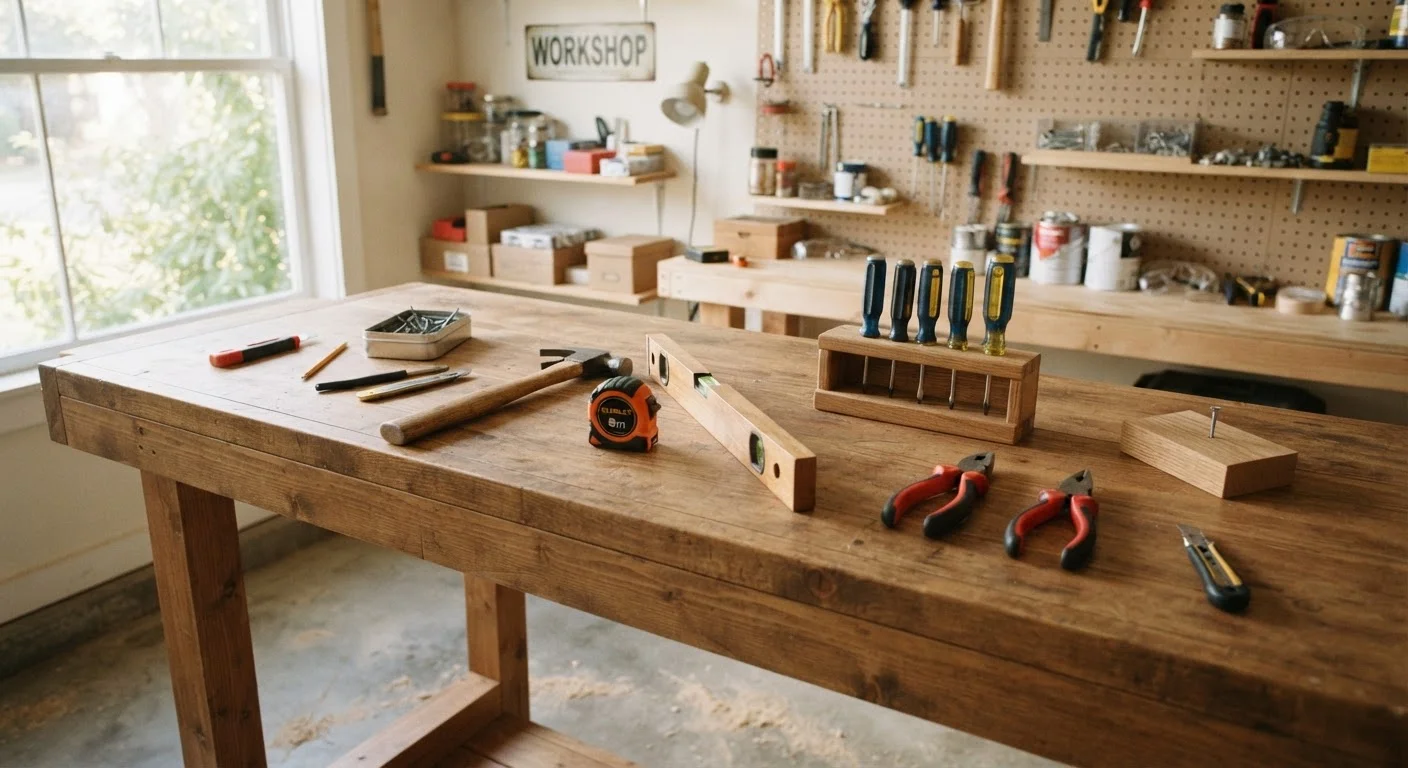
You don't need hundreds of tools. A focused starter set handles the vast majority of household fixes:
- Tape measure - for any job that involves sizing or spacing
- Hammer - picture hanging, small demolition, setting fasteners
- Flathead and Phillips screwdrivers (multiple sizes) - nearly universal use
- Adjustable pliers and slip-joint pliers - gripping, tightening, minor plumbing
- Utility knife - cutting drywall patches, caulk, flooring material
- Level - keeping shelves, frames, and fixtures straight
- Cordless drill/driver - one of the most useful tools you can own
- Stud finder - required for safely anchoring anything heavy to walls
Buy quality on the items you'll use most (screwdrivers, drill) and opt for basic versions of tools you'll reach for rarely. For guidance on expanding a tool collection beyond the home, the home mechanic toolkit overview covers hand tools that cross over between garage and household use.
Load-bearing wall
A wall that supports the weight of the structure above it. Removing or modifying one without engineering guidance can compromise the building's structural integrity.
Circuit breaker
A safety switch in your electrical panel that cuts power to a specific circuit. Always switch off the relevant breaker - and verify power is off - before working on any fixture or outlet.
Shutoff valve
A valve that stops water flow to a specific fixture (like a toilet or sink) or to the whole home. Knowing where yours are is essential before any plumbing work.
Caulk
A flexible sealant applied around joints and gaps (e.g., tubs, windows) to block water or air infiltration. It dries firm but remains slightly flexible to handle normal movement.
Permit
Official government approval required for certain home improvement or repair projects. Working without a required permit can create legal and insurance complications when you sell or insure the home.
Stud
A vertical framing member inside your walls, typically spaced 16 inches apart. Anchoring heavy objects into studs (rather than just drywall) prevents them from pulling out of the wall.
Safety Before You Start
No repair is worth an injury. Before touching anything, run through these non-negotiable steps:
- Shut off the relevant system. Water valve before any plumbing work; circuit breaker before touching any electrical fixture. Confirm the power is off with a non-contact voltage tester.
- Wear appropriate PPE. Safety glasses for drilling or cutting, gloves when working with sharp materials or chemicals, a dust mask for sanding or working with older drywall.
- Read instructions fully before starting. Whether it's a product manual or a repair guide, understand the whole process before you make the first cut or turn the first screw.
- Work in good lighting. Dim conditions lead to mistakes and injuries.
- Know where your shutoffs are. Main water shutoff, electrical panel, and gas shutoff (if applicable) - locate all three before you ever need them in a hurry.
Older homes (generally pre-1980) may contain lead paint or asbestos in certain materials. If you're disturbing surfaces in an older property, check with a qualified inspector before sanding, cutting, or demolishing anything.
Common Repairs You Can Likely Handle Yourself
The following tasks are generally within reach for a careful beginner, assuming no permits are required in your jurisdiction (verify locally):
- Patching small drywall holes - spackling compound and a putty knife handle nail holes and minor dings; mesh patch kits cover fist-sized damage
- Replacing a faucet washer or aerator - fixes most dripping faucets without touching supply lines
- Unclogging drains - a drain snake or a baking soda and vinegar flush clears most slow drains before chemical products are needed
- Replacing a toilet flapper - a common fix for a running toilet, typically a 20-minute task
- Fixing a sticking door - tightening hinge screws or light sanding resolves most cases
- Caulking around tubs and windows - prevents water intrusion; needs patience but no specialized skill
- Replacing switch plates and outlet covers - purely cosmetic, with the breaker off
For a more thorough breakdown of these and related tasks, our home maintenance reference for first-timers covers drains, walls, doors, and windows in greater depth.
Take Photos Before You Disassemble Anything
Before removing a faucet handle, hinge, or fixture, snap a few photos with your phone. You'll have a visual reference for reassembly, which is especially helpful when you're new to a task and there are more parts than expected.
When to Call a Licensed Professional
Some work is legally, technically, or safely beyond the DIY threshold - and attempting it can create serious hazards or costly problems down the road. Always hire a licensed professional for:
- Any electrical wiring work - adding circuits, replacing panels, running new wire. Even seemingly simple jobs can result in fire hazards if done incorrectly, and most jurisdictions require permits and inspections.
- Gas line work - appliance connections, line repairs, or new installations. Gas leaks are life-threatening; this is never a DIY task.
- Structural or load-bearing changes - removing walls, altering framing, foundation repairs.
- Main sewer line issues - if multiple drains are backing up simultaneously, the problem is likely in the main line, which requires professional equipment and usually a permit.
- Roof repairs beyond minor patching - fall risk is significant; improper repairs can void warranties or worsen damage.
When evaluating contractors, get at least two to three written estimates, verify licensing and insurance with your state's contractor licensing board, and ask for references. For ways to save money on home costs overall, explore our frugal living and saving tips for practical strategies.
This article is for general informational purposes only. Always verify local permit requirements and consult a licensed professional for any work involving electrical systems, gas lines, structural elements, or other regulated trades before proceeding.