Why Basic Maintenance Knowledge Matters
Moving into your first place - whether renting or owning - comes with a steep learning curve. Suddenly, a dripping faucet or a sticky door is your problem to solve. The good news: most routine home issues are straightforward once you know what you're looking at.
Beyond convenience, staying on top of small problems prevents them from becoming expensive ones. A slow drain ignored for months can become a blocked pipe requiring professional intervention. A door that doesn't seal properly wastes energy and inflates utility bills. These are costs that hit renters and first-time owners alike.
If you're still budgeting for your new place, our article on hidden costs first-time renters overlook covers what to anticipate financially before repairs even come into play.
Your Essential Starter Toolkit
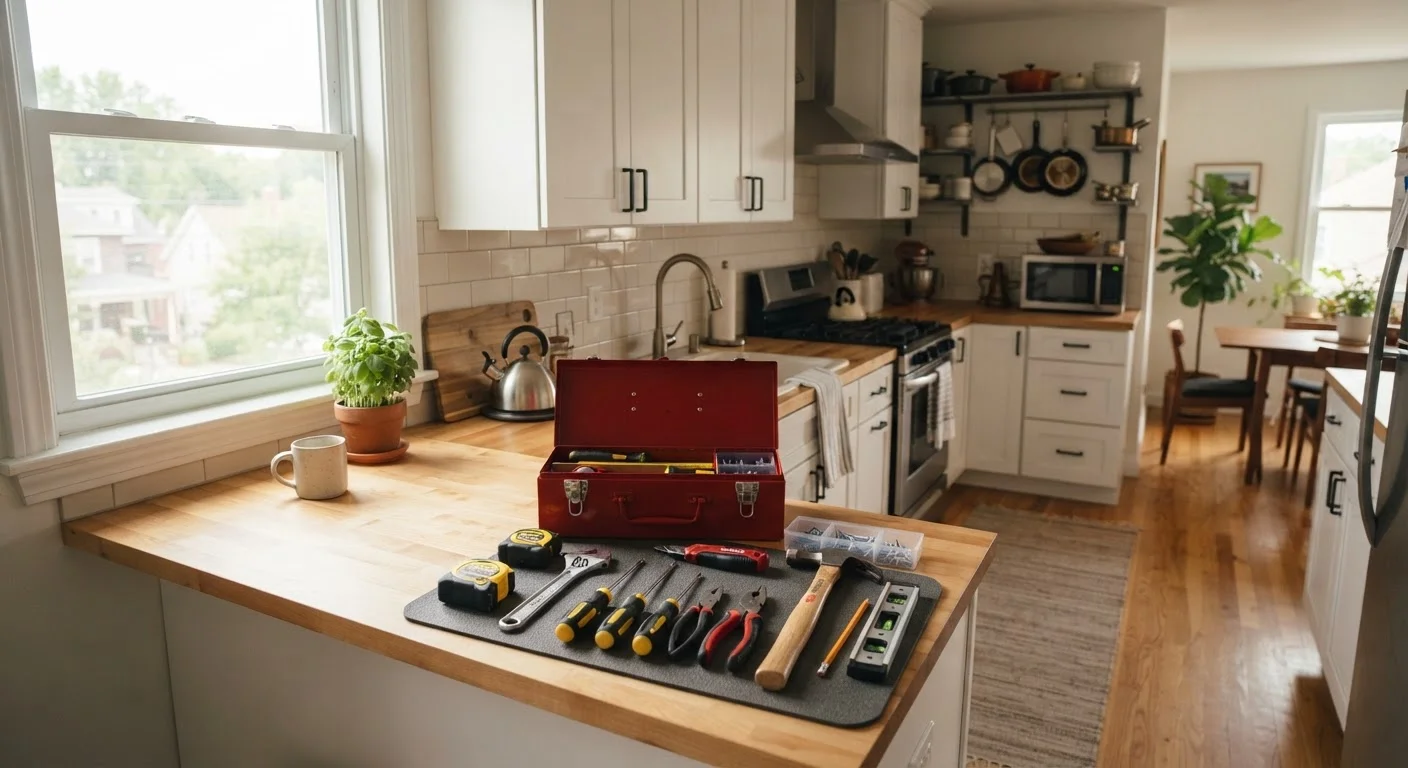
You don't need a full workshop. A compact kit covers the vast majority of household tasks:
- Claw hammer - hanging pictures, minor carpentry
- Flathead and Phillips screwdrivers (or a multi-bit set)
- Adjustable wrench and slip-joint pliers
- Tape measure
- Utility knife
- Level - inexpensive bubble levels work fine
- Plunger (cup-style for sinks, flange-style for toilets)
- Putty knife
A basic drill/driver is worth adding if your budget allows; it handles everything from assembling furniture to tightening loose cabinet hinges. For a broader look at tool selection principles, our first-timer's roadmap to home repairs walks through what to prioritize.
Buy a multi-bit screwdriver set rather than individual screwdrivers - it handles 90% of household fasteners and costs about the same as two single drivers.
First-time homeowners often over-invest in tools they rarely use; a compact, versatile set provides real utility without drawer-cluttering redundancy.
Keep a small container of touch-up paint from your walls' original color - even a baby food jar works - so minor scuffs can be fixed in under five minutes.
Touch-up paint perfectly matched to your walls is far more effective than trying to blend a new can, which almost never matches exactly due to sheen and aging differences.
Drains, Toilets, and Plumbing Basics
Plumbing problems feel intimidating, but most common issues don't require a plumber.
Slow or Clogged Drains
Hair and soap buildup cause most bathroom drain clogs. Remove the drain cover and use a drain snake or zip-it tool to pull out debris. Avoid chemical drain cleaners as a first step - they can damage older pipes and are rarely more effective than mechanical removal.
For kitchen drains, the culprit is usually grease. Flush periodically with very hot (not boiling) water to keep buildup minimal.
Running Toilets
A toilet that runs continuously wastes a significant amount of water and adds to your utility bill. Lift the tank lid and check three things: the flapper (the rubber seal at the tank bottom), the fill valve, and the float. A worn flapper is the most common cause and costs just a few dollars to replace - it's a straightforward swap requiring no special skills.
Shutoff Valves
Know where your main water shutoff is before you have an emergency. For toilets and sinks, individual shutoff valves are located underneath or behind the fixture.
Renters and Plumbing Repairs
Before fixing any plumbing issue in a rental, check your lease. Many leases restrict tenants from making repairs without landlord consent. Even straightforward fixes like a flapper replacement should ideally be cleared in writing first - both to avoid lease violations and to ensure the landlord can't hold you responsible if something goes wrong.
Walls, Doors, and Windows
Cosmetic and functional fixes in these areas are among the most common - and most manageable - home tasks.
Small Holes and Scuffs in Walls
Nail holes and minor dents are easily filled with lightweight spackle applied with a putty knife. Once dry, sand smooth and touch up with matching paint. Larger holes (roughly golf-ball size or bigger) need a wall patch kit, which is available at any hardware store and comes with instructions.
Renters' note: Always photograph walls when you move in and move out. Document any pre-existing damage in writing to your landlord immediately - this protects your security deposit.
Sticky or Misaligned Doors
Doors stick seasonally as humidity causes wood to swell. If the issue is minor, a light sanding on the binding edge often resolves it. Check hinges first - loose screws cause most alignment problems and take about two minutes to fix with a screwdriver.
Drafty Windows
Cold air coming through window frames is usually a weatherstripping issue. Self-adhesive foam tape is inexpensive and cuts to length easily. For gaps between the window frame and wall, a small bead of paintable caulk seals the joint. Both are beginner-friendly fixes that can meaningfully reduce heating costs.
Once your space is functional, decorating on a tight budget is a natural next step.
Appliances and Filters
Appliance maintenance is mostly about cleaning and replacing consumable parts on schedule.
HVAC Filters
Replacing your heating and cooling system's air filter is one of the highest-impact, lowest-effort maintenance tasks in any home. A clogged filter forces the system to work harder, shortening its lifespan and raising energy costs. Check your filter monthly; replace it every 1-3 months depending on the manufacturer's guidance and your living conditions (pets and dusty environments mean more frequent changes).
Refrigerator Coils
Dusty condenser coils (usually located at the back or bottom of the unit) make the refrigerator run inefficiently. Vacuum them once or twice a year using a brush attachment.
Range Hood Filters
Grease-clogged range hood filters reduce ventilation effectiveness and can become a fire hazard. Most mesh filters are dishwasher-safe - check yours monthly if you cook frequently.
It's worth noting that some popular DIY fixes actually make problems worse, so verify your approach before tackling anything unfamiliar.
When to Call a Professional
Knowing your limits is as important as knowing how to fix things yourself. Some work is legally required to be performed by licensed tradespeople - and for good reason.
- Electrical work - replacing an outlet or breaker involves real shock and fire risk. Permits and licensed electricians are required for most electrical modifications in the US.
- Gas lines and appliances - never attempt repairs involving gas connections yourself. Call your utility provider or a licensed plumber/technician.
- Structural issues - cracks in foundations or load-bearing walls require professional assessment.
- Mold beyond surface level - small surface patches in dry areas may be cleanable, but persistent or large mold growth (especially in walls or ceilings) needs professional remediation.
- Major plumbing - supply line replacements, anything involving the main line, or work requiring permits.
Always verify local permit requirements before starting any project beyond basic repairs. Requirements vary by municipality, and unpermitted work can create complications when selling or renting a property.
Keeping repair costs in check is part of a broader financial picture - the budgeting basics hub offers practical frameworks for managing home expenses alongside other priorities.
This article provides general home maintenance information for educational purposes. It is not a substitute for advice from a licensed contractor, electrician, plumber, or other qualified professional. Always verify local codes and permit requirements before undertaking repairs.