Why These Myths Spread - and Who They Hurt Most
Renters occupy a tricky middle ground: responsible enough for day-to-day upkeep, but often limited in what they can legally change. That gap breeds improvisation - and improvisation breeds myths. Tips get passed between roommates, posted in apartment forums, and repeated until they feel like facts.
The problem is that bad DIY advice doesn't just waste an afternoon. It can void a lease clause, damage a surface that was fine before you touched it, or mask a problem that quietly gets worse. Before reaching for whatever's under your sink, it's worth separating what actually works from what only sounds like it should. See our guide to DIY trade-offs for a broader look at when fixing it yourself makes sense.
Myth
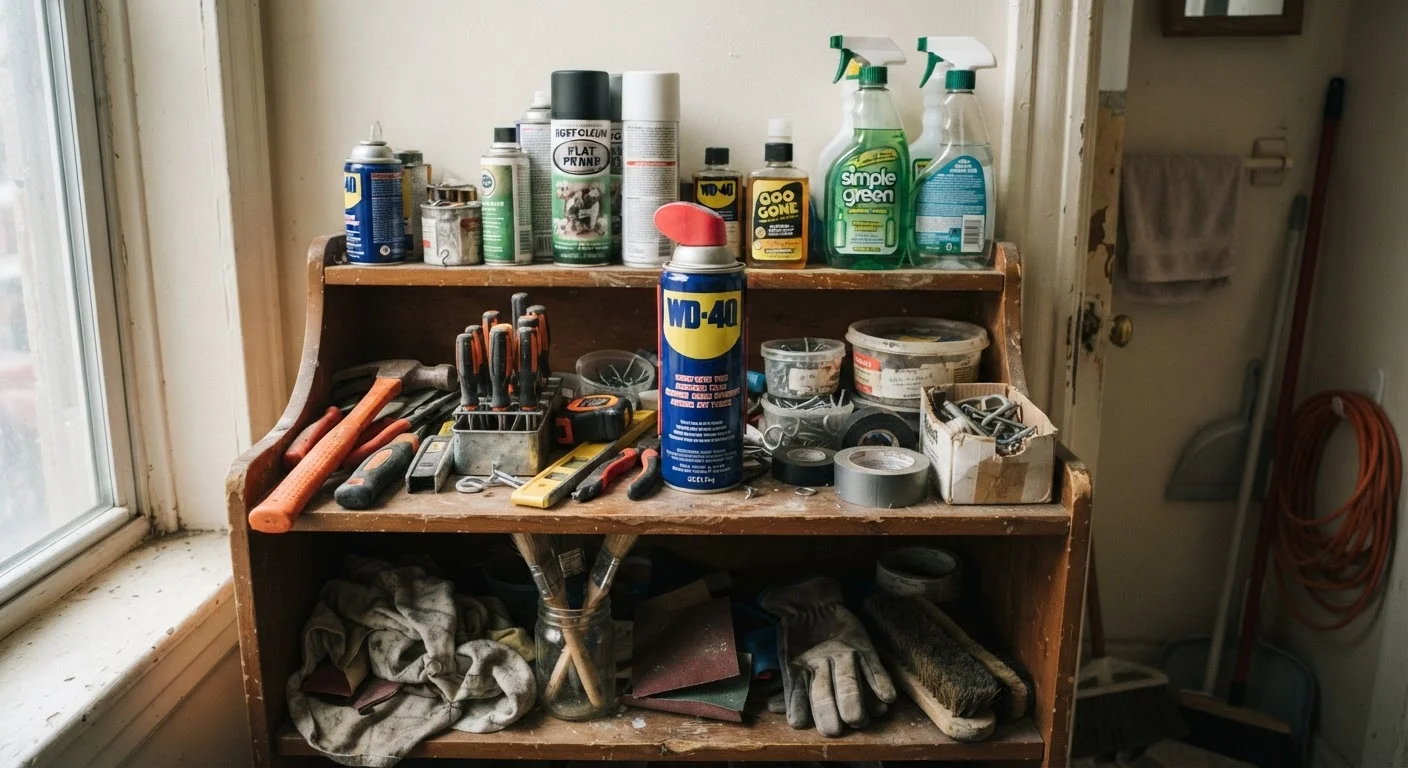
WD-40 fixes squeaky hinges and is a go-to lubricant for anything that sticks or creaks.
Fact
WD-40 is primarily a water displacer and light solvent - it provides short-term relief but attracts dust and leaves hinges stickier over time.
WD-40's name literally stands for "Water Displacement, 40th formula." It was designed to prevent rust and displace moisture, not to lubricate moving parts long-term. Applied to a squeaky hinge, it may quiet the noise for a few days, but the residue it leaves behind traps grime and can make the problem worse within weeks.
For hinges and door hardware, a small amount of white lithium grease or petroleum jelly is a more durable choice. For wood-on-wood squeaks in floors or furniture, dry lubricants like powdered graphite or even plain beeswax tend to outlast liquid sprays. See what's actually causing squeaky floors for a fuller breakdown.
Myth
You can paint over mould to cover it up and stop it from spreading.
Fact
Paint does not kill mould. It seals it temporarily, but the mould continues to grow beneath the surface and will eventually break through.
Mould needs three things: moisture, a food source (like drywall paper or grout), and warmth. Paint provides none of the conditions that stop it. Even primers marketed as "mould-resistant" are designed to prevent mould on clean surfaces - not to remediate existing growth.
Small surface mould patches (typically less than 10 square feet, per EPA guidance) on non-porous surfaces like tile can often be cleaned with appropriate mould-removing products following label directions and with adequate ventilation. Porous materials like drywall with embedded mould growth generally require professional assessment. Always address the underlying moisture source first - whether that's a slow leak, poor ventilation, or condensation buildup.
Myth
Chemical drain cleaners are the fastest, most effective way to clear a clogged drain.
Fact
Chemical drain cleaners can damage older pipes, are hazardous to skin and eyes, and often don't fully clear clogs - especially those involving grease or hair deep in the line.
Caustic drain cleaners generate heat as they react with the clog material. In older metal pipes - particularly in pre-1980s buildings - that heat and chemical reaction can accelerate corrosion. In PVC pipes, repeated use can soften joints over time.
For most common clogs, a drain snake (also called a drain auger) or even a simple combination of a cup plunger and manually removing visible debris from the drain opening works more reliably and without the chemical risk. Fixing a slow-draining sink without chemical cleaners walks through safer, effective steps in detail.
Myth
Fresh caulk applied over old, cracked caulk will seal the gap and last just as long.
Fact
Caulk applied over existing caulk bonds poorly and fails faster - the old layer needs to be fully removed first.
Caulk needs a clean, dry, stable surface to cure and bond correctly. Old caulk - especially if it's already cracking, peeling, or has any mould growth - is none of those things. New caulk layered on top will flex differently, delaminate along the old layer's edges, and typically begin failing within months rather than years.
The right process involves removing the old material completely using a plastic scraper or caulk remover tool, cleaning and drying the surface thoroughly, and only then applying a new bead. It's more work upfront, but the result lasts significantly longer. Resealing a bath or shower tray the right way covers the full process. Also see why caulk fails - and how to prep so it doesn't.
Myth
A running toilet is just annoying - it's not worth calling anyone about.
Fact
A constantly running toilet can waste thousands of gallons of water per month, adding meaningfully to utility bills or building costs.
The fill valve and flapper inside a toilet tank are small, inexpensive parts that most renters can inspect and, with landlord permission, replace themselves. A running toilet is often caused by a worn flapper that no longer seals properly - a part that typically costs only a few dollars at a hardware store.
If you're a renter, report a running toilet in writing rather than ignoring it. In many states, landlords are responsible for keeping plumbing in working order, and documented reports protect you if water bills are disputed. The hidden causes of a running toilet explains what's likely going wrong and when a simple fix is realistic.
When to Stop DIYing and Tell Your Landlord
Some issues genuinely belong to your landlord - not because you can't handle them, but because handling them yourself may create liability. Mould that covers more than a small isolated patch, any leak that originates inside a wall or ceiling, and anything involving the electrical panel or gas lines should go through your landlord or building management in writing.
Document the problem with photos and timestamps before touching anything. This protects your security deposit and establishes a paper trail if the issue worsens. For everything in between - slow drains, squeaky hinges, minor sealant failures - knowing the right approach saves money and avoids repeat fixes. Our comprehensive home maintenance reference covers the full spectrum of what renters typically encounter.
And if energy waste is your concern rather than repair, many solutions require zero landlord approval at all - see what renters can actually do to cut utility costs.
Electrical, Gas, and Structural Work: Don't DIY
No matter what you've read online, work involving your electrical panel, gas lines, load-bearing walls, or roofing should always be handled by a licensed professional. These aren't areas where a wrong step just creates inconvenience - they carry real safety risks and may require permits under local building codes. When in doubt, contact your landlord or a qualified contractor first.