Why Renters Have More Options Than They Think
Many renters assume that cutting utility bills requires replacing appliances or retrofitting windows - things only a landlord can authorize. In reality, a large share of household energy and water use comes down to daily habits and low-cost add-ons that are entirely within a tenant's control.
According to the U.S. Energy Information Administration, space heating and cooling account for roughly half of a typical home's energy consumption. Lighting, water heating, and plug loads make up most of the rest - and all of these can be influenced without touching a single wall or fixture permanently.
Before diving into the steps, it helps to understand what you're working with. Check whether your utility bills are included in rent or metered separately. If they're included, your landlord absorbs the cost - but if you pay directly, every kilowatt-hour and gallon counts. For a deeper look at which money-saving moves actually pay off versus which ones waste your effort, see our guide on separating genuine savings from false economy.
What you will need
Step-by-Step: Reducing Your Utility Costs as a Renter
Work through these steps in order - earlier steps cost nothing and deliver immediate results, while later steps involve small purchases that pay back over time.
Audit Your Standby Power (Phantom Load)
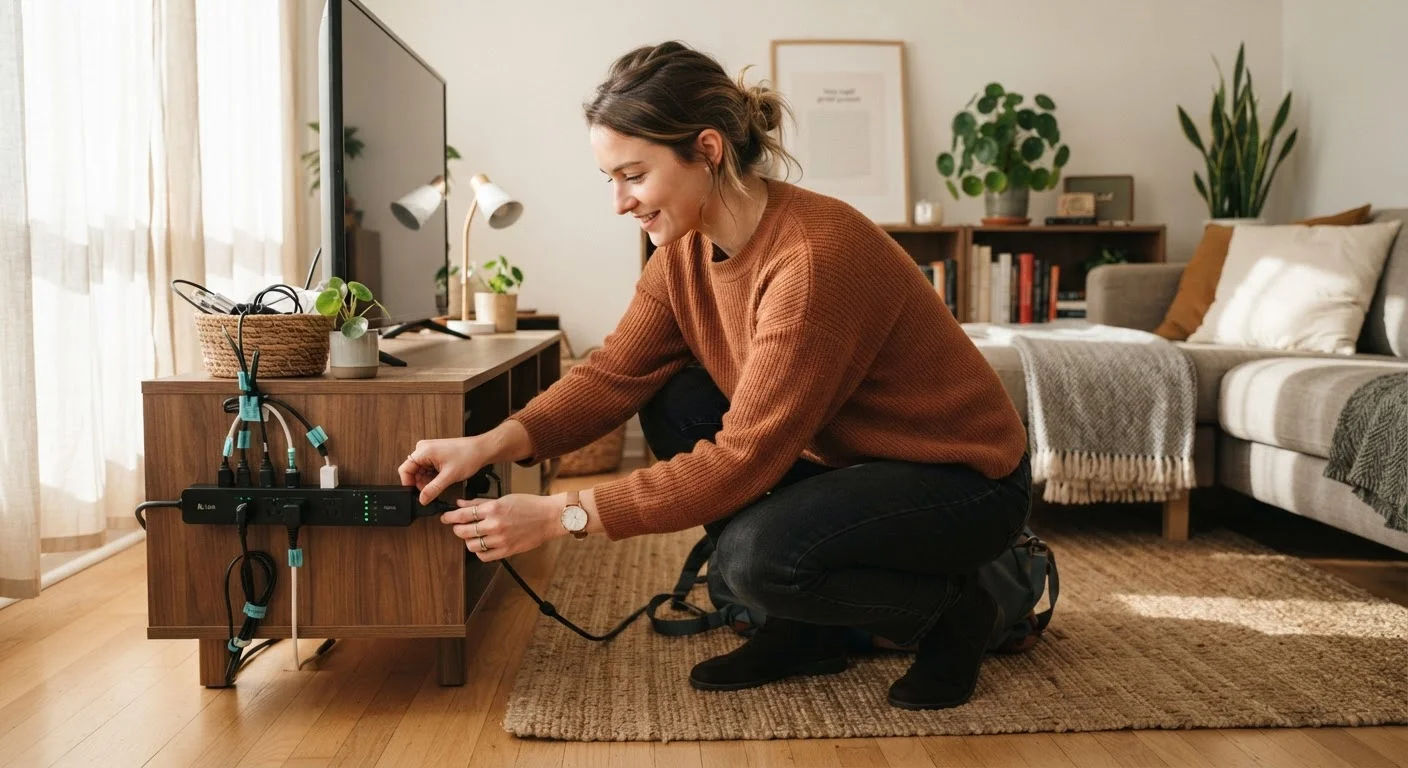
Electronics left plugged in but not in active use - TVs, gaming consoles, phone chargers, desktop computers - draw power continuously. This is called phantom load or standby power. Plug clusters of devices into a single power strip and switch it off when not in use. This requires no tools and costs nothing if you already own a power strip.
Optimize Your Thermostat Settings
If your rental has a programmable or smart thermostat, use the scheduling feature to reduce heating or cooling when you're away or asleep. A commonly cited guideline from the U.S. Department of Energy suggests that adjusting your thermostat by 7-10°F for 8 hours a day can reduce annual heating and cooling costs by around 10% - though individual results will vary based on your home, climate, and habits.
If your thermostat is basic and non-programmable, manual adjustments before leaving home still make a meaningful difference over time.
Switch to LED Bulbs in Fixtures You Use Most
If your rental has incandescent bulbs, swap them for LEDs in the fixtures you use most - desk lamp, kitchen overhead, bathroom. LEDs use roughly 75% less energy and last significantly longer. Keep the original bulbs stored safely and swap them back before you move out. The LEDs travel with you to your next place.
Install a Low-Flow Showerhead or Faucet Aerator
Standard showerheads often flow at 2.5 gallons per minute or more. A low-flow model can cut that in half without a noticeable drop in pressure. Similarly, faucet aerators - small mesh inserts that screw into the tip of a faucet - reduce water flow without requiring tools beyond your hands. Both are inexpensive, reversible, and renter-safe. Store the originals and reinstall them when you leave.
Run Full Loads and Use Cold Water for Laundry
Washing machines use roughly the same amount of energy regardless of load size, so waiting until you have a full load reduces cycles. Switching from hot to cold water for most laundry can cut the energy used per wash significantly - modern detergents are formulated to clean effectively in cold water. If your unit has a dryer, clean the lint filter before every cycle and consider air-drying when practical.
Seal Drafts with Removable Weatherstripping
Cold air leaking under a door or around a window frame forces your heating system to work harder. Self-adhesive foam weatherstripping can be pressed into door frames and removed cleanly at move-out. Door draft stoppers (fabric tubes placed at the base of doors) require no installation at all. For windows, removable rope caulk fills gaps temporarily and peels off without damage. See our full guide on renter-safe draught-proofing techniques for more detail.
Common Pitfalls and What Actually Works
A few well-intentioned habits can backfire. Running the dishwasher half-full, for example, uses the same water and energy as a full load - so consolidating loads is more efficient than running it more frequently on a shorter cycle. Similarly, setting your thermostat to an extreme temperature doesn't heat or cool your home faster; it just runs the system longer.
Draughty windows and doors are one of the biggest hidden energy drains in older rental units. Removable foam or rubber weatherstripping - available at any hardware store - can be applied to door frames and window sashes without adhesive damage. Our detailed walkthrough on draught-proofing a rental on a budget covers this thoroughly. And before you attempt any fix, it's worth reviewing common home repair myths so you don't make problems worse.
This article provides general information about energy and water conservation. It is not a substitute for advice tailored to your specific lease terms, local utility programs, or housing situation. Always review your lease before making any changes to a rental property.