The Cities You're Probably Skipping - And Why That's Worth Reconsidering
When most US travelers plan a domestic trip, the shortlist looks predictable: New York, Miami, Las Vegas, Chicago. Those cities deliver, but they charge accordingly. Hotel rates, restaurant bills, and even parking in top-tier tourist markets can drain a travel budget before you've had a chance to enjoy the destination.
The cities below don't appear on many Instagram feeds, and that's part of what keeps costs down. They have functioning local economies that aren't built around tourism, which means restaurants serve residents, not just visitors, and accommodation options cater to a broader price range. That dynamic tends to keep daily spending lower across the board.
As we've covered before, a low sticker price doesn't automatically mean a cheap trip - so each city below is worth assessing on total daily cost, not just the price of the flight. With that framing in mind, here are six underrated US cities that consistently deliver solid value.
Pittsburgh, Pennsylvania
Pittsburgh has undergone a sustained economic and cultural revival over the past two decades, transforming former industrial neighborhoods into art districts, tech corridors, and restaurant rows. The Strip District offers one of the most concentrated food-market experiences in the Northeast, with vendors selling everything from fresh produce to specialty imports.
Most of the city's major museums - including the Carnegie Museums complex - offer free community admission days. The extensive network of parks and the city's famous bridges make it highly walkable without requiring transit spending. Accommodation costs in Pittsburgh typically run well below comparable cities of similar cultural density, and the local restaurant scene skews toward independent operators rather than chains.
Pittsburgh's neighborhood food markets and free museum days make cultural immersion genuinely affordable.
El Paso, Texas
El Paso sits at the intersection of three states and two countries, giving it a cultural layering that most US cities simply can't replicate. The food scene draws heavily on both Tex-Mex and authentic regional Mexican cooking traditions, and local restaurants serve full meals at prices that reflect a local, not tourist, economy.
The Franklin Mountains State Park, one of the largest urban parks in the US, provides extensive hiking with minimal fees. The downtown arts scene, centered around the El Paso Museum of Art (which charges no general admission), adds another dimension to the city's appeal. Accommodation costs are consistently among the most reasonable of any similarly sized US city.
El Paso's cross-border cultural identity and low accommodation costs make it stand out among US value destinations.
Chattanooga, Tennessee
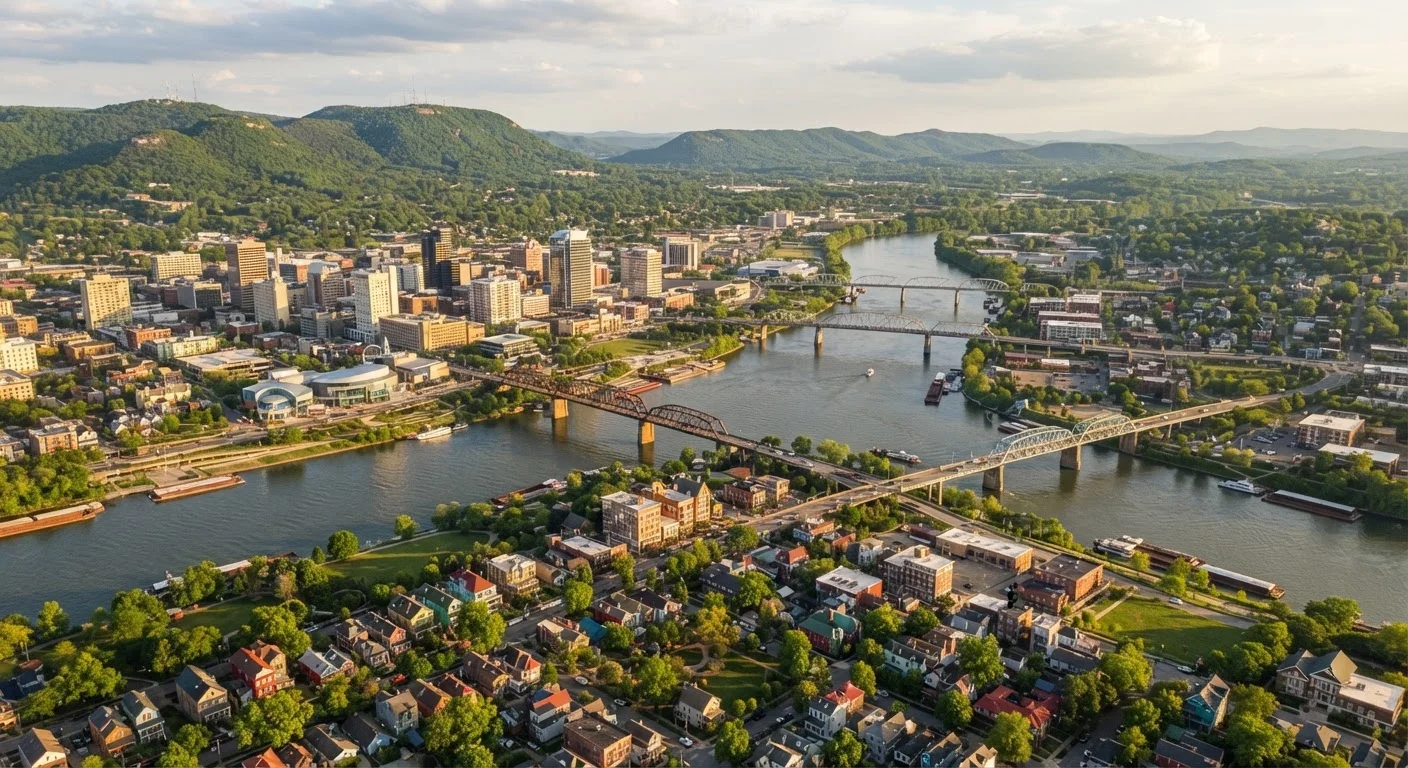
Chattanooga punches well above its weight for outdoor access. The Tennessee River runs directly through downtown, the Lookout Mountain area is accessible by a historic incline railway, and numerous hiking trails begin within a short drive of the city center. The Tennessee Aquarium on the waterfront is one of the more impressive attractions in the region and draws visitors from across the Southeast.
The city's revitalized Southside neighborhood has developed a legitimate food and brewery scene without pushing dining costs to metropolitan levels. Free electric shuttle buses operate throughout downtown, reducing the need for rideshares or rental cars once you've arrived. Hotel rates tend to be noticeably lower than in comparable outdoor-recreation gateway towns.
Chattanooga offers serious outdoor access and a revitalized food scene at costs well below other recreation-oriented destinations.
Albuquerque, New Mexico
Albuquerque is often overshadowed by Santa Fe in discussions of New Mexico travel, but it offers a more grounded and less expensive version of the same cultural richness. The Old Town plaza, the Petroglyph National Monument, and the Indian Pueblo Cultural Center all provide genuine historical depth at low or no cost.
The city sits at over 5,000 feet elevation, framed by the Sandia Mountains to the east. Balloon Fiesta aside - which drives prices up in early October - Albuquerque remains consistently affordable across most of the calendar year. Green and red chile cuisine, a regional tradition with deep roots, is available at local spots for well under what comparable specialty dining costs in larger cities.
Outside Balloon Fiesta season, Albuquerque offers remarkable cultural depth at some of the most accessible price points in the Southwest.
Spokane, Washington
Spokane is Eastern Washington's largest city and functions as a genuine regional hub for outdoor recreation. The Spokane River runs through Riverfront Park in the downtown core, and the city serves as a practical base for day trips into nearby Palouse wine country, the Channeled Scablands, and multiple lakes within a short drive.
Accommodation and restaurant costs in Spokane are meaningfully lower than in Seattle or Portland, making it an option worth considering for travelers who want Pacific Northwest scenery and cuisine without the corresponding expense. The city's downtown has seen steady investment in independent restaurants and cultural venues over the past decade.
Spokane gives travelers a Pacific Northwest base with outdoor access at substantially lower daily costs than Seattle or Portland.
Columbus, Ohio
Columbus is among the most underestimated cities in the Midwest. Its Short North Arts District offers an unusually concentrated mix of galleries, independent restaurants, and live music venues for a city of its size. The Columbus Museum of Art, the Franklin Park Conservatory, and the Scioto Audubon Metro Park all provide culturally or recreationally rich experiences at low or no cost.
The city's hotel market is competitive, particularly on weekends when Ohio State University events aren't in session, and the concentration of independent food businesses keeps dining costs from inflating the way they do in higher-profile Midwest destinations. Columbus also has a direct flight connection from most US hub airports, making it genuinely accessible without expensive routing.
Columbus's Short North district delivers a walkable arts-and-food scene that few cities of similar cost can match.
Making the Most of These Destinations
These cities reward travelers who do a little advance research. Most have free or low-cost public transit options, walkable downtown cores, and a mix of neighborhood restaurants where locals actually eat. That last point matters: finding where residents dine rather than defaulting to tourist-district spots is one of the most reliable ways to cut food costs without sacrificing quality.
If you're combining any of these cities with a road trip, it's worth knowing that several sit near underexplored public lands. Chattanooga and El Paso in particular are close to remarkable natural areas - and state parks and scenic byways near these cities can rival national park scenery at a fraction of the cost.
Finally, knowing where to spend and where to hold back is what separates a rewarding budget trip from a frustrating one. In each of these cities, the free and low-cost options are genuinely good - you won't be choosing them out of necessity alone.
Time Your Visit Around Local Calendars
Each of these cities has at least one annual event - a festival, university schedule, or regional draw - that pushes accommodation prices up temporarily. Checking local event calendars before booking can help you avoid those windows and find rates that reflect the city's normal, lower baseline. Shoulder periods often sit just a few weeks on either side of peak dates.