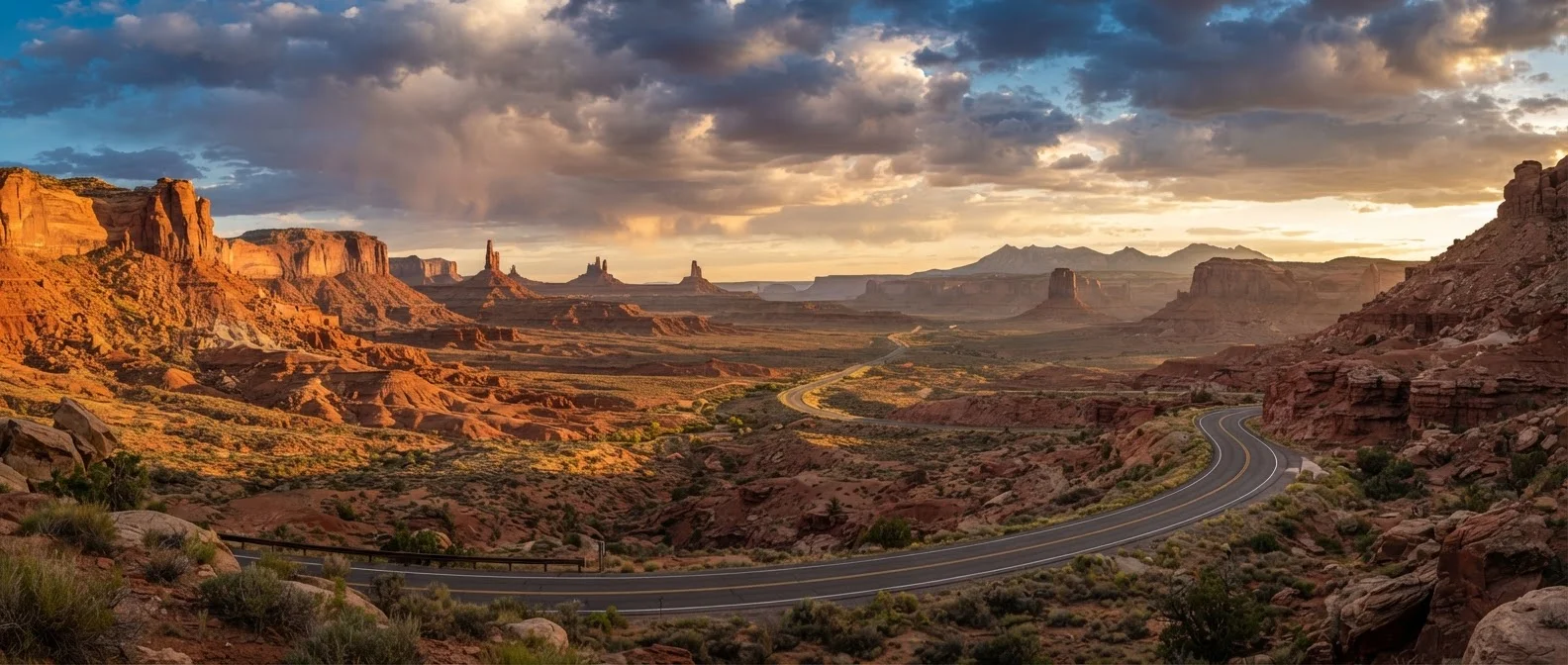
Why Rethink the National Park Circuit
The US national park system is genuinely spectacular - but it's no longer a secret. Entrance fees at marquee parks run up to $35 per vehicle, reservation systems now gate access to some trailheads weeks in advance, and peak-season crowds can turn a wilderness morning into a parking-lot experience. Meanwhile, hundreds of millions of acres of Bureau of Land Management (BLM) land, National Forests, state parks, and designated scenic byways sit nearby - often offering landscapes just as dramatic, with far fewer visitors and far lower costs.
This isn't about settling for less. It's about understanding that the federal public lands system is vastly larger than its most advertised corners. The routes below connect genuine geological wonders, old-growth forests, and canyon country that would anchor any travel highlight reel. For broader strategies on spending less without sacrificing quality, see our guide to limited-budget travel principles.
Owens Valley & the Eastern Sierra, California
The western entrance to Death Valley and the eastern face of the Sierra Nevada frame Owens Valley - one of the most visually arresting corridors in North America. US-395 runs the length of it for free, with pull-offs revealing Alabama Hills (BLM land, no fee), ancient bristlecone pine forests in Inyo National Forest (no entry fee, though some campgrounds charge), and views of 14,000-foot peaks that rival anything inside a national park boundary. The Alabama Hills in particular have served as a filming backdrop for over a century of Westerns precisely because the geology is that striking.
Alabama Hills on BLM land delivers cinematic Sierra scenery with zero entry fees.
Enchanted Circle Scenic Byway, New Mexico
This 84-mile loop around Wheeler Peak - New Mexico's highest point - passes through Carson National Forest and connects the towns of Taos, Eagle Nest, and Red River. There's no admission gate anywhere on the route. The byway delivers high-alpine meadows, aspen groves that turn gold in fall, and views into the Rio Grande del Norte National Monument, which itself has no entry fee. State park day-use fees in the area typically run under $10 per vehicle, and dispersed camping in Carson National Forest is free within posted guidelines.
The full 84-mile loop around New Mexico's highest peak costs nothing to drive.
Breaks Interstate Park, Virginia/Kentucky
Often called the "Grand Canyon of the South," Breaks Interstate Park straddles the Virginia-Kentucky border and features a 1,000-foot-deep gorge carved by the Russell Fork River. Day-use fees are a fraction of federal park rates - Virginia residents pay less, and even out-of-state visitors pay well under $10 per vehicle as of the park's published schedule. The overlooks, white-water rapids, and ridge trails are genuinely comparable in drama to more famous Appalachian destinations. Fall foliage here draws far smaller crowds than Shenandoah, which charges a $35 vehicle entrance fee.
A 1,000-foot gorge comparable to national park scenery - at a state-park price point.
Modoc Plateau & Lava Beds, Northern California
The far northeastern corner of California - Modoc and Siskiyou counties - is among the least-visited regions in the lower 48. Modoc National Forest is free to enter and traverse. Lava Beds National Monument (a separate unit that does charge an entrance fee) sits nearby, but the surrounding BLM high desert is accessible without any fee and offers dramatic volcanic terrain, seasonal wetlands at Tule Lake, and genuinely dark skies for stargazing. This is a destination where driving a full day of scenic road costs nothing beyond fuel.
Northern California's volcanic high desert offers dark skies and dramatic terrain for free.
Flint Hills National Scenic Byway, Kansas
The Flint Hills represent one of the last large intact tallgrass prairie ecosystems in North America - a landscape type that once covered 170 million acres and now exists in fragments. The 47-mile byway through Emporia and Council Grove is free to drive and cuts through privately held and publicly accessible tallgrass that turns amber and rust through fall. Tallgrass Prairie National Preserve is a no-fee site (managed jointly by the National Park Service and a private conservancy). For travelers interested in affordable US cities as overnight stops, Emporia and Manhattan, Kansas offer genuinely low lodging costs.
One of North America's rarest ecosystems is accessible via a free-to-drive scenic byway.
Owyhee Canyonlands, Oregon/Idaho
The Owyhee River canyon system in southeastern Oregon and southwestern Idaho contains slot canyons, hot springs, and rim-top vistas that would be swamped with visitors if they carried a national park designation. Most of the land is administered by BLM and is free to access. Roads are largely unpaved and require a high-clearance vehicle, but the payoff is genuine solitude in a landscape that looks like it belongs in Utah. Leslie Gulch, accessed from Vale, Oregon, is a particular standout - a narrow canyon of sculpted rhyolite with no entry fee and no crowds. For tips on keeping travel planning costs down, the hub has specific guidance on flexible routing strategies.
Owyhee's slot canyons and hot springs rival Utah's canyon country - without the entrance gates.
Planning Your Route Without the Sticker Shock
The road trips above share a common thread: they leverage the patchwork of land management agencies - BLM, US Forest Service, state park systems, and tribal-run recreation areas - that surround or parallel every major national park. Before you finalize a route, check each land management agency's official website for current road conditions, dispersed camping rules, and any temporary closures. Conditions and regulations change, and what's accessible one season may require a permit the next.
Use the 'America the Beautiful' Pass Strategically
If your route does include one or two fee-charging federal sites, the Interagency Annual Pass (commonly called the 'America the Beautiful' pass) covers entrance fees at national parks, monuments, and other federal lands for a single annual fee. It pays for itself after just one or two visits to fee-charging sites. Check the official USGS store or any federal fee area for current pricing and coverage details.
Be aware that even "free" destinations carry real costs once you factor in fuel, food, and overnight lodging - our article on hidden road trip costs breaks down where budgets quietly erode. Pairing smart destination choices with disciplined on-road spending is what actually moves the needle. For a full cost-management framework, the on-the-road savings guide is worth reading before you leave.
This article provides general travel information for educational purposes. Fees, access rules, road conditions, and permit requirements change regularly - always verify details with the relevant land management agency or official government source before travelling.