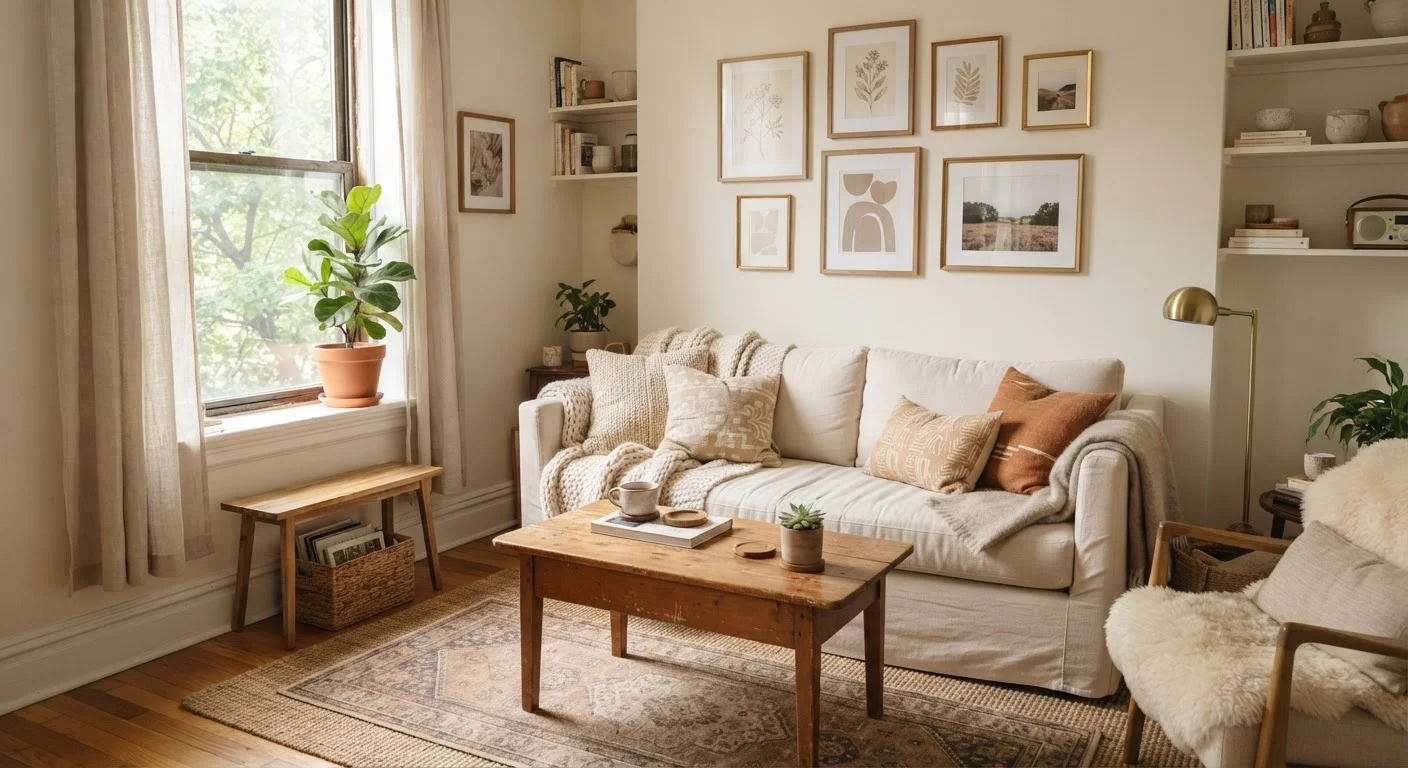
Start With a Plan, Not a Shopping Cart
The single most expensive decorating mistake first-time renters make is shopping before they have a plan. Walking into any home goods store without a list almost guarantees you'll come home with items that don't coordinate or don't fit your space.
Before spending anything, take these three steps:
- Measure every room. Note ceiling height, window placement, and any fixed elements like radiators or built-in shelving. A sofa that looks fine in a showroom may block your only natural light source at home.
- Sketch a rough floor plan. It doesn't need to be to scale - a simple pencil drawing helps you visualise furniture flow and avoids buying pieces that won't fit.
- List what you actually need vs. what you want. Separate functional necessities (a place to sleep, somewhere to sit, adequate lighting) from decorative wants. Fund the necessities first.
For a room-by-room audit of what to tackle in what order, the Budget Decorator's Room-by-Room Checklist is a practical starting point before you commit any money. If you're a renter, also check our guide on how your tenancy status should shape your décor choices - what you're allowed to change varies significantly by lease.
Colour palette
A limited set of coordinating colours chosen in advance to give a room a consistent, intentional look across all furnishings and décor.
Reversible changes
Decorating modifications that can be undone completely without damaging walls, floors, or fixtures - important for renters protecting their security deposit.
Flat-pack furniture
Ready-to-assemble furniture sold disassembled in a flat box, typically at lower cost than pre-built alternatives, requiring home assembly.
Gallery wall
A curated grouping of framed art, photos, or other flat objects arranged together on a wall to create a cohesive visual display.
Colour temperature
A measure of the warmth or coolness of a light source, expressed in Kelvin (K). Lower numbers (around 2700K) produce warm, yellowish light; higher numbers produce cooler, bluer light.
Choosing a Colour Palette on a Budget
A cohesive colour palette is the cheapest tool you have. It makes mismatched furniture look intentional and makes a small space feel more considered. The rule of thumb used by many design educators: choose one dominant neutral, one secondary tone, and one accent colour - then stick to it.
For renters who can't paint walls, work with what's already there. If your walls are white or off-white, almost any secondary tone works. If you're stuck with beige, warm terracotta or sage green accents tend to complement rather than fight it.
Practical ways to build a palette without spending much:
- Collect free paint chip cards from any hardware store to experiment with combinations before committing.
- Use a large piece of fabric - a thrifted throw or a remnant from a fabric store - as your palette anchor, then match other items to it.
- Limit patterned items to one or two per room. When everything has a pattern, nothing stands out.
Once you've settled on a direction, the approaches that consistently work across different spaces covers proven strategies for applying a palette through affordable sourcing.
Furniture: Secondhand, Flat-Pack, and What to Prioritise
For most first apartments, furniture eats the largest share of a decorating budget. You have two main options beyond buying new at full price: secondhand/thrifted pieces and flat-pack assembly furniture. Both have genuine advantages and real drawbacks.
| Factor | Secondhand | Flat-Pack |
|---|---|---|
| Upfront cost | Often lower, especially for solid wood | Predictable; range is wide |
| Durability | Can be excellent for older solid pieces | Varies; particleboard wears faster |
| Time investment | High - sourcing takes effort | Low - widely available |
| Style flexibility | Unique finds; harder to match sets | Easy to coordinate within a range |
Our detailed breakdown of thrift store finds vs. flat-pack furniture runs the numbers on both approaches so you can decide what fits your schedule and priorities.
What to prioritise buying new vs. secondhand: Mattresses and upholstered seating are generally safer purchased new or from a verified source due to hygiene concerns. Hard furniture - shelving, tables, bed frames, dressers - is where secondhand typically offers the best value.
Buy Big Pieces Last When Possible
If your move-in date allows, live in the space for two to four weeks before buying large furniture like sofas or bookshelves. Daily life in the apartment will reveal traffic patterns, light conditions, and storage gaps that are hard to anticipate on paper. This reduces the chance of buying something that doesn't work and can't easily be returned.
Affordable Art, Textiles, and Finishing Touches
This is where a first apartment transforms from functional to actually enjoyable to live in - and fortunately, it's the category where small spending goes furthest.
Wall Art Without the Gallery Price Tag
You don't need to buy art. Options that cost little to nothing include:
- Printing public-domain images (many major museum collections make high-resolution files freely available online) and framing them in inexpensive frames
- Framing pages from discarded or thrifted coffee-table books
- Creating a gallery wall of postcards, photographs, or fabric swatches using removable adhesive strips
Textiles: The Fastest Way to Add Warmth
A rug, throw blanket, and a couple of cushion covers do more to make a space feel cozy than almost anything else - and they're among the most affordable decorating purchases. Focus on texture contrast: pair a chunky knit throw with a smooth linen cushion, or a jute rug with a velvet accent pillow.
Plants and Lighting
A single healthy plant and a warm-toned lamp can shift the mood of a room significantly. Low-maintenance houseplants like pothos or snake plants are widely available and generally affordable. Swap out harsh overhead bulbs for warm-white alternatives where possible - the colour temperature (look for around 2700K on the packaging) makes a noticeable difference to how inviting a space feels.
For a comprehensive walkthrough that covers everything from initial layout to final styling, see our end-to-end budget decorating guide. And if managing the overall cost feels overwhelming, the Budgeting Basics hub covers simple frameworks for allocating spending across competing priorities.