Setting a Realistic Decorating Budget
Before you move a single piece of furniture, establish what you can actually spend. Budget decorating fails most often not from bad taste, but from absent planning. Start by reviewing your household finances - see our guide to the full budgeting lifecycle for a structured approach to understanding what's left after essential expenses.
A practical starting framework: divide your decorating allowance into three buckets - furniture and large items (50-60%), decor and accessories (25-30%), and a contingency reserve (10-15%) for unexpected needs like extra paint or hardware. Treat these as proportional guides, not rigid rules.
If your budget is tight, consider a phased approach: finish one room before starting another. This prevents the common trap of having five half-decorated rooms and no money left for any of them. The Saving & Frugal Tips hub offers practical ideas for building a dedicated savings pot over time.
Start with a One-Room Focus
Resist the urge to tackle the whole home at once. Completing one room gives you a confidence boost, a clearer sense of your personal style, and a realistic picture of what things actually cost. Apply those lessons before moving on.
Planning Your Space Before You Spend
Measure every room you intend to decorate and sketch a basic floor plan - even a hand-drawn grid on paper works. Note window placements, door swings, and any fixed architectural features. This step alone prevents buying a sofa that won't fit through the door or a rug that disappears under oversized furniture.
Next, define a visual direction. Choose a palette of two to three base colors and one or two accent tones. You don't need design software - paint chips from any hardware store are free and let you test combinations in natural light before committing. For a deeper look at how color and visual balance interact, see the principles behind affordable interior styling.
Also consider your tenancy status before making any permanent changes. Renters face restrictions on painting, drilling, and built-in installations that owners don't. The article on how tenancy status shapes décor choices breaks down what's typically permitted and what could cost you a deposit.
~70%
Shoppers who regret impulse home purchases
Consumer research consistently finds a majority of shoppers report at least one regretted impulse home goods purchase when no prior plan was in place.
$0
Cost of a hand-drawn floor plan
A basic room sketch on paper - showing dimensions, windows, and door swings - costs nothing and is widely cited by interior educators as the single most impactful planning step.
Sourcing Affordable Materials and Pieces
Where you shop matters as much as what you buy. Thrift stores, estate sales, Facebook Marketplace, and Craigslist consistently yield quality furniture at a fraction of retail cost. The trade-off is time: good finds require regular browsing, not a single afternoon trip. Build sourcing into a weekly habit rather than a one-time hunt.
For new purchases, prioritize investment pieces - items that anchor a room and get daily use, such as a sofa, bed frame, or dining table. These warrant spending more relative to accent pieces like throw pillows or frames, which you can source inexpensively or make yourself.
DIY refinishing is another major lever. A coat of chalk paint can transform a scratched dresser into a statement piece. Reupholstering a chair seat requires only a staple gun and fabric - often under $20 in materials. If you're new to the approach, the first apartment on a shoestring guide covers beginner-friendly sourcing strategies in detail.
When browsing thrift stores, bring a small measuring tape and your room dimensions written on your phone. Pieces sell fast, and hesitating to measure on the spot often means losing the find.
Decision paralysis and poor measurement are the two most common reasons budget shoppers leave good pieces behind or buy the wrong ones.
Paint a 12-inch square of your chosen wall color on the actual wall and observe it at different times of day before committing to a full gallon. Undertones shift dramatically between morning and evening light.
Paint color is one of the highest-impact, lowest-cost changes in decorating - but it's also one of the most commonly misjudged due to in-store chip lighting.
Styling Your Space Room by Room
Once furniture is placed, styling is where most budgets either stretch well or collapse. The core rule: restrain yourself. A room with five well-chosen pieces almost always looks more intentional than one with thirty mismatched items purchased on impulse. Grouping objects in odd numbers (three, five) and varying heights creates visual rhythm without requiring expensive art.
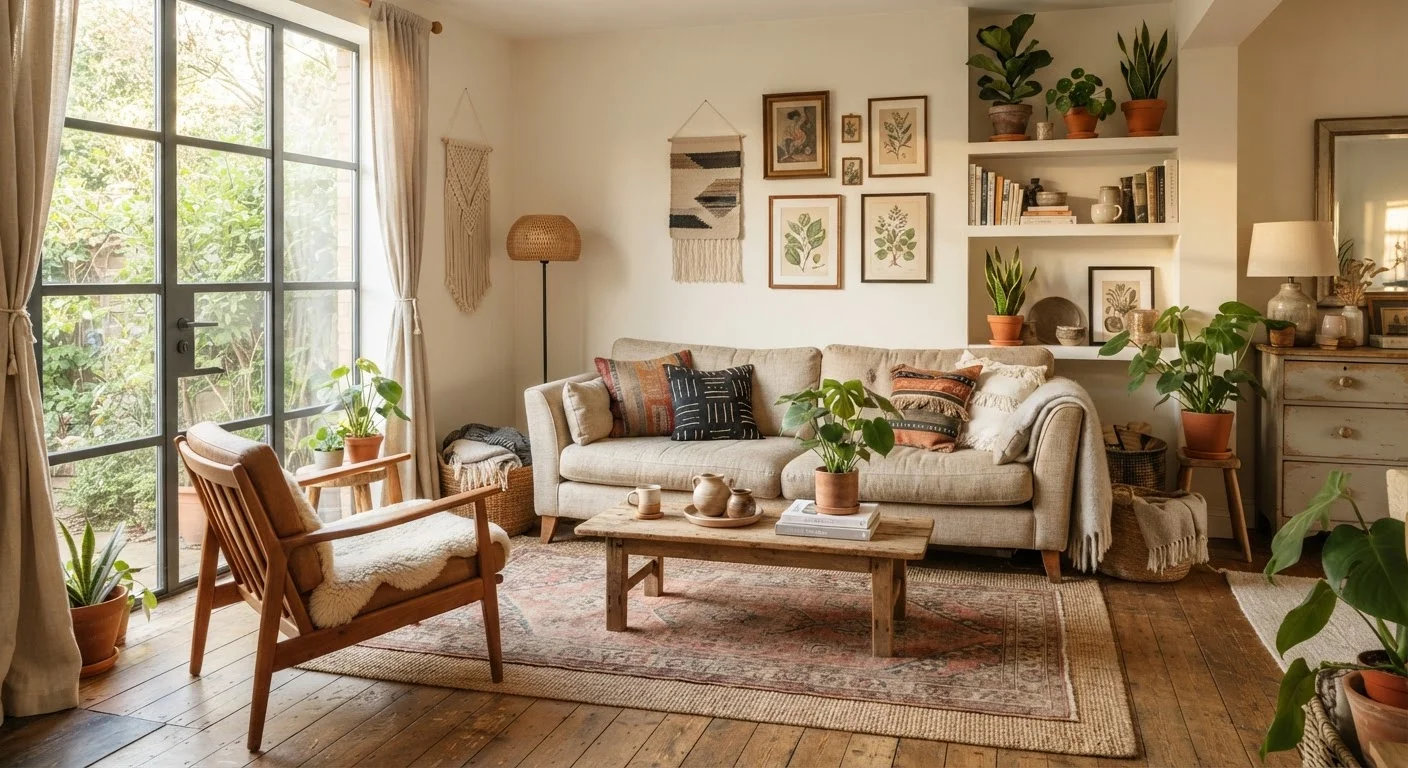
Textiles - rugs, curtains, throw blankets, and cushion covers - deliver the highest perceived-value-per-dollar of any decorating category. A neutral-walled room with layered textiles reads as warm and finished. Swap covers seasonally to refresh the look without replacing furniture.
Lighting is the most underused budget tool. Swapping a bare bulb for a warm-toned lamp ($15-$30 at most discount retailers) or adding peel-and-stick LED strips under shelving dramatically changes a room's atmosphere at minimal cost. For repeatable strategies that work across room types, see our article on styling approaches that consistently work across different spaces. And be careful not to fall for myths that make rooms look perpetually unfinished - the article on affordable styling myths addresses the most common ones directly.
Maintaining and Updating on a Budget
Decorating doesn't end at styling. Maintenance extends the lifespan of every piece you own, which is critical when each item was chosen carefully on a limited budget. Establish simple routines: rotate cushion covers, wipe down painted furniture with a damp cloth rather than abrasive cleaners, and re-tighten furniture joints before they loosen into wobbly hazards.
For seasonal updates, work within what you already own. Rotate art between rooms, swap summer linens for heavier winter textiles, and move plants to take advantage of shifting light. These free or near-free adjustments keep a space feeling current without new spending.
When something does need replacing, prioritize based on daily visibility and use. A worn sofa affects the feel of an entire living room; a scratched nightstand does not. Budget your replacements accordingly, and keep the Budgeting Basics hub bookmarked as your financial foundation evolves alongside your home.
This article provides general home decorating information for educational purposes only. Cost estimates are illustrative and will vary by location, materials, and market conditions. Verify any local permit or rental agreement requirements with the relevant authorities or your landlord before making changes to your home.