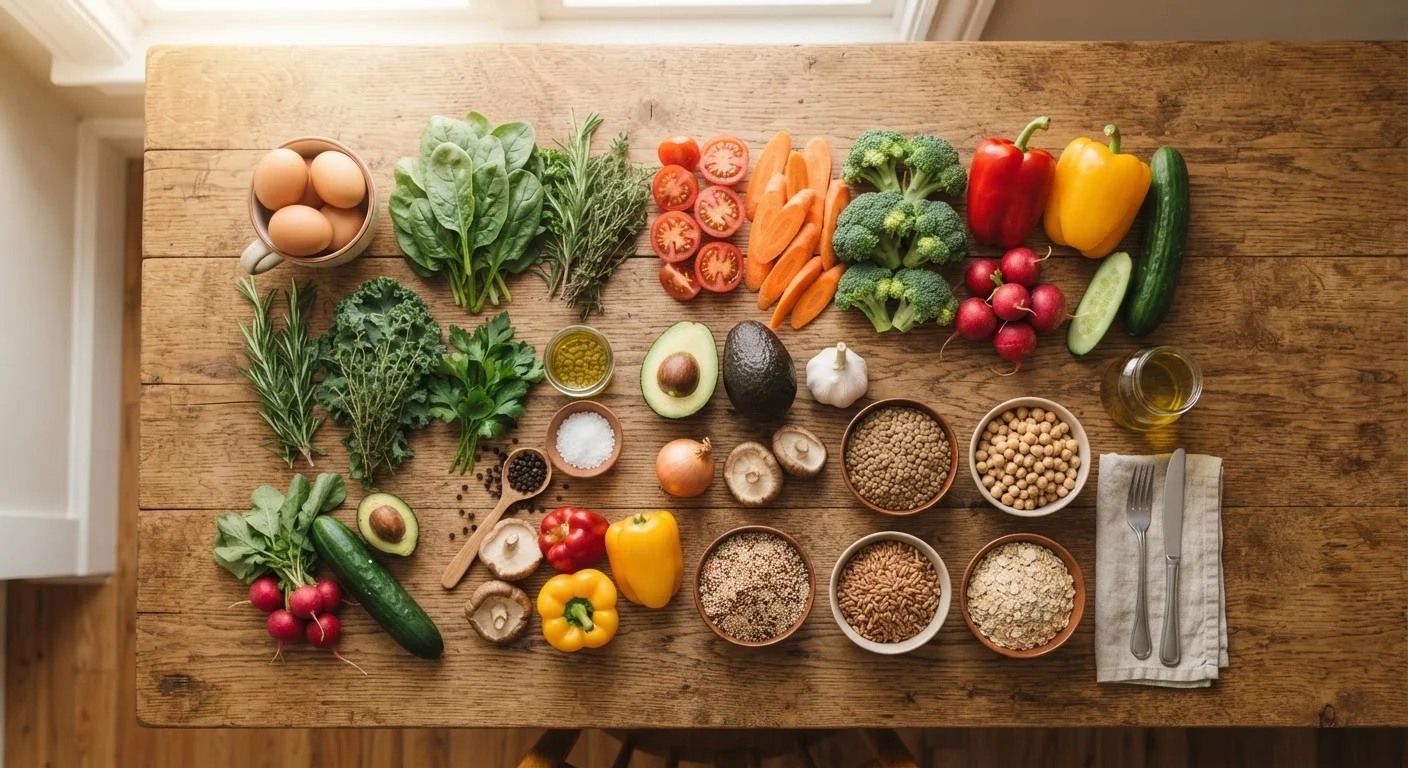
Why Budget Eating Gets a Bad Reputation
The assumption that healthy food is inherently expensive is widespread - and largely wrong. It persists partly because nutrition messaging tends to spotlight premium products, trendy superfoods, and specialty diets that simply aren't realistic for most household budgets. What gets less attention is that some of the most nutritionally complete foods available are also among the least expensive.
Budget eating earns a bad reputation when it's equated with deprivation: the idea that less spending means less nourishment. In practice, the challenge isn't money alone - it's knowledge. Without a basic understanding of which foods offer genuine nutritional value, it's easy to spend what little you have on convenient but nutrient-poor options.
This guide focuses on foundational principles: which affordable foods are worth prioritizing, how to plan meals that stretch a grocery budget, and what shopping habits actually make a difference. For a deeper look at the vocabulary that comes up in nutrition reading, see this plain-language nutrition glossary.
Whole foods
Foods that are minimally processed and close to their natural state - such as vegetables, legumes, eggs, and whole grains. They tend to retain more nutrients than heavily processed alternatives.
Macronutrients
The three main categories of nutrients your body needs in larger amounts: protein, carbohydrates, and fat. Each plays a distinct role in energy, tissue repair, and overall function.
Complete protein
A protein source that contains all nine essential amino acids your body cannot produce on its own. Eggs, fish, and dairy are examples; most plant proteins are incomplete but can be combined effectively.
Complex carbohydrates
Carbohydrates made of longer sugar chains - found in oats, brown rice, and legumes - that digest more slowly and provide more sustained energy than refined carbs like white bread or sugary snacks.
Omega-3 fatty acids
A type of unsaturated fat found in fatty fish, walnuts, and flaxseed that supports heart and brain health. Many people don't consume enough through their regular diet.
Food waste
Food that is purchased but not eaten - a major driver of unnecessary grocery spending. Meal planning and buying only what you need are the most effective ways to reduce it.
The Affordable Whole Foods Worth Knowing
A handful of food categories consistently deliver strong nutritional value at low cost. Understanding these is the foundation of budget-conscious healthy eating.
- Legumes - lentils, chickpeas, kidney beans, and black beans are high in protein, fiber, and micronutrients. Dried versions are the least expensive; canned are nearly as good and faster to prepare.
- Eggs - a complete protein source containing all essential amino acids, plus vitamins B12 and D. One of the most versatile and consistently affordable animal proteins available.
- Whole grains - oats, brown rice, and whole-grain pasta provide complex carbohydrates, fiber, and B vitamins at a fraction of the cost of processed grain products.
- Frozen vegetables - nutritionally comparable to fresh in most cases, frozen vegetables are often cheaper and last much longer, making food waste far less likely.
- Canned fish - tuna, sardines, and salmon in cans are rich in protein and omega-3 fatty acids, a nutrient many young adults don't consume enough of.
For a detailed look at how protein options compare by cost and nutritional content, see protein sources ranked by affordability.
Simple Meal Planning That Actually Saves Money
Meal planning is one of the most consistently effective tools for reducing grocery spending without reducing nutrition. It works by eliminating unplanned purchases and reducing food waste - two of the biggest budget leaks for people who shop without a clear structure.
A practical starting approach: plan three to four meals for the week before you shop. Write down what you need for each meal and build your list from that - not the other way around. Look for overlapping ingredients across meals. If one recipe uses half a can of chickpeas, plan another that uses the rest.
You don't need elaborate meal prep or strict calorie tracking to benefit from planning. Even a rough weekly outline dramatically reduces the chance that food goes unused or that you default to expensive convenience options on a tired weeknight.
For a more structured approach to weekly planning, this student budget grocery planning guide offers a practical checklist framework.
Smart Shopping Habits for Tight Budgets
Eat Before You Shop
Shopping on an empty stomach is reliably linked to buying more - and less healthily. Before your next grocery run, have a small snack or meal. It's one of the simplest ways to stay on budget and make more deliberate food choices.
A few consistent habits can meaningfully reduce what you spend at the grocery store over time - without requiring coupons, apps, or significant effort.
- Shop with a list and stick to it. Unplanned purchases account for a significant share of grocery overspending. A written list reduces impulse buying and keeps you focused on what meals actually require.
- Consider store-brand staples. For items like canned beans, oats, rice, and frozen vegetables, store-brand options are often nutritionally identical to name-brand versions at a noticeably lower price.
- Don't shop hungry. Research suggests that shopping while hungry increases the likelihood of buying higher-calorie, impulse-driven foods. Eating beforehand is a simple way to make more deliberate decisions.
- Buy in bulk where it makes sense. Dried legumes, oats, and whole grains store well and are significantly cheaper per serving when purchased in larger quantities - provided you'll actually use them.
For more evidence-backed habits that reduce grocery spending, this frugal grocery habits guide is a strong companion read. Connecting your food budget to your overall spending plan is also worth doing - budgeting basics provides a solid starting framework.
Building a Balanced Plate Without Overcomplicating It
Nutrition guidance can feel overwhelming, but the underlying structure of a balanced meal is straightforward. Most evidence-based dietary frameworks recommend a plate that includes a source of protein, a complex carbohydrate, and a variety of vegetables. Healthy fats - from sources like eggs, canned fish, or a small amount of oil - round out the picture.
You don't need to follow a strict diet or count every gram to eat well. What matters more is consistency across meals over time: regularly including foods from different groups, minimizing reliance on heavily processed options, and not skipping meals when hungry. For a more detailed breakdown of what a balanced plate looks like in practice, see building a balanced plate without a strict diet.
Budget-friendly meals that follow this structure might look like: lentil soup with whole-grain bread; eggs with oats and frozen berries; brown rice with canned fish and frozen vegetables. None of these require significant cooking skill or expensive ingredients.
The connection between eating well and managing your finances more broadly is real - small, consistent decisions in both areas compound over time. For ideas on how frugal habits extend beyond the grocery store, saving and frugal tips offers practical guidance across everyday spending.
This article is for general informational and educational purposes only and does not constitute medical or dietary advice. For guidance specific to your health needs, please consult a registered dietitian or qualified healthcare provider.