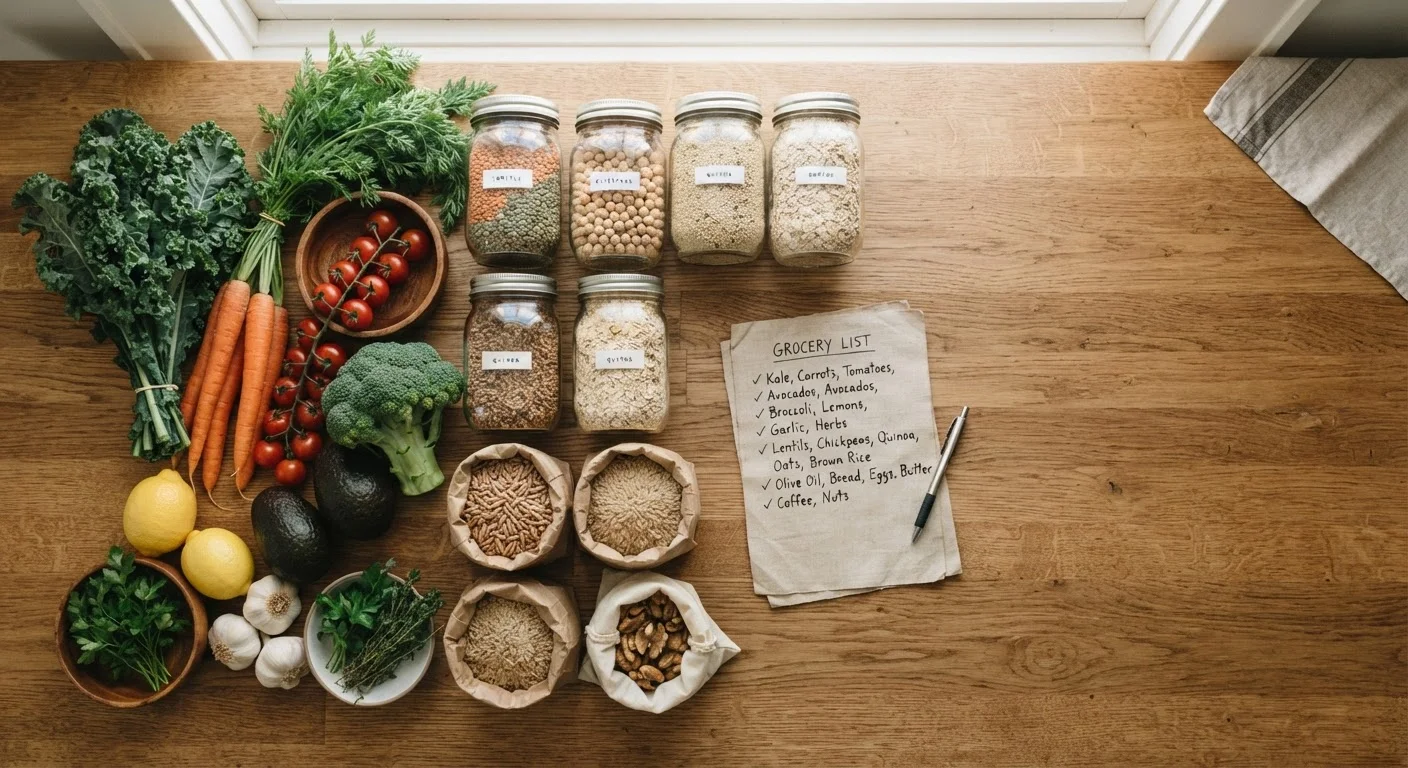
Why Grocery Habits Matter More Than One-Off Deals
For most young adults, groceries rank among the top three monthly expenses - and unlike rent, this category actually bends. The difference between a household spending $400 versus $600 a month on food often isn't income or luck; it's a handful of consistent habits applied week after week.
This isn't about extreme couponing or eating the same meal every day. It's about making deliberate decisions that add up quietly. The budgeting basics principle applies here directly: knowing where money goes is the first step to steering it. For a deeper look at how frugality works in practice, see our guide on separating genuine savings from false economy.
The Practices That Actually Move the Needle
The following habits are grounded in how real household budgets behave - not hypothetical scenarios. Start with two or three; consistency matters more than doing everything at once.
Write a weekly meal plan before you write a shopping list
Shopping without a plan leads to redundant purchases, forgotten ingredients, and food that spoils unused. A meal plan lets you build a precise list, which reduces impulse buying and keeps the food waste - a significant hidden cost - close to zero.
Buy shelf-stable staples in larger quantities when your budget allows
Dried beans, lentils, oats, rice, and canned tomatoes have long shelf lives and a lower per-serving cost when purchased in larger pack sizes. This doesn't require a warehouse club membership - most grocery stores stock bulk bins or larger bags at a lower unit price.
Choose store-brand products for staples and ingredients
Store-brand (also called private-label) products are manufactured to meet the same food-safety standards as name-brand equivalents. For staples like flour, canned vegetables, pasta, and spices, the quality difference is negligible while the price difference is often 20-30%.
Use frozen vegetables as a primary produce category, not a fallback
Frozen vegetables are harvested and flash-frozen at peak ripeness, preserving most nutrients. They're also cheaper than fresh equivalents, have no spoilage risk, and reduce the guilt of throwing out wilted produce. Treating them as the default rather than the backup makes both financial and nutritional sense.
Track your grocery spending weekly, even roughly
Budget creep in grocery spending is gradual and easy to miss. A quick weekly tally - even just photographing receipts - builds awareness of where dollars are going and makes it easier to course-correct before overspending compounds.
Rotate plant-based proteins into at least half your weekly meals
Meat - particularly beef and seafood - is one of the highest per-meal costs in a grocery cart. Replacing meat with eggs, lentils, beans, tofu, or canned fish in several meals per week can cut protein costs substantially while maintaining adequate nutrition for most healthy adults.
Quick Wins You Can Apply This Week
You don't need to overhaul everything at once. These immediate actions create tangible savings within your next grocery cycle.
Making It Stick: Nutrition Doesn't Have to Suffer
A common worry about cutting grocery costs is that healthy eating becomes harder. In practice, the highest-nutrition-per-dollar foods - legumes, frozen vegetables, eggs, oats, canned fish - are also among the most affordable. Research consistently shows frozen vegetables retain most of their nutrients through the freezing process; our article on frozen vs. fresh produce breaks down exactly what changes and what doesn't.
For a structured approach to weekly shopping that balances nutrition and cost, the weekly grocery planning guide offers a practical checklist. Students navigating campus life may also find the university food budget guide especially relevant. And if you're looking to build broader money-smart routines, everyday frugal habits for your twenties offers a natural next step.
This article is for general informational and educational purposes only and does not constitute financial or nutritional advice. Consult a qualified professional for guidance specific to your personal circumstances.