Why Food Spending Is Worth Taking Seriously
For most students, food is one of the largest discretionary expenses after rent - and one of the few areas where smart habits genuinely move the needle. Unlike fixed costs, your grocery bill responds directly to the choices you make each week. The goal isn't to eat as cheaply as possible; it's to eat well without spending money you don't have.
If you're still figuring out how money flows through a typical student month, the student budgeting guide is a useful starting point before diving into food-specific strategies. And for a broader look at healthy eating on a tight budget, our nutrition basics article covers the foundational principles in plain language.
Build a Weekly Meal Plan Before You Shop
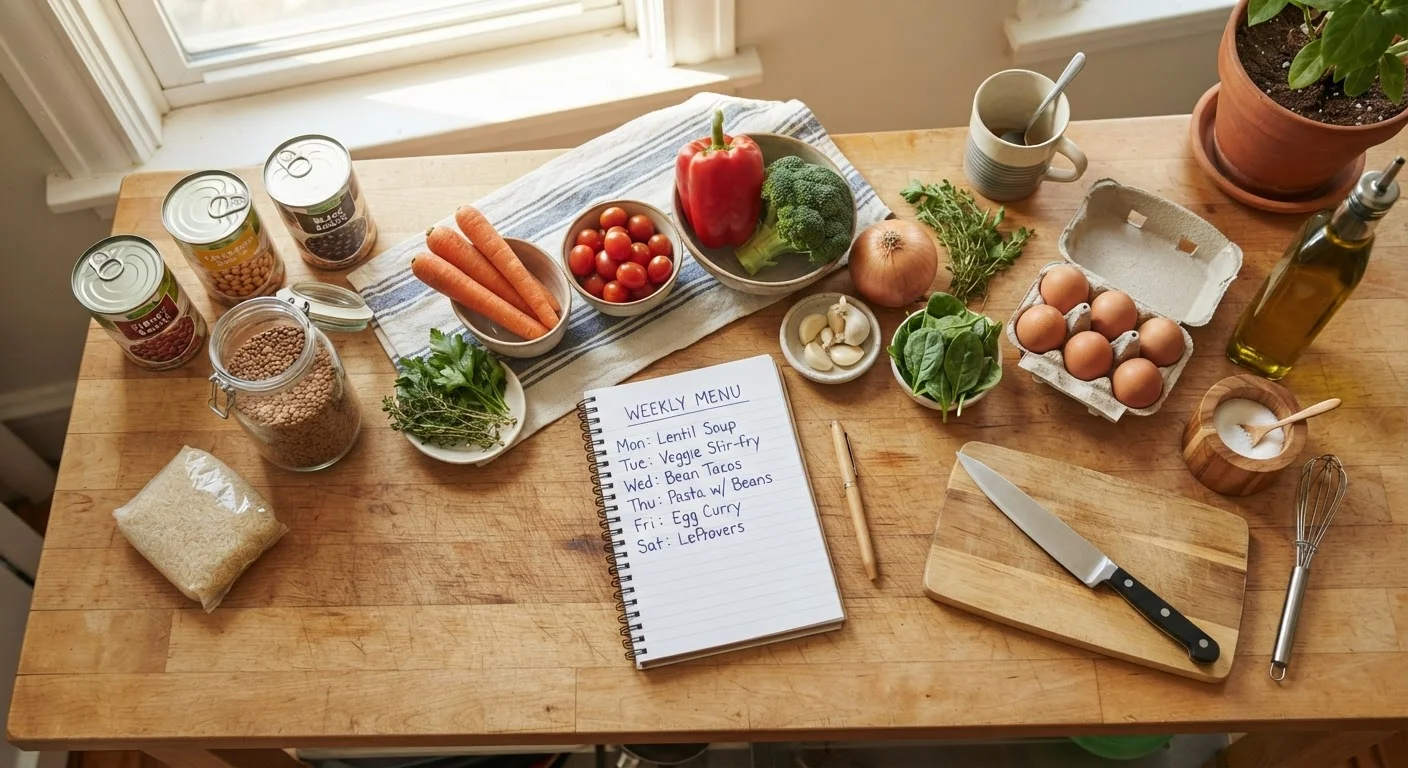
Walking into a supermarket without a plan is one of the fastest ways to overspend. A rough weekly meal plan - even a simple list of dinners - tells you exactly what ingredients to buy, eliminates duplicate purchases, and prevents the fridge drift that turns fresh produce into compost.
Start by planning five or six dinners that share overlapping ingredients. If you're roasting a tray of sweet potatoes on Monday, plan a sweet potato and black bean wrap for Wednesday. That kind of ingredient overlap cuts waste and stretches your dollars naturally. For a practical checklist approach, see our guide on weekly grocery planning for nutritional balance.
Choose Affordable Protein Sources That Actually Nourish You
Protein is often the most expensive part of a meal - but it doesn't have to be. Lentils, canned chickpeas, canned tuna, eggs, and frozen edamame are among the most affordable and nutritionally dense options available in any mainstream US grocery store. These staples provide protein, fiber, and key micronutrients at a fraction of the cost of fresh meat.
A bag of dried red lentils, for example, can yield multiple servings of dal or soup for under two dollars. Eggs remain one of the most versatile and economical protein sources per gram. For a more detailed breakdown, protein sources ranked by affordability and nutritional value offers clear comparisons worth bookmarking.
Batch Cook to Beat Busy-Night Temptation
The main reason students reach for delivery apps isn't laziness - it's exhaustion after a long day with nothing ready to eat. Batch cooking removes that friction. Spend ninety minutes on a Sunday afternoon making a large pot of soup, a grain salad, or a bean-based curry, and you'll have lunches and dinners covered for several days.
Keeping a well-stocked freezer also helps. Cooked rice, portioned soups, and homemade burritos all freeze well and reheat in minutes. Compare this approach against the real cost of eating out regularly - our article on cooking at home vs. eating out runs the numbers honestly, accounting for time and convenience trade-offs.
Shop Smarter: Unit Prices, Store Brands, and Timing
Supermarket shelf design encourages shoppers to grab whatever is at eye level or prominently displayed. Checking the unit price - the cost per ounce or per pound - rather than the package price is a simple habit that consistently reveals better value. Store-brand (own-label) versions of staples like oats, canned tomatoes, pasta, and frozen vegetables are typically identical in nutritional value to name brands and noticeably cheaper.
Shopping later in the day can also yield markdowns on bread, deli items, and prepared foods approaching their sell-by dates - items that are perfectly safe and can go directly into that evening's meal. For broader habits that reinforce this approach, see grocery spending habits that make a real difference. And if you're building frugal instincts beyond food, everyday frugal habits worth building in your twenties is worth a read.
This article provides general information about food budgeting and nutrition for educational purposes only. It is not a substitute for personalized dietary or financial advice. Please consult a qualified professional for guidance tailored to your individual circumstances.