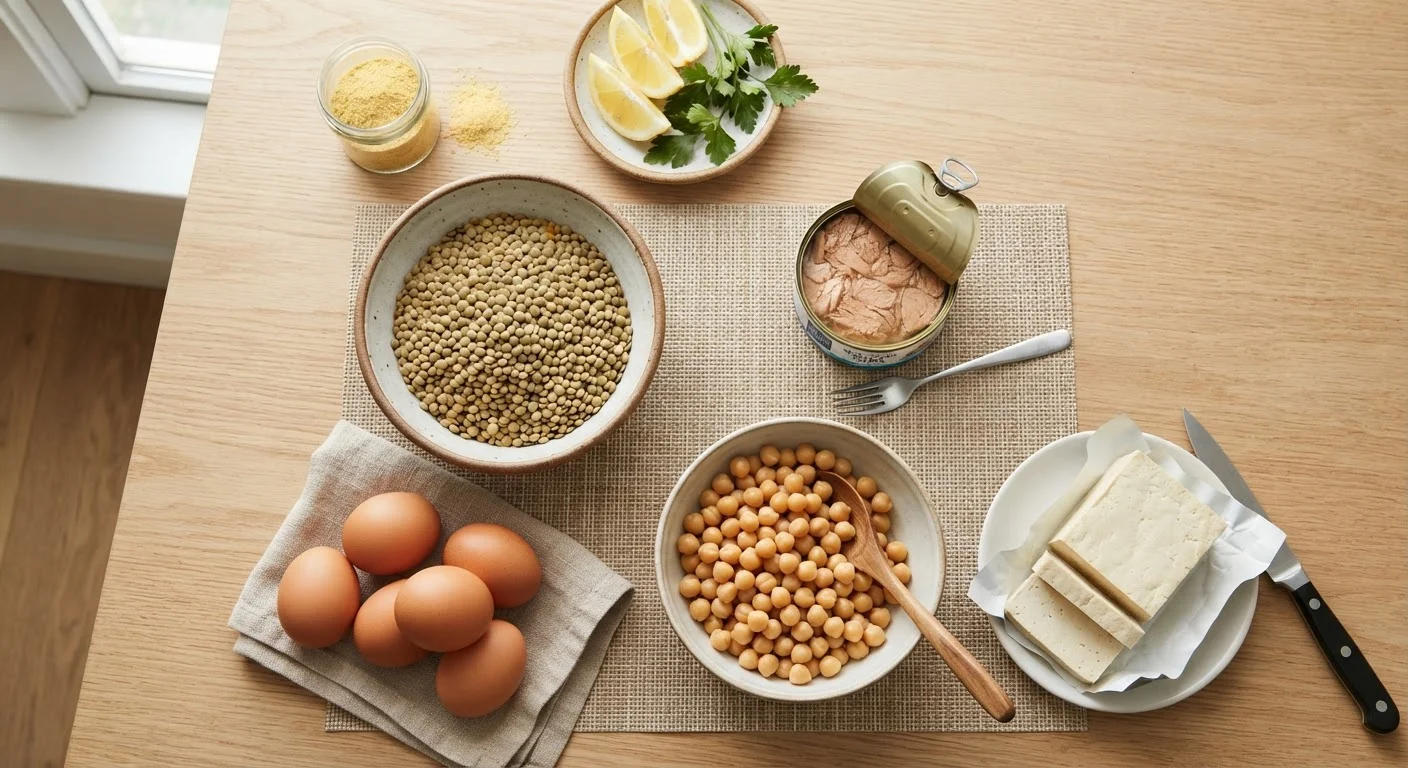
Why Protein Affordability Matters
Protein is essential for muscle repair, immune function, enzyme production, and nearly every structural process in the body. Yet many young adults assume that eating enough protein requires expensive meat or specialty supplements. The reality is more practical: several everyday foods deliver high-quality protein at a fraction of the cost of premium cuts or powders.
This reference breaks down common protein sources by two criteria - cost per gram of protein and overall nutritional value (including micronutrients, fiber, and bioavailability). Use it as a quick lookup when planning meals or building a grocery list. For broader meal-planning strategies, see our guide to eating well on a tight budget.
This article is for general informational and educational purposes only and is not medical or dietary advice. Consult a registered dietitian or healthcare provider for guidance tailored to your individual needs.
| Protein in dried lentils (cooked cup) | ~18 g (USDA FoodData Central) |
| Protein in one large egg | ~6 g (USDA FoodData Central) |
| Protein in canned tuna (3 oz) | ~20-25 g (USDA FoodData Central) |
| Protein in firm tofu (½ cup) | ~10 g (USDA FoodData Central) |
| Protein in plain Greek yogurt (6 oz) | ~17 g (USDA FoodData Central) |
| Essential amino acids required from diet | 9 (National Institutes of Health (NIH)) |
Protein Sources: A Ranked Reference
The sources below are grouped from most to least cost-efficient, based on typical US grocery prices. Prices vary by region, store, and season - treat these as general guidance rather than guarantees.
Tier 1 - Highest Value per Dollar
- Lentils (dried)
- Approximately 18 g of protein per cooked cup. Also rich in iron, folate, and dietary fiber. One of the most nutrient-dense foods available at very low cost per serving. Suitable for soups, stews, and grain bowls.
- Eggs
- About 6 g of protein per large egg, with all nine essential amino acids, making them a complete protein
. Also provide choline, vitamin D, and B12. Highly versatile and widely available.
Complete protein
A protein source that contains all nine essential amino acids in adequate amounts. Animal proteins like eggs and dairy are typically complete; many plant proteins are not, though combining plant foods across a day achieves the same result.
Essential amino acids
Nine amino acids the body cannot produce on its own and must obtain through food. They are histidine, isoleucine, leucine, lysine, methionine, phenylalanine, threonine, tryptophan, and valine.
Bioavailability
The proportion of a nutrient that the body actually absorbs and uses. Animal proteins generally have higher bioavailability than plant proteins, though cooking and food pairing can improve uptake from plant sources.
Casein protein
A slow-digesting protein found primarily in dairy products such as cottage cheese and milk. Because it releases amino acids gradually, it can support sustained satiety between meals.
Omega-3 fatty acids
A type of polyunsaturated fat found in fatty fish like sardines and tuna. Omega-3s are associated with cardiovascular and brain health; they are considered essential because the body produces very little on its own.
- Dried chickpeas and black beans
- Roughly 15 g of protein per cooked cup, plus substantial fiber and key minerals like magnesium and potassium. Canned versions cost a little more but save preparation time.
Tier 2 - Strong Value with Moderate Cost
- Canned tuna or sardines
- Around 20-25 g of protein per 3-oz serving. Sardines also supply calcium (from edible bones) and omega-3 fatty acids. Shelf-stable and convenient. Those who are pregnant or managing mercury exposure should consult a healthcare provider about appropriate consumption levels.
- Plain Greek yogurt
- Roughly 17 g of protein per 6-oz serving, along with calcium and probiotics. Full-fat and low-fat versions both provide similar protein content. Store-brand options tend to cost significantly less than premium labels.
- Tofu (firm)
- About 10 g of protein per half-cup, derived from soy - another complete protein source. Absorbs flavors well, making it adaptable across cuisines. Often more affordable than comparable animal proteins.
Tier 3 - Nutritious but Higher Cost per Gram
- Chicken breast (boneless, skinless)
- Around 26 g of protein per 3-oz cooked serving, low in fat, and a very high protein-to-calorie ratio. Cost varies widely; buying in bulk or opting for thighs reduces expense.
- Cottage cheese
- Approximately 14 g of protein per half-cup. A good source of casein protein, which digests slowly - useful between meals. Often overlooked but competitively priced.
For students looking to combine these sources into a week of meals, our weekly grocery planning guide offers a practical framework.
Getting the Most From Plant Proteins
Plant-based proteins like lentils, beans, and tofu are among the most affordable options available, but some - beans in particular - are incomplete proteins, meaning they lack one or more essential amino acids on their own. This is not a problem when your overall diet is varied. Eating a combination of legumes and grains over the course of a day (such as rice and beans, or lentil soup with bread) provides a full amino acid profile without any special planning required.
If you're exploring how plant-based and omnivorous eating patterns compare nutritionally, our article on plant-based vs. omnivorous diets covers the key trade-offs in balanced detail.
Students managing tight budgets can also find practical bulk-cooking strategies in our guide to stretching a food budget at university.