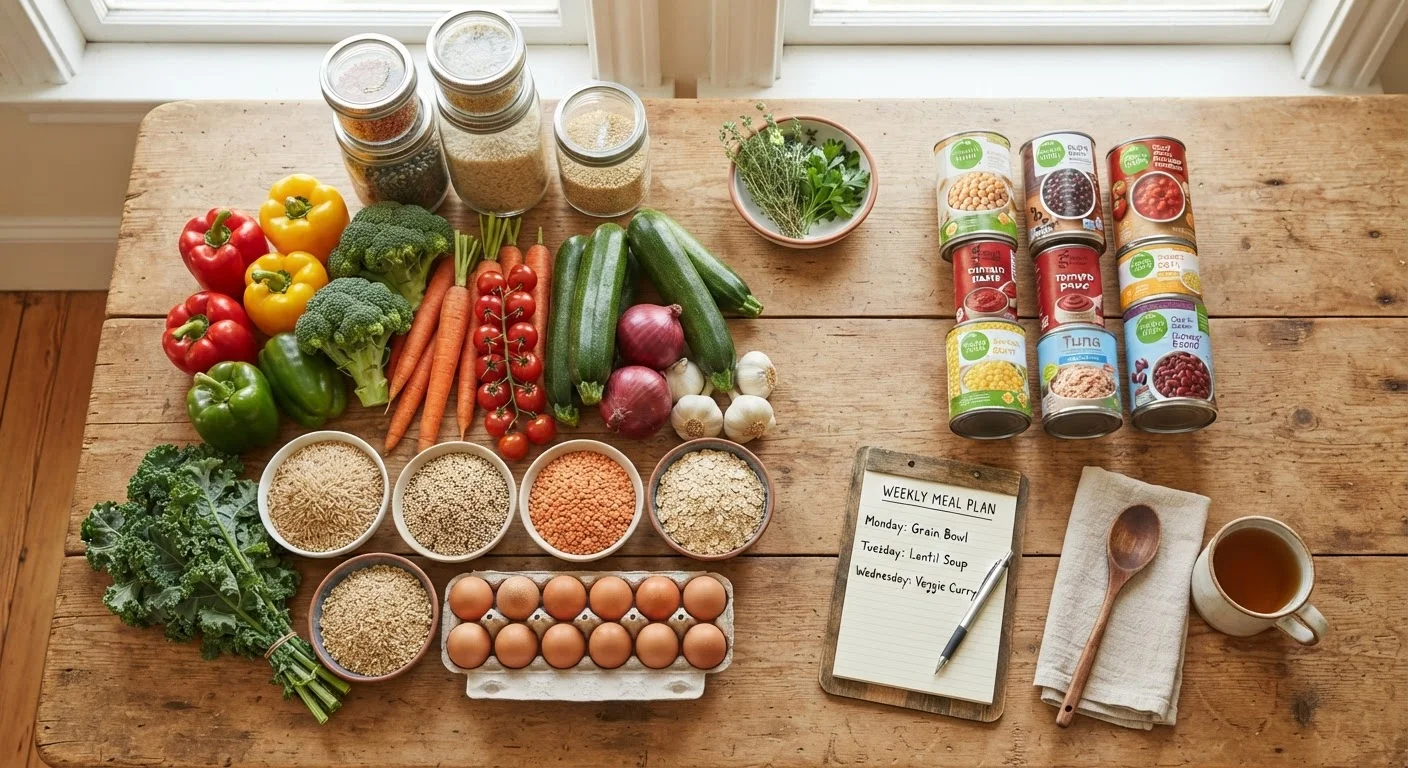
Why Weekly Planning Pays Off
Most students overspend on groceries not because they buy expensive items, but because they shop without a plan. Unplanned trips lead to duplicate purchases, impulse buys, and ingredients that spoil before they're used. Research from the USDA consistently finds that meal planning is one of the most effective strategies for reducing household food waste and controlling food costs.
The good news: you don't need a nutrition degree or a lot of time. This checklist walks you through each step of a weekly grocery planning routine - from assessing what you already own to building a nutritionally balanced cart on a student budget. For broader money-saving habits that complement this process, see our guide on reducing your grocery bill without sacrificing nutrition.
Before You Plan
Meal Planning
Building Your Grocery List
At the Store and After
Tools That Make the Process Easier
You don't need specialized apps or equipment to plan well, but a few simple tools make the process faster and more consistent. Below are resources worth having before you start.
Notepad or notebook
Write your meal plan and grocery list by hand - a simple, distraction-free method that many find more reliable than apps.
Grocery list app (e.g., any free list app on your phone)
Organize your shopping list by store section and check off items in real time to prevent missed or duplicate purchases.
Kitchen scale
Helps with portioning proteins and grains accurately, reducing waste and keeping servings consistent across the week.
Reusable containers (various sizes)
Store prepped ingredients and batch-cooked meals safely in the fridge or freezer, extending their usable life.
Store loyalty card or app
Provides access to member discounts and digital coupons on staple items without requiring extra effort at checkout.
Building a Nutritionally Balanced Cart
Nutritional balance on a budget comes down to prioritizing whole, minimally processed foods across the main food groups: vegetables and fruit, whole grains, protein sources, and healthy fats. The goal isn't perfection - it's consistency across the week.
Protein is often the trickiest category to manage affordably. Eggs, canned legumes, frozen edamame, and canned fish are among the most cost-effective options. Our article on affordable protein sources by nutritional value breaks this down in detail if you want to refine that part of your list.
For students navigating campus life on a tight budget, a broader set of strategies - from batch cooking to shared grocery runs - is covered in stretching a food budget at university. The principles in that guide pair well with the planning process outlined here.
Avoid Over-Restricting for the Sake of Budget
It can be tempting to cut entire food groups to save money - but drastically limiting variety can lead to nutritional gaps over time. Focus on affordable options within each food group rather than eliminating categories. If you find your budget makes it genuinely difficult to eat a varied diet, a campus health or student services office may be able to connect you with local food assistance resources.
This article provides general nutrition information for educational purposes. It is not a substitute for personalized advice from a registered dietitian or other qualified healthcare professional. If you have specific dietary needs, health conditions, or concerns about nutrition, please consult a professional.