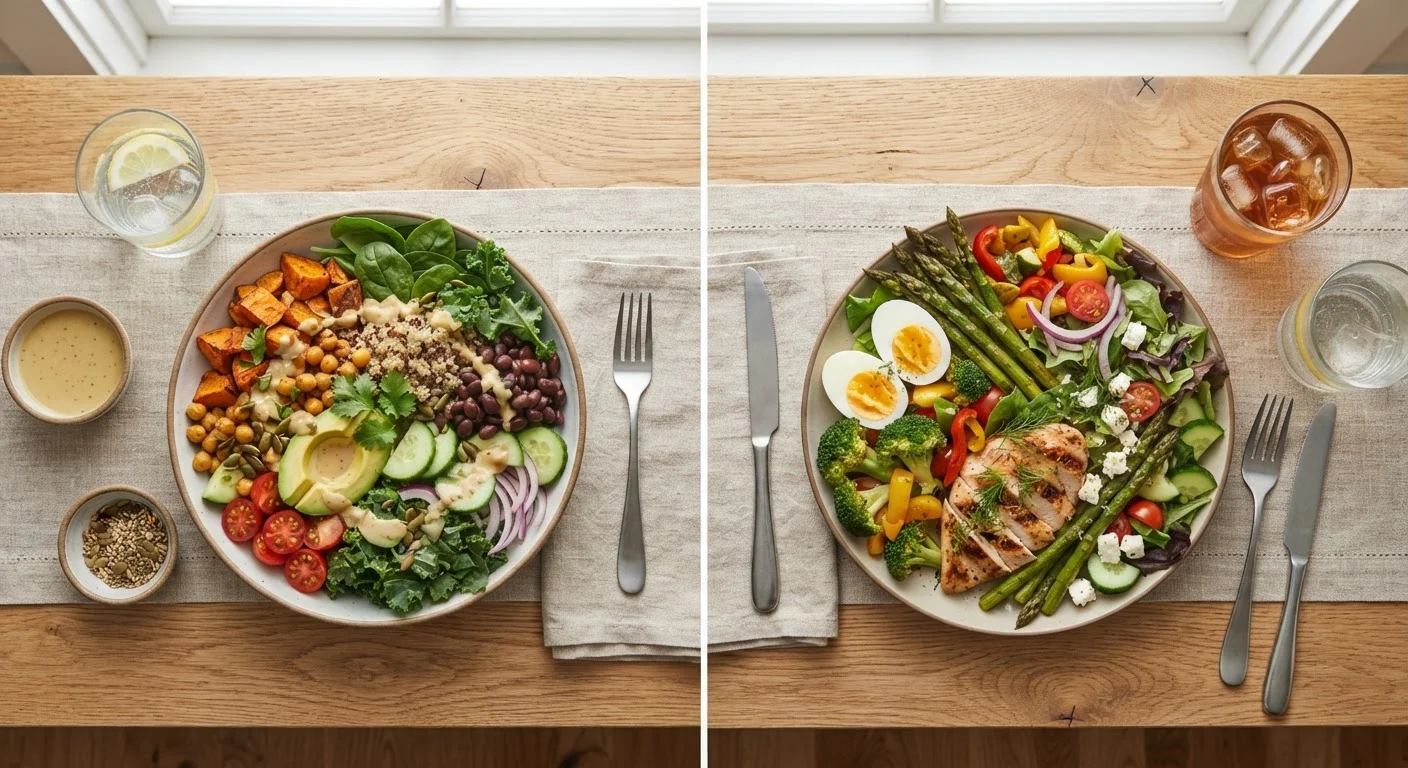
What Each Eating Pattern Actually Means
Plant-based eating is an umbrella term covering vegan diets (no animal products), vegetarian diets (which may include eggs and dairy), and flexitarian patterns that emphasize plants while occasionally including meat. Omnivorous diets include both plant and animal foods - but the range is enormous, from a diet heavy in ultra-processed meat to one built around vegetables, whole grains, and modest portions of fish and poultry.
This distinction matters because comparisons between the two are only meaningful when we're comparing well-constructed versions of each. A diet of fast food and processed snacks is technically omnivorous; a diet of white rice and iceberg lettuce is technically plant-based. Neither comparison tells you much. For a deeper look at how food processing affects nutritional value across both patterns, see our guide on whole foods vs. processed foods.
Key Nutritional Trade-offs Side by Side
Both patterns have genuine strengths and real gaps. The table below outlines how well-planned versions of each compare across major nutritional considerations.
| Plant-Based Diet | Omnivorous Diet | |
|---|---|---|
| Fiber intake | Typically high from legumes, grains, produce | Variable; often lower if few plant foods included |
| Saturated fat | Generally lower | Higher if red/processed meat is frequent |
| Vitamin B12 | Deficient without supplementation | Readily supplied by animal foods |
| Iron absorption | Non-heme iron; less bioavailable | Heme iron; more efficiently absorbed |
| Complete protein | Requires varied food combining | Naturally provided by animal sources |
| Omega-3 (DHA/EPA) | Limited; algae oil supplement needed | Available via fatty fish and eggs |
| Phytonutrients & antioxidants | Typically abundant | Depends on produce intake |
| Meal planning effort | Higher to avoid nutritional gaps | Lower for most micronutrients |
Understanding these differences doesn't require abandoning your preferred approach - it means knowing where to pay closer attention.
Where Plant-Based Diets Excel (and Where They Need Help)
Well-planned plant-based diets are consistently associated with higher fiber intake, lower saturated fat consumption, and greater intake of certain antioxidants and phytonutrients. Research published in nutritional epidemiology literature links these patterns to lower rates of certain chronic diseases, though causality is complex and confounded by lifestyle factors.
The nutritional gaps that require active planning include:
- Vitamin B12: Found almost exclusively in animal foods. Supplementation is generally considered necessary for those following a fully vegan diet.
- Iron: Plant foods contain non-heme iron, which is absorbed less efficiently than the heme iron in meat. Pairing iron-rich plant foods with vitamin C improves absorption.
- Zinc, calcium, and omega-3 fatty acids (DHA/EPA): Present in plant sources but often in forms that are less bioavailable or require conversion by the body.
- Complete protein: Most plant proteins lack one or more essential amino acids, but combining varied sources - legumes, grains, nuts, seeds - across the day addresses this. See our breakdown of affordable protein sources for practical options.
Where Omnivorous Diets Excel (and Where They Need Help)
Omnivorous diets provide heme iron, zinc, vitamin B12, preformed vitamin A (retinol), and DHA/EPA omega-3s in readily absorbable forms. Animal proteins are complete - meaning they supply all essential amino acids - which reduces the need for deliberate food combining.
The trade-offs depend heavily on which animal foods dominate the plate. Diets heavy in processed meats and high-fat dairy tend to be elevated in saturated fat and sodium, and lower in fiber - a nutrient most Americans fall short on regardless of eating pattern, according to federal dietary assessment data.
Omnivores who eat few fruits, vegetables, legumes, or whole grains often miss out on the fiber, folate, and phytonutrient benefits that plant-heavy diets naturally deliver. Building a balanced plate without rigid rules is a practical starting point for omnivores who want to increase plant diversity without overhauling their diet entirely.
Making Either Approach Work for Your Budget and Lifestyle
Cost is a real consideration. Meat can be expensive; specialty plant-based products are often even more so. The most affordable versions of both diets overlap considerably: dried legumes, canned beans, frozen vegetables, eggs, whole grains, and seasonal produce are economical anchors for either approach. Frozen produce is often nutritionally comparable to fresh and significantly cheaper - an important consideration for budget-conscious shoppers.
Start With What You Already Eat
You don't have to commit to a label to improve your nutrition. Try adding one or two more plant-based meals per week, or focus on shrinking ultra-processed portions in your current diet. Small, consistent shifts in food quality tend to be more sustainable than dramatic overhauls. Track how you feel over several weeks rather than expecting immediate results.
Before making any significant dietary change - especially if you have an existing health condition, are pregnant, or are managing a chronic illness - consult a registered dietitian or your primary care provider. General nutrition principles are useful, but individual needs vary, and personalized guidance is the standard for safe, sustainable change.
This article is for general informational and educational purposes only and does not constitute medical or dietary advice. Always consult a qualified healthcare professional before making significant changes to your diet.