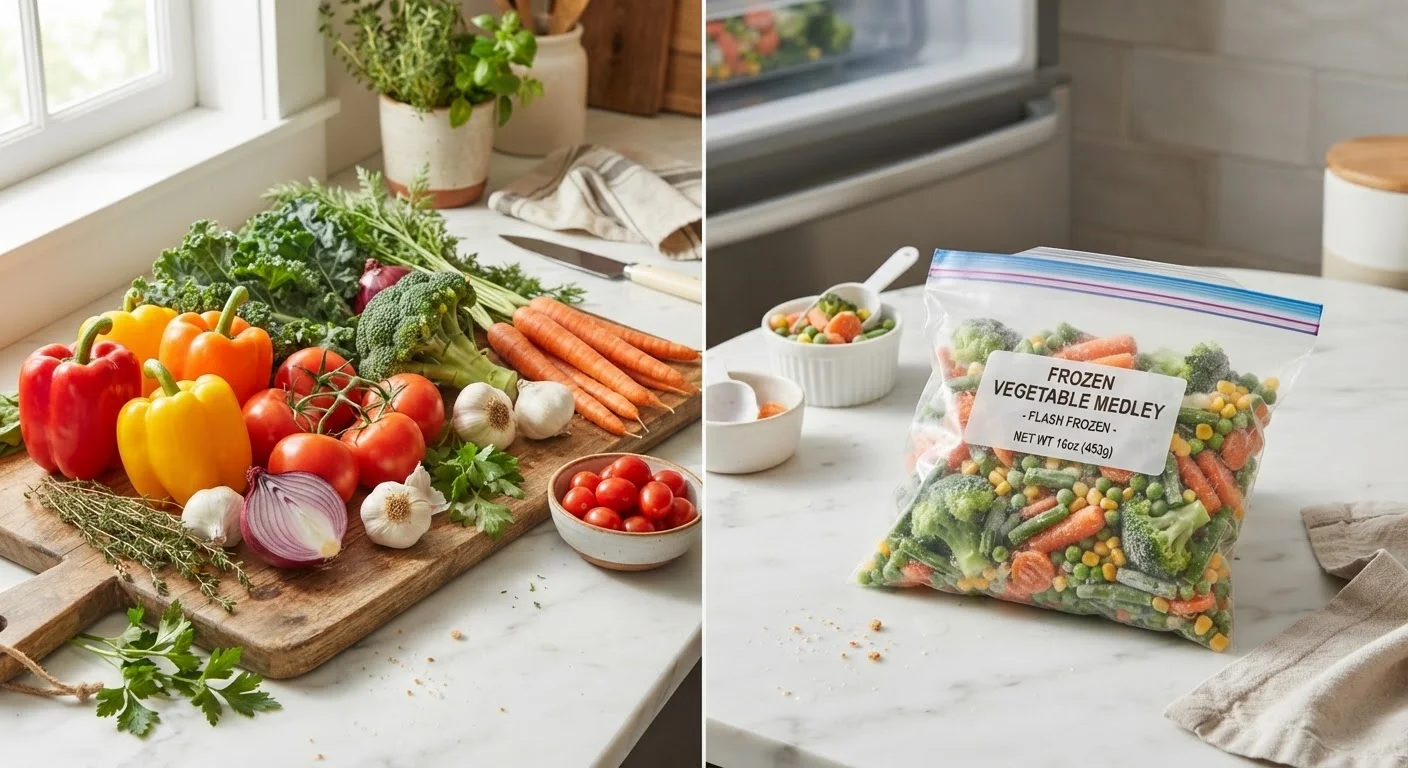
The Nutrient Retention Question
One of the most persistent food myths is that frozen vegetables are nutritionally inferior to fresh. Research, including studies published in journals like the Journal of Food Composition and Analysis, tells a more nuanced story. Frozen vegetables are typically harvested at peak ripeness and then blanched - briefly exposed to heat - before being flash-frozen within hours. This process halts enzyme activity that would otherwise degrade nutrients over time.
Fresh produce, by contrast, begins losing certain vitamins immediately after harvest. Vitamin C and B vitamins (both water-soluble and sensitive to heat, light, and air) can decline considerably during the days of transport and shelf time between farm and table. A head of broccoli sitting in your refrigerator for five days may contain measurably less vitamin C than its frozen counterpart. That said, blanching - used in freezing - does cause some initial nutrient loss, particularly of heat-sensitive vitamins, so neither option preserves every nutrient perfectly.
The takeaway: nutrient differences between fresh and frozen are real but often smaller than people assume, and they vary by vegetable, storage duration, and preparation method.
| Criterion | Fresh Produce | Frozen Produce |
|---|---|---|
| Nutrient retention over time | Declines during transport & storage | Stable for months when kept frozen |
| Nutrient level at purchase | Variable; depends on age | Locked in at peak ripeness |
| Typical cost per serving | Moderate to high (seasonal variation) | Generally lower, more consistent |
| Food waste risk | Higher - shorter shelf life | Lower - use only what you need |
| Texture in raw applications | Superior for salads and raw dishes | Poor; thaws soft |
| Texture in cooked applications | Good when fresh | Comparable to fresh |
| Year-round availability | Limited by season and region | Consistent year-round |
| Convenience for small households | Low - harder to portion | High - easy to portion and store |
Cost, Waste, and Practical Convenience
From a budget perspective, frozen produce has a clear structural advantage. Because frozen vegetables have a longer shelf life - often measured in months rather than days - they produce significantly less food waste. The USDA estimates that a substantial portion of fresh produce in American households is discarded before it's eaten, representing both a financial and environmental cost.
Frozen items also tend to be priced lower per serving, and out-of-season vegetables (like peas in January or corn in March) are far more affordable frozen than fresh. If you're building better grocery habits on a limited budget, stocking a freezer with vegetables is a well-established strategy backed by nutrition educators and budget advocates alike.
Fresh produce wins on flexibility for certain preparations - raw salads, fresh salsas, or dishes where texture is central. But for cooked applications like stir-fries, soups, and roasted sides, frozen vegetables perform comparably and are often more practical.
30-40%
Fresh produce discarded before eaten
USDA estimates suggest American households discard a significant share of fresh produce, contributing to household food waste costs.
Up to 50%
Vitamin C loss in stored fresh spinach
Research indicates spinach stored at room temperature can lose up to half its vitamin C content within a few days of harvest.
12+ months
Typical frozen vegetable shelf life
Most commercially frozen vegetables maintain quality and nutritional value for up to a year when stored at consistent freezer temperatures.
What the Research Actually Shows
A frequently cited study from the University of California, Davis found that frozen vegetables were comparable or superior in several nutrient categories when compared to fresh produce stored for several days. The study examined vegetables including broccoli, spinach, and green beans, finding that differences in vitamin C and folate levels varied depending on storage time and conditions - not simply on whether the produce was fresh or frozen.
It's worth noting that how you prepare any vegetable matters significantly. Boiling vegetables for extended periods causes considerable nutrient loss into cooking water for both fresh and frozen produce. Steaming, microwaving, or light roasting preserves more nutrients regardless of starting form. For more on how food processing affects nutritional value, our overview of whole foods vs. processed foods offers useful context.
The bottom line from nutrition research: neither fresh nor frozen is categorically superior. Building a diet rich in vegetables - in whatever form you'll actually eat them consistently - is far more important than optimizing for minor nutrient differences between the two options. Consulting a registered dietitian is the most reliable path if you have specific health conditions or dietary needs that require personalized guidance.
This article is for general informational and educational purposes only and is not a substitute for professional medical or nutritional advice. Consult a qualified healthcare provider for guidance tailored to your individual health needs.