Defining the Terms: What Do These Categories Actually Mean?
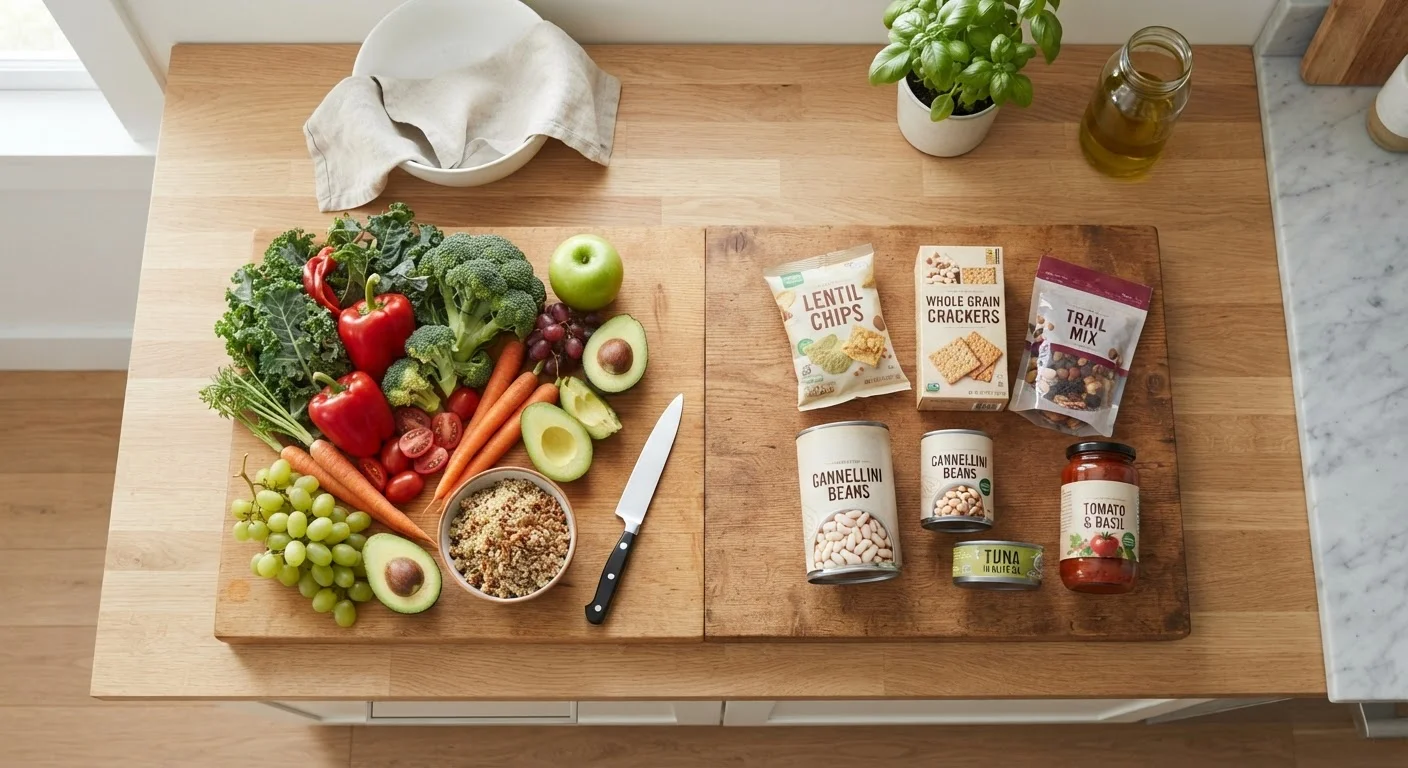
The phrase "processed food" gets used loosely, which creates confusion. In nutritional science, processing refers to any change made to a food after it leaves its natural state - including washing, freezing, cooking, milling, canning, fermenting, or adding ingredients. By that definition, almost everything we eat is technically processed to some degree.
A more useful framework comes from the NOVA classification system, developed by researchers at the University of São Paulo. NOVA groups foods into four categories based on the extent and purpose of processing:
- Group 1 - Unprocessed or minimally processed: Fresh fruits, vegetables, plain meat, eggs, legumes, plain nuts. These foods are either untouched or altered only in ways that don't add substances (e.g., dried, frozen, pasteurized).
- Group 2 - Processed culinary ingredients: Oils, flours, sugar, salt - extracted from whole foods and used in cooking but not typically eaten on their own.
- Group 3 - Processed foods: Canned vegetables with salt, cheese, smoked meats, simple breads. These are made from Group 1 foods with added Group 2 ingredients for preservation or flavor.
- Group 4 - Ultra-processed foods: Soft drinks, packaged snacks, instant noodles, flavored cereals. These contain industrial substances rarely found in home kitchens - emulsifiers, colorants, flavor enhancers, and stabilizers.
This spectrum matters because labeling everything processed as equivalent obscures a meaningful nutritional divide. See our guide to reading nutrition labels to learn how to spot these distinctions in the grocery aisle.
What the Research Says About Health Outcomes
The distinction between minimally processed and ultra-processed foods carries real weight in the research literature. Multiple large observational studies - including a 2019 study published in JAMA Internal Medicine analyzing over 44,000 French adults - found that higher consumption of ultra-processed foods was associated with increased risk of cardiovascular disease and all-cause mortality.
Importantly, these associations are with ultra-processed foods, not with all processed foods. Plain canned tomatoes, frozen peas, or whole-grain bread do not carry the same signals in the data.
| Criterion | Whole Foods | Processed Foods (spectrum) |
|---|---|---|
| Definition | Unaltered or minimally changed from natural state | Ranges from lightly modified to industrially formulated |
| Fiber content | Generally high and intact | Often reduced, especially in ultra-processed items |
| Added sugars | None by definition | Common in Group 3 and 4 products |
| Sodium levels | Naturally low | Varies widely; often elevated for preservation |
| Shelf life | Short - perishable | Extended - sometimes months to years |
| Cost | Variable; fresh produce can be pricier | Often lower cost, especially canned/frozen |
| Preparation time | Usually requires cooking or prep | Often ready-to-eat or quick to prepare |
| Research association | Generally linked to better dietary outcomes | Ultra-processed linked to health risks; minimally processed less so |
Researchers believe several mechanisms may explain the link between ultra-processed foods and poorer health outcomes. These include high levels of added sugars and sodium, lower fiber content, displacement of more nutritious foods in the diet, and the potential effects of certain additives - though the science on specific additives is still evolving and should not be overstated.
Understanding macronutrient quality matters here too. Our explainer on macronutrients breaks down how carbohydrates, protein, and fat function and why food quality within each category affects outcomes.
This article is for general informational purposes only and is not a substitute for personalized medical or dietary advice. Consult a qualified healthcare professional or registered dietitian for guidance specific to your health needs.
Practical Strategies for Everyday Eating
Eating more whole foods doesn't require abandoning convenience or straining a budget. Some of the most nutrient-dense foods are also among the most affordable - dried or canned legumes, frozen vegetables, plain oats, and eggs are all examples. Our comparison of frozen and fresh produce examines how well nutrients are retained in frozen options, and the findings are more reassuring than many people expect.
A few evidence-informed habits can help you shift toward whole foods without an overhaul:
- Use the ingredient list, not just the front of the package. A shorter list with recognizable ingredients generally indicates less processing. Five or fewer ingredients is a useful rough heuristic, though not a hard rule.
- Add whole foods incrementally. Swapping one refined grain serving for a whole grain, or adding a piece of fruit to a snack, makes a cumulative difference over time without requiring a dramatic dietary shift.
- Watch added sugars and sodium in packaged foods. These are often the most health-relevant additions in processed items. Our look at sugar in the diet separates the evidence from the noise on this topic.
- Consider the diet as a whole. A single food choice is rarely what defines a dietary pattern. If most of your meals are built around whole or minimally processed foods, occasional ultra-processed items are unlikely to undermine an otherwise sound approach.
For readers curious about how food-type thinking applies to broader dietary patterns, plant-based vs. omnivorous eating explores how food quality plays out across very different dietary frameworks.
A Note on Dietary Diversity
No single food choice determines the quality of your overall diet. Nutrition researchers generally emphasize dietary patterns over individual items - meaning the overall balance of what you eat regularly matters more than any one meal or product. If you have specific health conditions or dietary concerns, a registered dietitian can offer personalized guidance that accounts for your full health picture.