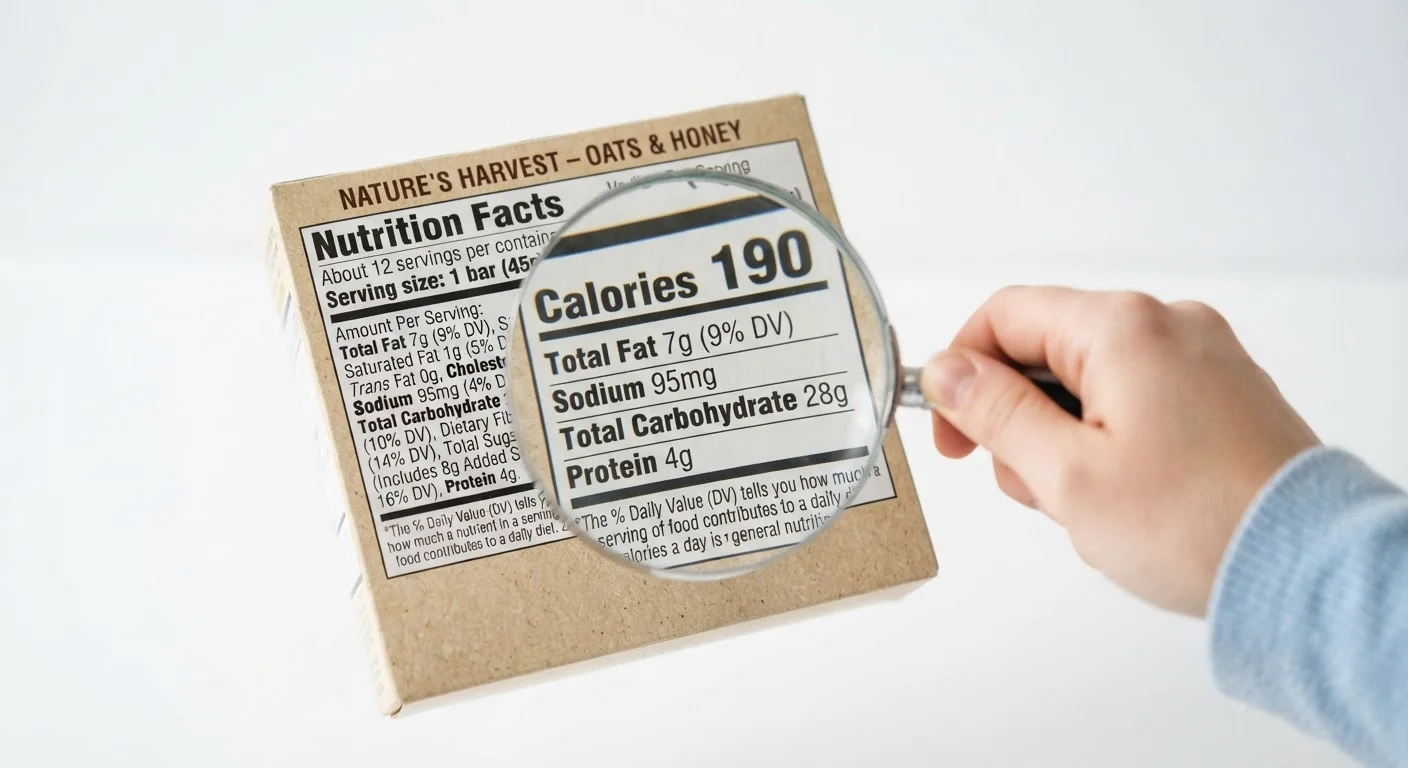
Why Label Reading Is a Skill Worth Building
Packaged food labels can feel like a wall of numbers designed to confuse rather than inform. In reality, the Nutrition Facts panel - the standardized box required on most packaged foods in the US by the FDA - follows a logical structure once you understand the order in which to read it. Building this skill helps you make more informed choices without needing a nutrition degree or a strict diet plan.
This guide walks you through the label from top to bottom, explaining what each section actually measures and which figures deserve your attention. For a deeper look at how different kinds of foods compare nutritionally, see our guide to whole foods vs. processed foods.
Compare Products Using the Same Serving Size
When comparing two products, make sure their serving sizes are the same before looking at any other number. A cereal listing fewer calories per serving may simply have a smaller serving size than its competitor. Normalizing to the same amount - say, 100 grams - gives you a fair comparison.
What You'll Need Before You Start
No special tools are required - just a food package with a Nutrition Facts label and a few minutes. Having a basic grasp of common nutrition terms will help you move faster; our practical nutrition glossary is a useful companion reference if any terms feel unfamiliar.
What you will need
Reading the Label Step by Step
Follow the steps below to systematically read any US Nutrition Facts label. With practice, this process takes under a minute per product.
Start with the serving size
At the very top of the panel you'll find Serving Size and Servings Per Container. Every single number that follows - calories, fat, sodium, everything - applies to that one serving, not the whole package. If a bag of chips lists 140 calories per serving but contains 3.5 servings, eating the bag means consuming around 490 calories. Always anchor your reading here before moving on.
Note the calorie count in context
Calories measure the energy a food provides per serving. While calorie counts are a useful reference point, they don't capture the full nutritional picture - a 200-calorie handful of nuts and a 200-calorie portion of candy are nutritionally very different. Use calories as one data point, not the only one. Our article on what calorie counting can and can't tell you explains the strengths and limitations in more depth.
Understand Percent Daily Value (%DV)
%DV tells you how much of a nutrient one serving contributes toward a general daily reference amount. The FDA bases these percentages on a 2,000-calorie-per-day diet, which is a population-level benchmark, not a prescription for your individual needs. A useful rule of thumb: 5% DV or less is considered low for a nutrient; 20% DV or more is considered high. Use this scale to quickly compare products or evaluate whether a food is a meaningful source of, say, calcium or iron.
Identify nutrients to limit
Current US dietary guidelines suggest most people benefit from keeping these nutrients on the lower end of their intake:
- Saturated fat - associated with cardiovascular risk at high intakes
- Sodium - linked to blood pressure concerns when consistently elevated
- Added sugars - distinguished from naturally occurring sugars; listed separately on modern labels
Note that total fat and dietary cholesterol appear on labels too, but current research is more nuanced about their role - context matters significantly.
Identify nutrients to get enough of
Many people in the US fall short on several nutrients the label tracks. Look for adequate %DVs for:
- Dietary fiber - supports digestive health and satiety
- Vitamin D - commonly under-consumed, especially in northern climates
- Calcium - essential for bone health
- Iron - particularly relevant for menstruating individuals
- Potassium - important for blood pressure regulation
Foods providing 20% DV or more of these can be meaningful contributors to meeting your daily needs.
Read the ingredient list
The ingredient list is separate from the Nutrition Facts panel but equally important. Ingredients are listed in descending order by weight - the first ingredient makes up the largest share of the product. A few things to look for:
- Length of the list: longer lists often (though not always) indicate more processing
- Position of sugar: if any form of sugar appears in the first three ingredients, the product is likely high in added sugar
- Multiple names for the same ingredient: added sugars can appear as high-fructose corn syrup, cane juice, dextrose, maltose, and others
The ingredient list gives you qualitative information the numbers alone can't convey.
Putting It All Together
No single number tells the whole story. A food with a low calorie count but a long ingredient list of additives may not serve your goals as well as a minimally processed alternative with more calories. Likewise, a product high in sodium might still fit into your day if the rest of your meals are lower in salt.
Added sugars are worth particular attention - our evidence-based guide to sugar in your diet helps separate real concern from overstated fear. Fibre is another number many people overlook; learn why most people fall short on fibre and how to change that. And for nutrients your labels may show only in small amounts, such as iron, vitamin D, and magnesium, see our piece on micronutrients most young adults fall short on.
Once you're comfortable reading individual labels, the natural next step is applying that knowledge at mealtime. Our guide on building a balanced plate without following a strict diet offers a flexible, non-restrictive framework to do exactly that.
This article is for general informational and educational purposes only. It is not a substitute for advice from a registered dietitian, physician, or other qualified healthcare professional. Individual nutrition needs vary - consult a professional for guidance specific to your health situation.