Why Sugar Conversations Get Complicated
Few nutrition topics generate more confusion than sugar. Online headlines swing between dismissing it entirely and labeling it a toxin, leaving most readers unsure what to actually do. The reality sits somewhere more nuanced - and more useful.
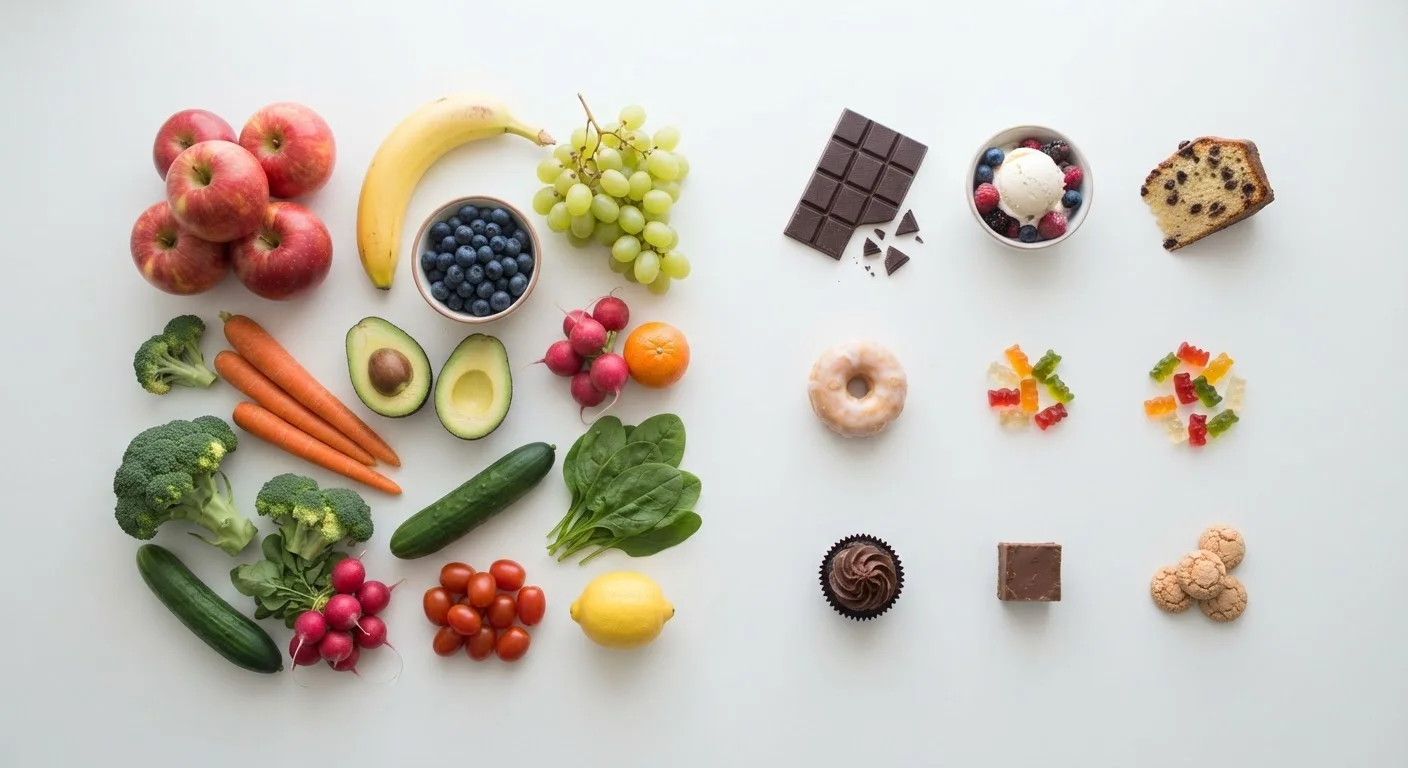
The key distinction that clears up a lot of the noise: dietary guidelines and most research on sugar's health effects focus specifically on added sugars - sugars and syrups added to foods during processing or preparation - not the sugars naturally present in whole foods like fruit, dairy, or vegetables. Understanding that difference makes the conversation far more practical.
For a deeper look at how food processing affects nutrition overall, see our guide to whole foods vs. processed foods.
Myth
Sugar is inherently toxic and should be eliminated from your diet entirely.
Fact
Sugar is a carbohydrate found naturally in many nutritious foods. The concern is with excessive added sugar, not sugar as a category.
Describing sugar as a poison or toxin overstates what the science shows. Sugars occur naturally in fruit, dairy, and starchy vegetables - all of which are associated with positive health outcomes in research. The human body uses glucose (a simple sugar) as a primary fuel source. Public health guidance targets added sugars specifically, recommending limits rather than outright elimination. The American Heart Association suggests no more than 25 grams per day for women and 36 grams for men. Complete elimination of all sugar-containing food is neither supported by evidence nor practical for most people.
Myth
Eating sugar directly causes type 2 diabetes.
Fact
Type 2 diabetes is driven by insulin resistance, which is most strongly linked to excess body weight, physical inactivity, and overall dietary patterns - not sugar consumption alone.
This is one of the most persistent misconceptions in nutrition. While high intake of sugar-sweetened beverages is associated with increased diabetes risk - partly by contributing to weight gain and caloric surplus - sugar itself is not a direct cause. Type 2 diabetes involves complex interactions between genetics, lifestyle, and metabolic health. Someone who eats moderate amounts of sugar within a balanced, calorie-appropriate diet is not simply "giving themselves diabetes." Framing it that way can cause unnecessary fear and stigma without improving understanding of the real risk factors.
Myth
Fruit is bad for you because it contains a lot of sugar.
Fact
The fiber, water content, vitamins, and phytonutrients in whole fruit significantly change how the body processes its sugars, and fruit consumption is associated with better health outcomes in research.
Whole fruit contains fructose, but it also contains dietary fiber, which slows digestion and reduces the rate at which sugar enters the bloodstream. This is a meaningful physiological difference from drinking fruit juice or eating added fructose in processed foods. Large-scale epidemiological studies consistently associate higher whole fruit consumption with reduced risk of cardiovascular disease and type 2 diabetes. The concern about fruit sugar applies most to fruit juice, dried fruit eaten in large quantities, or added fruit syrups - not to eating a whole apple or a handful of berries. See our article on calorie counting for more on why food composition matters beyond raw numbers.
Myth
"Natural" sugars like honey or agave are healthier alternatives to table sugar.
Fact
Honey, agave, and maple syrup are all classified as added sugars and have similar metabolic effects to white sugar when consumed in comparable amounts.
This myth is largely a product of marketing. While honey and maple syrup contain trace minerals and some antioxidants, the quantities present at typical serving sizes are nutritionally insignificant. Agave syrup is notably high in fructose. The U.S. Dietary Guidelines and nutrition labeling rules treat all of these as added sugars. Substituting one for another does not meaningfully reduce sugar intake or provide measurable health advantages. If you enjoy the flavor of honey in your tea, that's fine - but it shouldn't be viewed as a health food relative to other sweeteners.
Myth
Sugar-free products are always the healthier option.
Fact
"Sugar-free" labels indicate an absence of sugar, but the product may still contain significant calories, saturated fat, sodium, or artificial sweeteners whose long-term effects are still being studied.
Reformulated "sugar-free" products often replace sugar with fat, sodium, or alternative sweeteners to maintain palatability. Artificially sweetened beverages, for instance, may help reduce caloric intake in the short term, but some research suggests they can influence appetite signaling and gut microbiota in ways that are not yet fully understood. "Sugar-free" does not equal nutritious. Evaluating a food's full nutrition profile - including fiber, protein, saturated fat, and sodium - gives a much clearer picture than focusing on a single front-of-pack claim.
What the Evidence Actually Supports
The research on added sugar is fairly consistent in a few areas. High intake of added sugars - particularly from sugar-sweetened beverages - is associated with increased risk of weight gain, type 2 diabetes, cardiovascular disease, and dental decay, according to bodies including the World Health Organization and the American Heart Association. These are meaningful findings worth taking seriously.
However, the strength and mechanism of those associations vary. For example, the link between sugary drinks and metabolic risk is well-established, partly because liquid calories are less satiating than solid food. The evidence for sugar causing harm independently of excess calorie intake is more debated among researchers.
17 tsp
Average daily added sugar intake for U.S. adults
According to CDC data, Americans consume roughly 17 teaspoons of added sugar daily - nearly three times the American Heart Association's recommended limit for women.
47%
Share of added sugar coming from beverages
The CDC has reported that nearly half of all added sugar consumed by U.S. adults comes from drinks, particularly sodas, energy drinks, and sweetened coffees.
Knowing how to read a nutrition label is one of the most practical skills here. The label's "Added Sugars" line - required on U.S. packaging since 2020 - lets you see exactly how much sugar was introduced during processing, separate from what occurs naturally. Our nutrition label literacy guide walks through how to interpret those numbers effectively.
Budget-conscious eating also plays a role. Many affordable whole foods - oats, bananas, canned beans, frozen vegetables - are naturally low in added sugar. For strategies that keep nutrition high without stretching your wallet, the grocery spending on a tight budget guide offers practical starting points.
The goal isn't perfection or elimination - it's awareness. Once you can distinguish hype from evidence, you're better equipped to make informed, affordable choices without unnecessary anxiety about every gram of sugar on a label.
This article is for general informational and educational purposes only and does not constitute medical or dietary advice. Consult a qualified healthcare professional or registered dietitian for guidance specific to your health situation.