Why Maintenance Costs Get Out of Hand
For many drivers, car maintenance feels unpredictable - a string of unplanned bills that appear at the worst possible time. The root cause is usually the same: small, affordable tasks get deferred until they quietly become expensive failures. A worn serpentine belt, for example, costs relatively little to replace on a schedule; the same belt snapping on the highway can damage the alternator, power steering pump, and cooling system simultaneously.
Understanding this chain reaction is the starting point for managing costs. As our guide on skipping minor maintenance explains, deferred upkeep rarely saves money - it just moves the cost forward with interest. The goal of budget-minded maintenance isn't to do less; it's to do the right things at the right time for the lowest reasonable price.
$1,200+
Average annual vehicle maintenance and repair cost per US driver
According to AAA's annual Your Driving Costs study, maintenance and repair represents a significant share of total vehicle ownership costs for most American drivers.
35%
Drivers who delay maintenance due to cost concerns
A survey by the Car Care Council found that a substantial portion of US drivers postpone recommended maintenance, often leading to more expensive repairs later.
~$25
Typical cost of a DIY engine air filter replacement
The same job at a dealership or quick-lube shop commonly runs $40-$70 including labour, making it one of the higher-return DIY tasks.
The Maintenance Tasks That Actually Matter
Not every item on a service menu is equally urgent. Prioritising correctly means understanding which tasks protect the engine and drivetrain - the most expensive components to repair or replace.
Non-Negotiable Priorities
- Engine oil and filter: The interval depends on your vehicle and oil type. Modern synthetic oils often last 7,500-10,000 miles or more, but your owner's manual is the authoritative source - not the sticker on your windshield. Check our standard servicing intervals reference for common milestones.
- Tire pressure and tread depth: Under-inflated tires wear unevenly, reduce fuel efficiency, and increase stopping distances. Checking pressure monthly takes under two minutes.
- Coolant level and condition: Overheating is one of the fastest ways to destroy an engine. Coolant should be checked at every oil change.
- Brake pads: Most pads include a wear indicator that produces a squealing sound when replacement is due. Ignoring it risks rotor damage, which multiplies the repair cost.
Important but Often Overscheduled
Transmission fluid, spark plugs, and timing belts are real maintenance items, but their intervals vary widely by vehicle. Many drivers are sold these services before they're due. Always cross-reference any shop recommendation against your owner's manual. Our article on car maintenance myths covers several common upsells worth scrutinising.
What You Can Realistically Do Yourself
DIY maintenance has a genuine cost advantage, but it's only worthwhile when a task is within your skill level and doesn't introduce safety risk. The following jobs are widely considered accessible to careful beginners with basic tools:
- Engine air filter replacement: Typically involves removing a few clips or screws. A clogged filter reduces engine efficiency and is straightforward to swap.
- Cabin air filter replacement: Usually located behind the glove box. No tools required in most vehicles.
- Wiper blade replacement: Requires no tools and takes minutes. Most auto parts stores will show you the correct size.
- Checking and topping off fluids: Windshield washer fluid, coolant (when the engine is cold), and brake fluid reservoir levels can all be visually inspected safely.
- Tire inflation: A quality tire pressure gauge costs a few dollars and is one of the highest-return maintenance tools you can own.
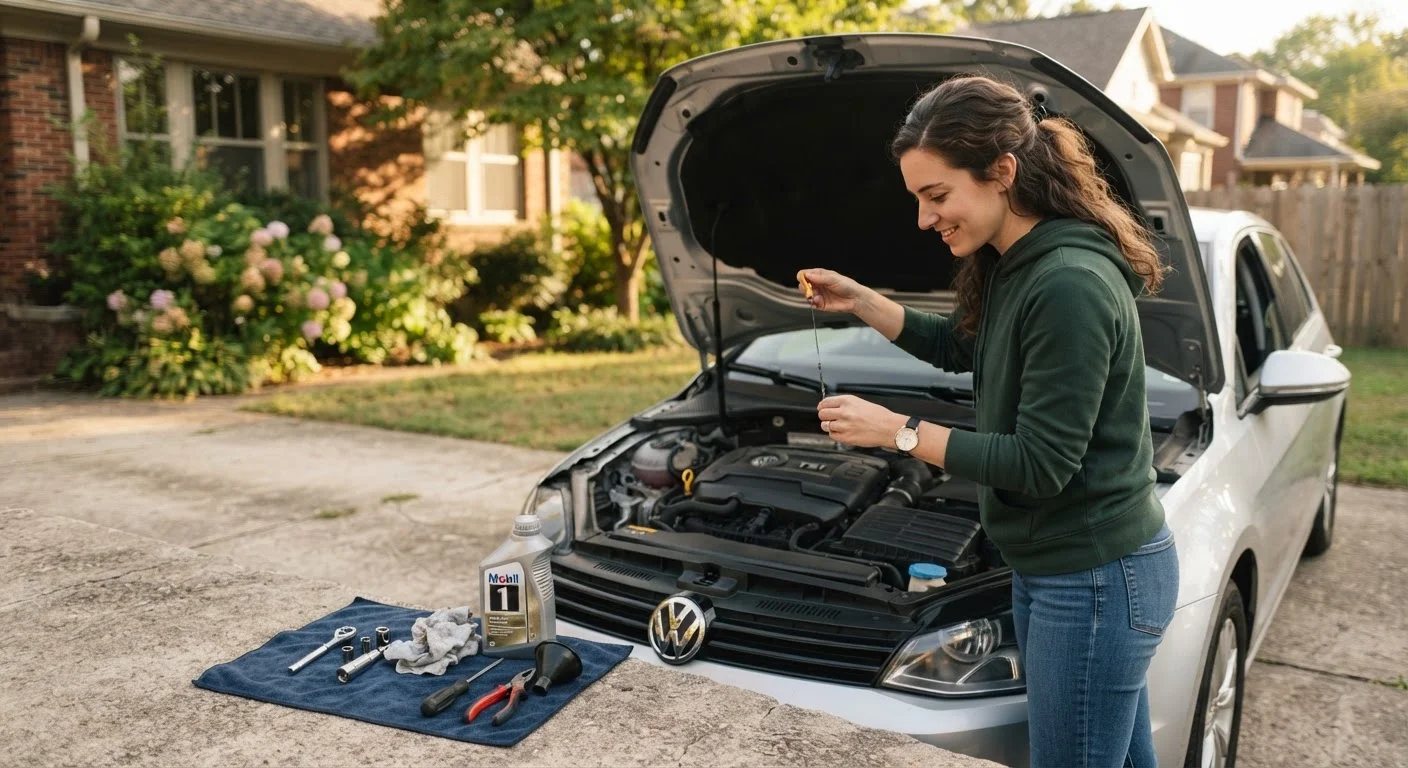
For those considering oil changes at home, the decision involves more than skill - it requires safe jack stands, proper oil disposal, and time. See our balanced breakdown in the DIY oil change vs. garage guide before committing either way.
Before buying a replacement part at a shop, check the part number in your owner's manual and price it independently - parts markup at service centres is real and varies widely.
Shops typically mark up parts between 25% and 100% over their cost. Knowing the part number gives you a reference price and signals to the shop that you're an informed customer.
Set a calendar reminder tied to your mileage rather than a fixed date - for example, flag your next oil change at current mileage plus your interval, checked monthly.
Mileage-based reminders are more accurate than date-based ones, especially if your driving volume fluctuates seasonally. This prevents both overdue service and unnecessarily early changes.
When to Always Use a Qualified Mechanic
Some jobs carry real safety risk if performed incorrectly, and the potential cost of a mistake far exceeds what you'd save. These include:
- Brake system work beyond visual inspection - including caliper replacement, brake line bleeding, and ABS-related repairs
- Suspension and steering components - worn ball joints or tie rods affect vehicle control and can cause loss of steering
- Timing belt or timing chain replacement - incorrect installation can cause engine destruction
- Cooling system repairs involving hose replacement, thermostat, or radiator work under pressure
- Any electrical or airbag system diagnosis
When you do go to a shop, go prepared. Knowing what to ask before authorising any repair helps you evaluate whether a recommendation is justified and whether the price is reasonable. Similarly, run through the checklist in Before You Agree to a Service before signing off on any work order.
Smart Ways to Reduce Shop Bills
Even when you need professional help, how you approach the shop matters. These practices can help keep costs reasonable:
- Get itemised written quotes. A single lump-sum estimate makes it difficult to identify inflated labour or markup on parts. Ask for a line-by-line breakdown.
- Compare at least two quotes for any repair over a modest threshold. Labour rates and parts markups vary significantly between dealerships, independent shops, and chains.
- Ask about OEM vs. aftermarket parts. For many non-safety-critical components, aftermarket parts meet the same performance standards at a lower price. For brake or suspension components, discuss the trade-offs with your mechanic.
- Decline services not yet due. A shop recommending a coolant flush or transmission service isn't automatically wrong - but verify it against your owner's manual first.
Drivers managing older vehicles face a particular version of this calculation - higher repair frequency offset by lower depreciation and no loan payments. Our guide to owning an older car walks through the full financial picture.
Keeping a Simple Maintenance Log
A maintenance log doesn't need to be elaborate - a notes app, a spreadsheet, or even a paper notebook kept in your glove box will do. Record the date, mileage, and description of every service performed. This habit pays off in several concrete ways:
- You avoid paying for the same service twice when a shop recommends something you recently had done elsewhere.
- You can accurately track how close you are to the next recommended interval without guessing.
- When selling the vehicle, documented maintenance history is a genuine asset that can support your asking price.
Seasonal conditions add another layer to maintenance timing. Weather affects tire pressure, battery performance, and fluid viscosity. Our seasonal car maintenance guide is a practical companion for timing your checks around the calendar. And if you're thinking long-term, our article on keeping your car running past 100,000 miles covers the additional attention high-mileage vehicles need to stay reliable without draining your savings.
Finally, if a dashboard warning light appears, don't guess. Understand what it means before deciding whether to drive or stop - see our explainer on dashboard warning lights for a straightforward breakdown by urgency level.