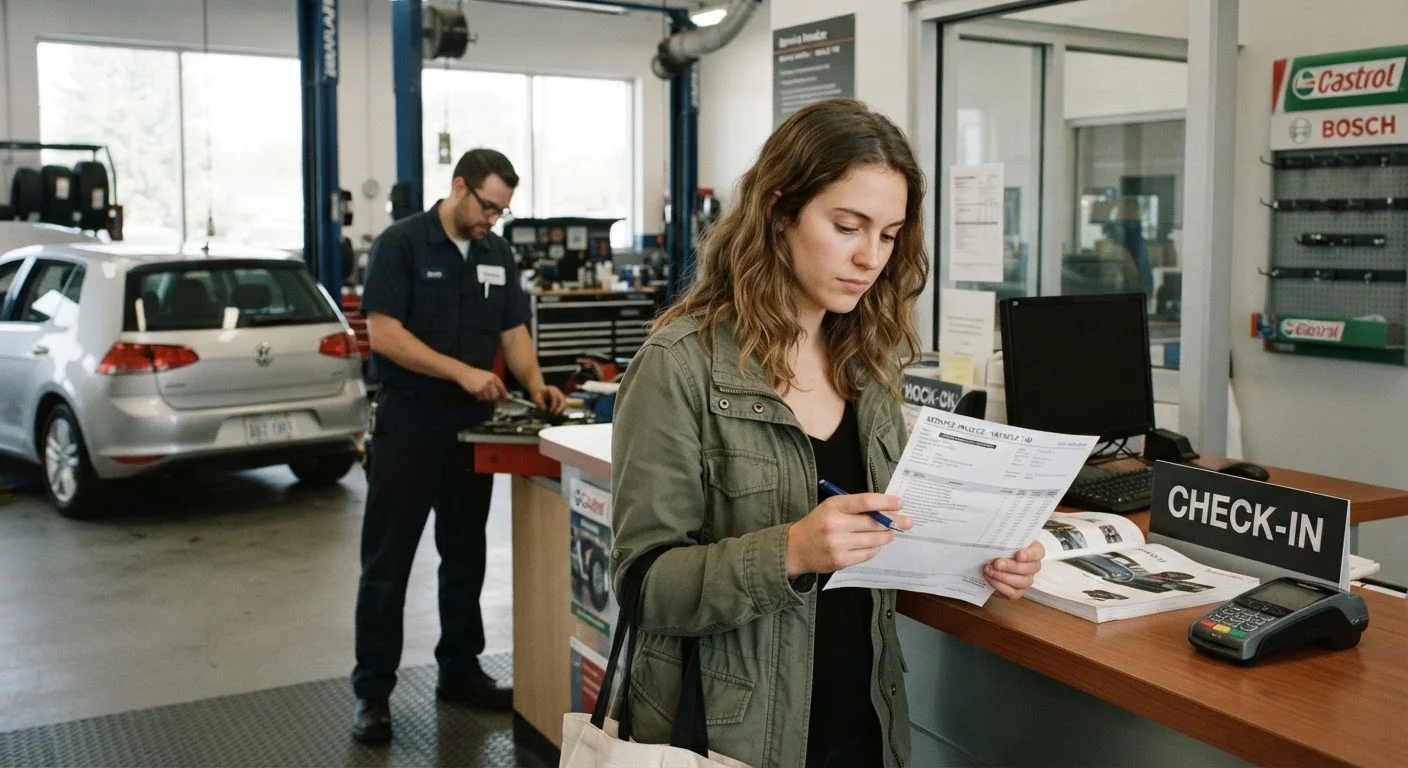
Always request a written, itemised estimate before authorising any work.
Cross-check recommended services against your vehicle's actual service schedule.
Understand what each line item covers - labour, parts, and fees should be listed separately.
You have the right to decline or defer any service that isn't immediately safety-critical.
Getting a second opinion on costly repairs is a normal and sensible step.
A practical checklist to run through before authorising any workshop service — so you pay for what's needed and nothing more.
Why Verification Before You Sign Matters
Walking into a workshop without a plan is one of the most reliable ways to overspend on your car. Service advisors are often trained to upsell - not out of bad faith, but because that's how many shops generate revenue beyond labour hours. For a budget-conscious driver, the gap between what your car actually needs and what ends up on your invoice can be surprisingly wide.
This checklist gives you a structured way to slow down before you hand over your keys. It works whether you're booking a routine oil change, responding to a dashboard warning light, or bringing your car in after a minor collision. Cross-reference your own records, ask the right questions, and you'll be far better positioned to authorise only the work that's genuinely warranted.
Pull your vehicle's service history - whether from a physical logbook, a dealership record, or a maintenance app - so you know exactly what's been done and when.Must
Check your owner's manual or a reliable servicing interval reference to identify which services are actually due at your current mileage or date.Must
Note any specific symptoms or warning lights to describe accurately, rather than leaving interpretation entirely to the service advisor.Should
Research the typical labour time and parts cost for any work you already know is needed, so you have a rough benchmark going in.Nice to have
Reviewing the Written Estimate
Request a written, itemised estimate before authorising any work - verbal quotes are difficult to dispute later.Must
Confirm that labour, parts, and any shop fees (disposal, environmental levies) are listed as separate line items, not bundled into a single total.Must
Verify that the parts listed are described as OEM (original equipment manufacturer), aftermarket, or remanufactured - this affects both price and quality expectations.Should
Check that the estimate includes a total ceiling cost and note whether it's a firm quote or an estimate subject to revision.Must
Cross-reference every recommended service against your actual service history to avoid paying for work recently completed.Must
Evaluating Recommendations
Ask the service advisor to explain, in plain terms, what each recommended service does and what the consequence of deferring it would be.Must
Distinguish between safety-critical work (brakes, tyres, steering components) and advisory maintenance that can reasonably be scheduled for a later visit.Must
Ask whether any recommended services can be combined to reduce total labour time and cost.Should
For any repair over a threshold you're uncomfortable with - commonly $300-$500 - consider seeking a second opinion from another workshop before authorising.Should
Before You Leave the Car
Confirm the estimated completion time and agree on how the workshop will contact you if additional work is identified.Must
Explicitly state that no additional work should be performed without your prior approval and a revised written estimate.Must
Photograph any pre-existing exterior damage before leaving the vehicle, and note it on the intake form if the option is available.Should
Remove any valuables from the vehicle before drop-off.Nice to have
Keep a record of the estimate, your authorisation, and any communications in case of a billing dispute.Should
What to Watch for Once You're at the Workshop
The checklist above covers your preparation and the estimate review process. But a few situations arise specifically at the workshop that catch drivers off guard.
Verbal Authorisation Is Still Authorisation
If a service advisor asks 'Should we go ahead with that?' and you say yes over the phone, that's generally considered consent. Always ask for any change in scope to be sent to you in writing - even a text or email summary - before agreeing. This creates a record and gives you a moment to consider before committing.
Workshops are required to obtain your authorisation before performing work beyond the original scope. If a technician discovers an additional problem mid-job, they should call or message you with a revised estimate - not proceed and present a larger bill at collection. Make clear at drop-off that you expect to be contacted before any scope changes.
When you collect your vehicle, ask for the replaced parts back where possible. This is a reasonable request for items like brake pads, filters, or belts - it confirms the work was actually done. If a shop declines without a clear reason, that's worth noting for future decisions.
For a detailed look at how to evaluate quotes and what itemised estimates should contain, our guide to getting a fair repair quote walks through the process step by step.
Required
Vehicle Owner's Manual
Lists the manufacturer's recommended service intervals - the primary reference for deciding whether a recommended service is actually due.
Required
Service History Logbook or App
Tracks past maintenance so you can cross-check workshop recommendations against work already performed.
Optional
Notepad or Phone Notes App
Use it to record symptoms before the visit, note what the advisor says, and keep a paper trail of verbal agreements.
Optional
Camera or Smartphone
Document the vehicle's condition at drop-off to protect against disputes over pre-existing damage.
The content provided on our blog site traverses numerous categories, offering readers valuable and practical information. Readers can use the editorial team’s research and data to gain more insights into their topics of interest. However, they are requested not to treat the articles as conclusive. The website team cannot be held responsible for differences in data or inaccuracies found across other platforms. Please also note that the site might also miss out on various schemes and offers available that the readers may find more beneficial than the ones we cover.