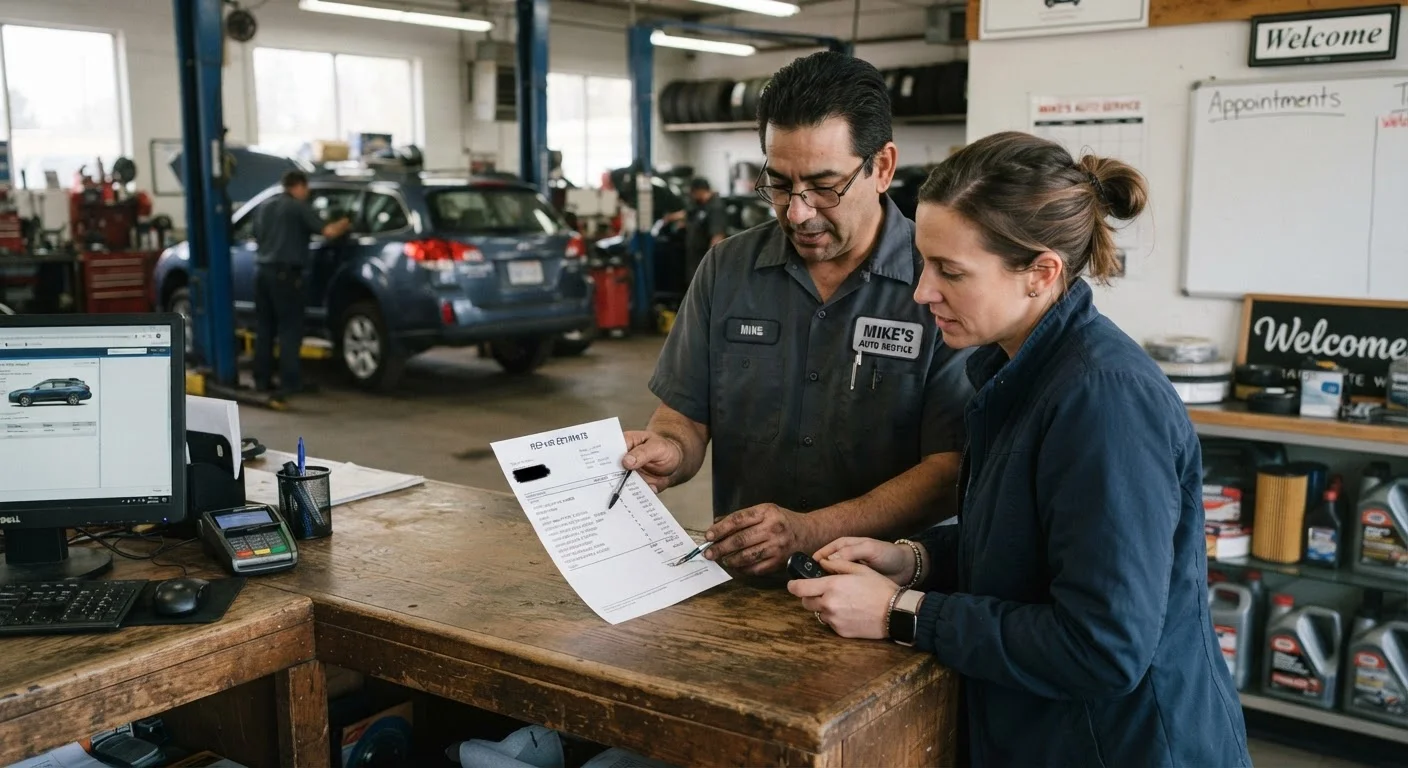
Why the Quote Stage Is Your Most Important Moment
Most drivers feel the pressure the moment a service advisor says, "We found a few things." That moment - before you've said yes to anything - is when you have the most leverage. Once you authorise work, your options narrow significantly.
Getting a fair quote isn't about being difficult. It's about being informed. Shops vary considerably in how they price labour, mark up parts, and bundle services. Understanding what a quote should contain, and what questions to ask, helps you make a confident decision rather than a pressured one.
For a broader look at keeping car costs manageable, see our guide to car maintenance on a budget.
What Every Itemised Quote Should Include
A proper written estimate isn't just a total at the bottom. It should break down every cost so you can evaluate each line independently. Before you sign anything, confirm the quote includes:
- A description of each repair - not just a code or shorthand, but a plain-language explanation of what's being done and why.
- Parts costs listed separately - including whether parts are OEM (original equipment manufacturer), aftermarket, or remanufactured. Each category carries different quality and warranty implications.
- Labour hours and hourly rate - so you can see how long the job is estimated to take and what you're being charged per hour.
- Any applicable diagnostic fees - some shops charge for the inspection itself; confirm whether this is rolled into repair costs if you proceed.
- A clear total - before tax, and with tax shown separately.
If a shop hands you a single-line quote or refuses to itemise, treat that as a warning sign. You have every right to request detail before committing.
Questions to Ask Before Authorising Repairs
Once you have a written quote in hand, the next step is verification. These questions help you separate a genuine recommendation from an upsell:
- "Can you show me the problem?" - A reputable mechanic should be willing to walk you to the vehicle or show you a photo of the issue. If a part is visibly worn, cracked, or leaking, you should be able to see it.
- "Is this repair urgent, or can it wait?" - Not every recommended fix is safety-critical. Understanding the timeline helps you prioritise if you're working with a limited budget.
- "What happens if I don't do this now?" - This helps distinguish between deferred maintenance that could compound and optional work that carries little immediate consequence.
- "Are these parts OEM or aftermarket?" - Both can be appropriate, but you should know what you're getting. OEM parts typically carry manufacturer warranties; aftermarket quality varies.
- "What warranty covers this repair?" - A standard industry benchmark is 12 months or 12,000 miles on parts and labour, though this varies by shop.
These questions aren't adversarial - good shops expect them. If a service advisor becomes evasive or dismissive when you ask basic questions, that's useful information about whether you want to do business there.
When to Get a Second Opinion
A second opinion is worth the time whenever the repair involves significant cost or an unfamiliar diagnosis. Common situations where it makes sense:
Keep in mind that deferred or ignored minor maintenance often escalates costs over time. Our article on why skipping minor maintenance leads to major bills explains how small items compound. If you're trying to determine what's truly necessary versus optional, that context helps you ask sharper questions at the shop.
For older vehicles, repair decisions get more nuanced. See the financial trade-offs of owning an older car for a realistic breakdown of when repair costs start to outweigh a car's value.
Protecting Yourself After You Authorise Work
Even after you've agreed to a repair, there are steps to protect yourself through to pickup:
- Ask for your old parts back. On most replacement jobs, mechanics can return the removed components. This is one of the most effective ways to confirm the work was actually performed.
- Don't authorise additional work verbally. Any changes to the original scope should be documented in writing. Many states have laws requiring shops to get written authorisation for work beyond the original estimate - know your rights in your state.
- Review the final invoice against the quote. Confirm the parts and labour match what was agreed. Unexpected add-ons should prompt a direct conversation before you pay.
Before your next service visit, the pre-service checklist covers additional verification steps worth running through. And for a broader view of managing car costs and ownership expenses, our hub covers everything from fuel to insurance.
This article is for general informational purposes only and does not constitute professional mechanical or legal advice. Repair costs, warranty terms, and consumer protection laws vary by location and situation. Consult a qualified mechanic and verify your state's consumer protection rules for guidance specific to your circumstances.