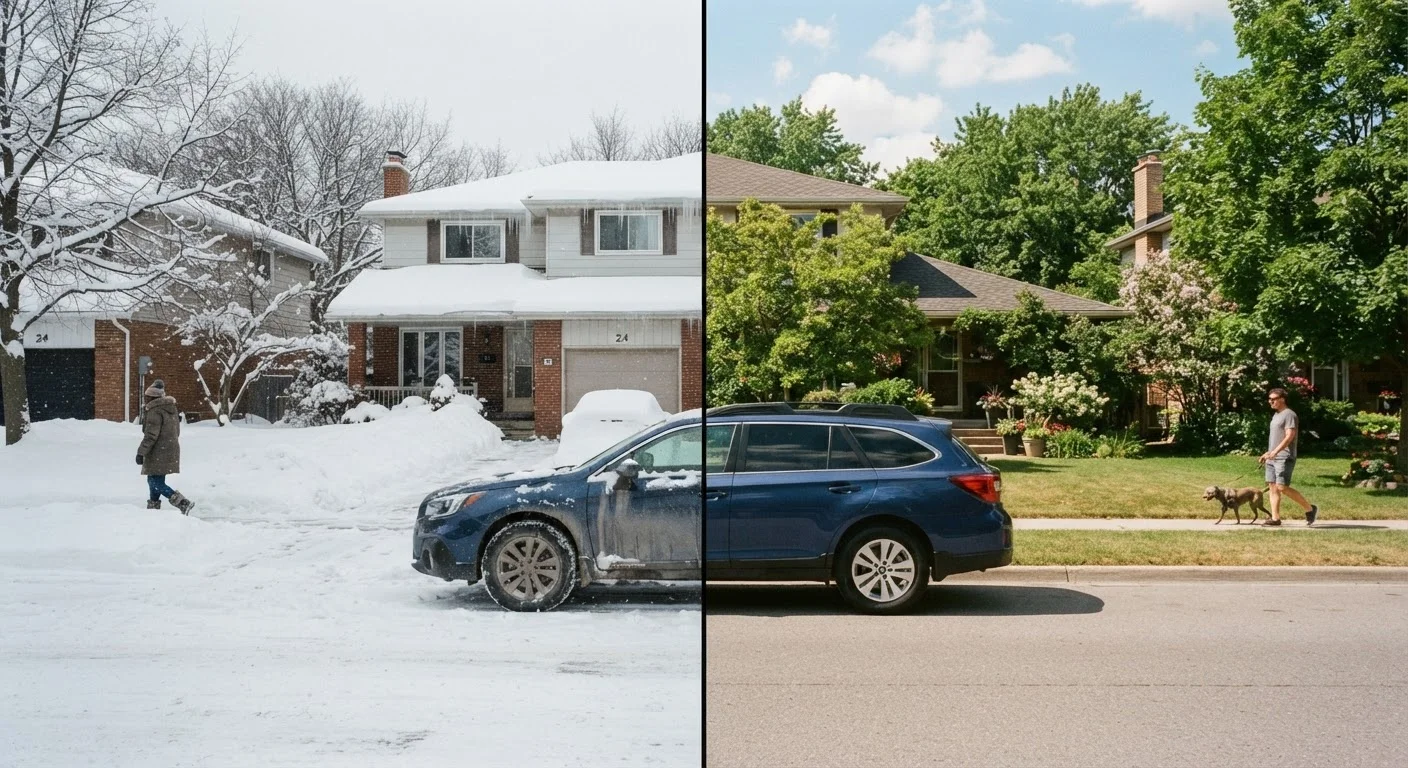
Most seasonal checks can be done at home in under an hour with basic tools.
Skipping seasonal prep is one of the most common reasons for avoidable roadside breakdowns.
Addressing small issues before each season typically costs far less than reactive repairs.
A season-by-season checklist of maintenance priorities to keep your car reliable year-round in varying weather conditions.
Why Seasonal Maintenance Is Different From Your Regular Service Schedule
Your car's manufacturer service schedule covers mileage-based tasks - oil changes, filter swaps, fluid flushes. But seasonal preparation is a separate layer of care that responds to environmental stress rather than wear from miles driven.
Extreme temperatures change how fluids behave, how rubber ages, and how hard your battery has to work. A tire inflated correctly in July can drop several PSI by January without a single mile driven. A battery holding a solid charge in September may struggle to turn over an engine at 10°F in January. These are physics problems, not mileage problems - and your standard service interval won't necessarily catch them in time.
Think of seasonal prep as a two-a-year audit: once before temperatures drop, once before the heat peaks. Done consistently, it's one of the most cost-effective habits in vehicle ownership. For broader context on what maintenance actually matters and where you can realistically cut costs, see our guide to car maintenance on a budget.
Winter Preparation (Before Temperatures Drop)
Test your battery's charge and cold-cranking amps - have a shop or auto parts store run a free load test if your battery is more than three years old.Must
Check tire pressure and adjust to the PSI listed on your door jamb sticker, accounting for the fact that pressure drops roughly 1 PSI for every 10°F of temperature decrease.Must
Inspect tire tread depth using the quarter test - if tread doesn't reach Washington's head, traction on wet or snowy roads will be significantly reduced.Must
Verify antifreeze concentration is rated to at least 20°F below your region's expected low - most auto parts stores will test this free with a hydrometer.Must
Replace wiper blades with winter-rated blades and top off washer fluid with a freeze-resistant formula rated below 0°F.Must
Check all exterior lights since shorter days mean more driving in darkness - replace any dim or burned-out bulbs before winter arrives.Should
Inspect brakes for pad thickness and rotor condition, as stopping distances increase significantly on cold and wet pavement.Should
Keep your gas tank at least half full during cold snaps to reduce condensation buildup in the fuel system and prevent fuel-line freeze in older vehicles.Nice to have
Summer Preparation (Before Heat Peaks)
Check coolant level and condition - old coolant loses its corrosion inhibitors and can cause overheating; if it looks brown or gritty, have it flushed.Must
Inspect radiator hoses and belts for cracks, softness, or swelling, as high heat accelerates rubber degradation significantly.Must
Test your A/C system early in the season - if airflow is weak or it takes a long time to cool the cabin, have a qualified technician check refrigerant levels and system pressure.Must
Recheck tire pressure, as pressure rises roughly 1 PSI for every 10°F of temperature increase - overinflated tires in summer heat are more vulnerable to blowouts.Must
Inspect the battery again, especially if it's more than three years old - summer heat degrades battery fluid faster than cold does.Should
Top off windshield washer fluid with a formula that won't evaporate quickly in heat, and replace wiper blades if they were left on through winter.Should
Year-Round Items to Verify Each Season
Check all fluid levels - engine oil, brake fluid, power steering fluid, and transmission fluid - and top off or schedule a change if any are low or discolored.Must
Verify your spare tire is properly inflated and that your jack and lug wrench are accessible in the trunk.Must
Review your emergency kit and replace any expired or missing items such as jumper cables, a flashlight, or a basic first-aid kit.Should
Clean out your air filter if it looks visibly dirty - a clogged filter reduces fuel efficiency and engine responsiveness in all seasons.Nice to have
What to Do When Seasonal Tasks Flag a Problem
Running through this checklist may reveal something that needs professional attention - a battery reading below 12.4 volts, a coolant reservoir that keeps running low, or brake pads worn past their wear indicators. Catching these before the season starts gives you time to shop around and schedule service without urgency.
Don't Skip Brake Inspection Before Either Season
Brakes that feel fine in mild weather may perform poorly on wet winter roads or fade under repeated hard stops in summer mountain driving. If you notice squealing, grinding, or a longer-than-usual stopping distance, have a qualified mechanic inspect them before the season change - not after. See our guide to extending brake life for habits that reduce wear over time.
If you're uncertain which items to prioritize given your vehicle's mileage or age, cross-reference with our standard car servicing intervals reference to see what your car is likely due for. High-mileage vehicles should also pay extra attention to cooling system and battery health - our guide for cars over 100,000 miles covers those pressure points in detail.
It's also worth knowing that neglecting even small seasonal items - like a marginal battery or low washer fluid - can cascade. Our article on why skipping minor maintenance leads to major bills explains how that pattern typically unfolds.
Required
Tire pressure gauge
Used to check tire PSI against your door jamb specification each season.
Required
Battery load tester or multimeter
Measures battery voltage and cold-cranking capacity before winter; many auto parts stores will do this free.
Required
Coolant hydrometer or test strips
Checks the freeze-point protection level of your antifreeze mixture before cold weather arrives.
Optional
Tread depth gauge
Gives a precise measurement of tire tread depth beyond the basic quarter or penny visual test.
Optional
Flashlight or work light
Needed when inspecting hoses, belts, and fluid reservoirs in low-light engine bays.
Optional
Microfiber cloths
Useful for wiping down the battery terminals and checking for corrosion buildup.
This article is for general informational purposes only. Always consult your vehicle owner's manual and a qualified mechanic before performing or deferring any maintenance tasks.
The content provided on our blog site traverses numerous categories, offering readers valuable and practical information. Readers can use the editorial team’s research and data to gain more insights into their topics of interest. However, they are requested not to treat the articles as conclusive. The website team cannot be held responsible for differences in data or inaccuracies found across other platforms. Please also note that the site might also miss out on various schemes and offers available that the readers may find more beneficial than the ones we cover.