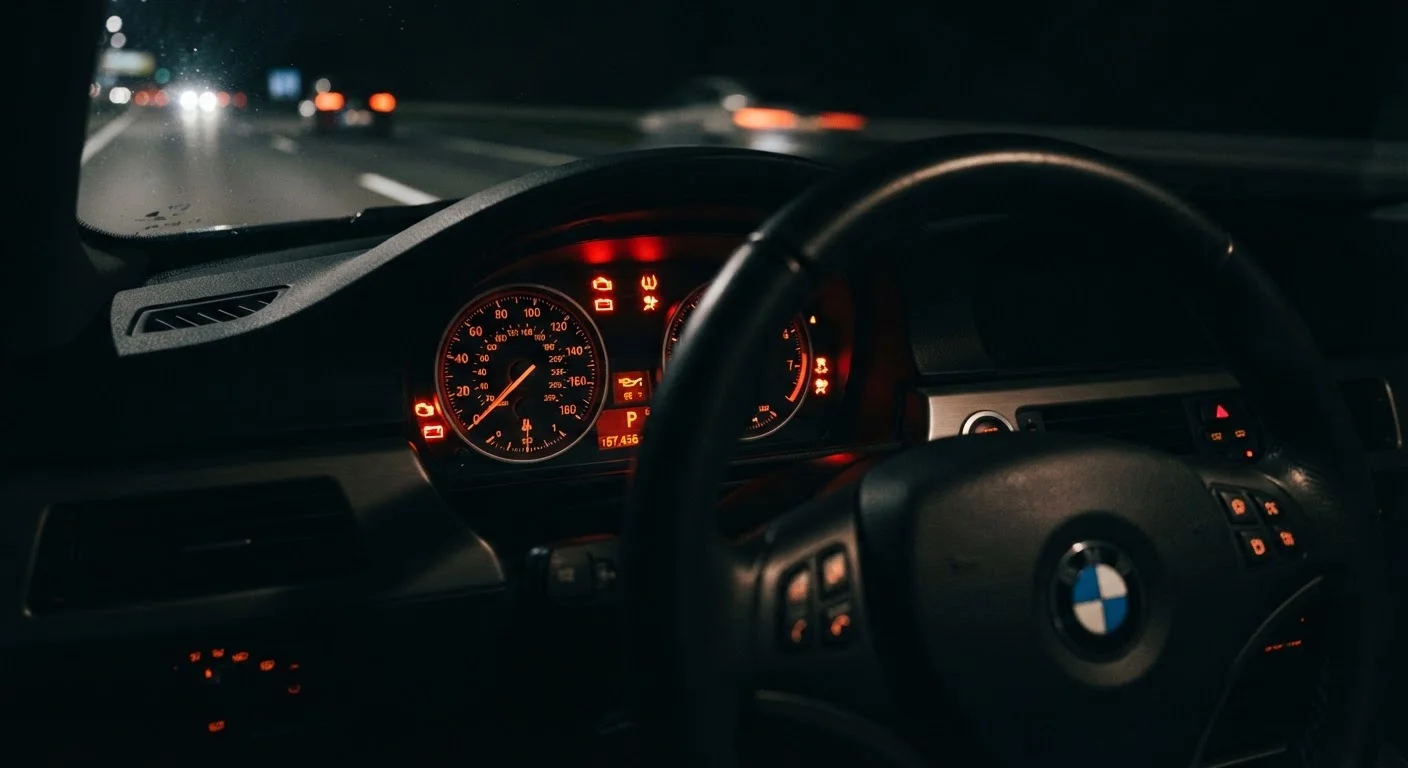
The Color Code: What Red, Yellow, and Green Mean
Before decoding individual symbols, understanding the color system gives you an instant urgency framework. Most vehicles follow this convention:
- Red: Stop or act immediately. A red light signals a serious safety or mechanical risk - continuing to drive could cause major damage or danger.
- Yellow/Amber: Caution. Something needs attention soon, but you're not necessarily facing an immediate crisis. Schedule service within days, not weeks.
- Green or Blue: Informational. These lights confirm that a system is active, such as high beams or cruise control. No action needed.
This framework alone helps you avoid two expensive mistakes: panicking over a yellow light and dismissing a red one. For a broader look at how routine maintenance fits into your overall vehicle care, see your car's service schedule explained.
Keep Your Owner's Manual Within Reach
Your vehicle's owner's manual includes a complete, model-specific guide to every dashboard symbol - far more reliable than generic online searches. If your manual is missing, most automakers offer downloadable PDF versions on their official websites at no cost. A quick five-minute read of the warning lights section is one of the most practical things a new car owner can do.
The Warning Lights You're Most Likely to See
Here's a plain-language breakdown of the most common dashboard alerts:
Check Engine Light (Engine Symbol)
This amber light covers a wide range - from a loose fuel cap to a failing oxygen sensor. A steady light means get it scanned soon. A flashing light means reduce speed and seek service immediately to prevent catalytic converter damage. Fault codes from a free OBD-II scan at many auto parts retailers can narrow down the cause before you visit a shop.
Oil Pressure Warning (Oil Can Symbol - Red)
This is one of the most serious alerts. Low oil pressure means your engine's moving parts aren't being lubricated. Pull over, shut off the engine, and don't restart until a mechanic has assessed it. Running an engine with low oil pressure can cause irreversible internal damage in minutes.
Temperature Warning (Thermometer Symbol - Red)
Your engine is overheating. Turn off the AC, pull over safely, and let the engine cool before opening the hood. Never open a hot radiator cap. Checking your coolant level is a useful first step once the engine has fully cooled.
Battery / Charging System (Battery Symbol)
This amber or red light signals a charging fault - usually the alternator or drive belt rather than the battery itself. Reduce electrical load (AC, radio) and head to a shop. Ignoring it risks a complete loss of power while driving.
Tire Pressure (TPMS - Exclamation Mark in Tire)
An underinflated tire affects handling, fuel economy, and tire life. Check all four tires against the recommended PSI on your door jamb sticker - not the maximum listed on the tire sidewall. Cold weather commonly triggers this light as air contracts.
Brake System Warning (Exclamation Mark in Circle)
If your parking brake is off and this light appears, it may signal low brake fluid or a hydraulic fault. Brakes are safety-critical - have it inspected promptly. Don't confuse this with the ABS light, which relates to the anti-lock braking system specifically.
1 in 3
US drivers ignoring a warning light
A survey by CarMD found that roughly one in three American drivers admitted to ignoring an illuminated check engine light for more than a month.
$400+
Average check engine repair cost
CarMD's Vehicle Health Index has tracked average check engine-related repair costs consistently above $400, underscoring the cost of delayed diagnosis.
1 PSI
Tire pressure lost per 10°F drop
The U.S. Department of Energy notes tires lose approximately 1 PSI for every 10-degree Fahrenheit decrease in ambient temperature.
When to Wait and When to Act Immediately
Not every warning light requires roadside drama, but sorting urgency correctly protects your wallet and your safety.
| Light | Urgency | Recommended Action |
|---|---|---|
| Oil Pressure (red) | Immediate | Pull over, engine off |
| Temperature (red) | Immediate | Pull over, let cool |
| Brake System | Same day | Inspect brake fluid; shop visit |
| Check Engine (flashing) | Immediate | Reduce speed, seek service |
| Check Engine (steady) | Within days | Get OBD-II scan |
| Battery | Same day | Limit electrics; shop visit |
| TPMS | Soon | Check and inflate tires |
The guiding rule: red means stop, amber means schedule. Proactive attention to amber lights is one of the simplest ways to avoid costly repairs - a pattern explored further in our guide on car maintenance on a budget. And if you've been told certain maintenance steps are non-negotiable, it's worth reading about car maintenance myths that cost drivers money before spending unnecessarily.