Why Old Car Advice Keeps Costing Drivers
Much of the car maintenance advice circulating today dates back to an era of carbureted engines, single-grade motor oils, and 1970s mechanical simplicity. Vehicles and lubricants have advanced considerably since then, but the folk wisdom hasn't kept pace. The result: many drivers are spending money on unnecessary services while occasionally skipping things that genuinely matter.
This article examines the most persistent maintenance myths, explains what current automotive engineering actually recommends, and helps you decide where your maintenance dollars have real impact. For a broader look at keeping costs under control, see our car maintenance budget guide.
Myth
You must change your engine oil every 3,000 miles or risk engine damage.
Fact
Most modern vehicles - especially those using synthetic oil - can safely go 5,000 to 10,000 miles or more between oil changes, depending on the manufacturer's specification.
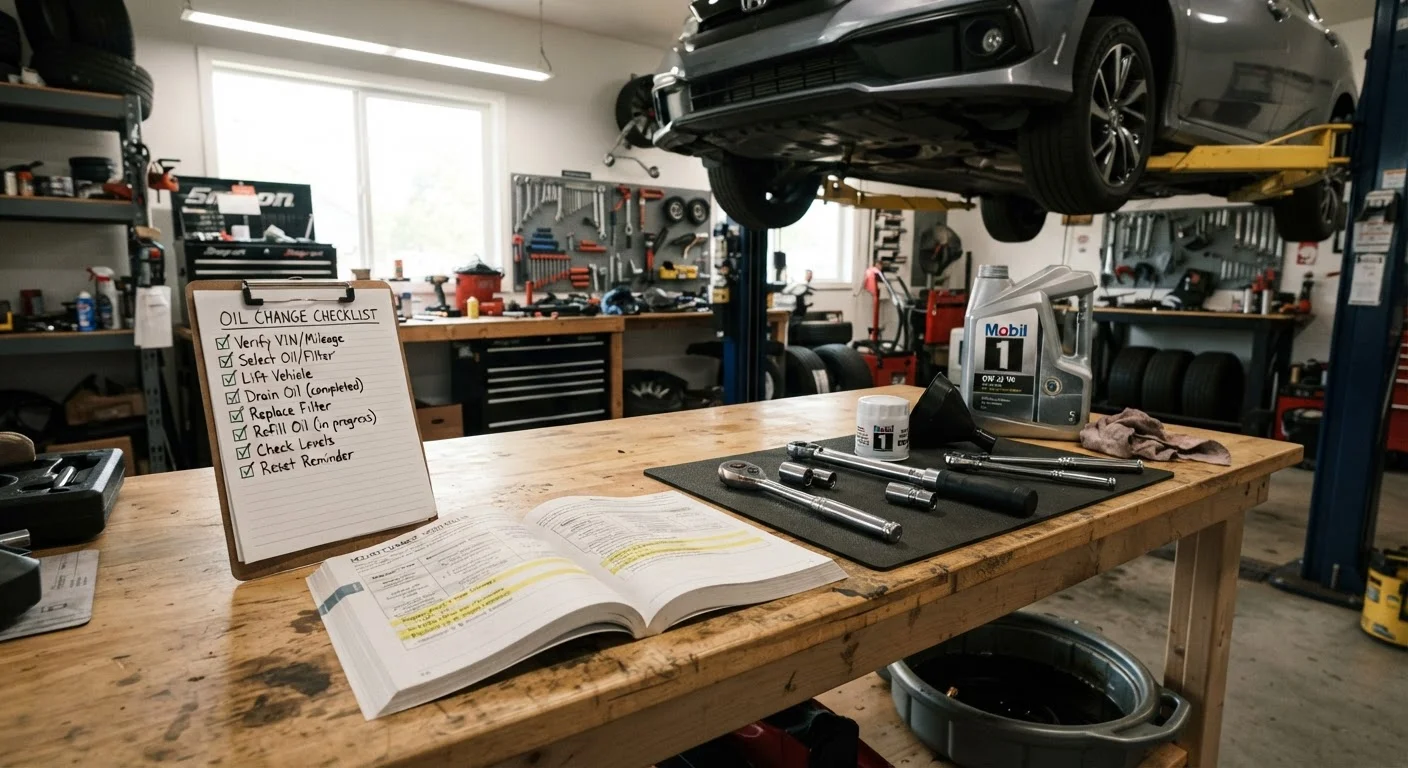
The 3,000-mile rule made sense decades ago when conventional motor oils degraded faster and engines had looser tolerances. Today's synthetic and synthetic-blend oils maintain viscosity and protective properties far longer. Following an unnecessarily short interval doesn't protect your engine further - it just costs you extra money on oil and shop visits. Always check your owner's manual or oil life monitor for the interval that applies to your specific engine. For a detailed comparison of oil types, see our synthetic vs. conventional oil guide.
Myth
You need to let your engine idle and warm up for several minutes before driving in cold weather.
Fact
Modern fuel-injected engines reach operating temperature more efficiently by being driven gently, not by sitting idle.
Extended idling was necessary for older carbureted engines that needed time to adjust fuel mixture in cold conditions. Fuel injection systems eliminated that need. Idling a modern engine for more than 30 seconds before moving doesn't meaningfully warm the drivetrain - and it burns fuel, increases emissions, and can wash cylinder walls with excess fuel if prolonged. A better approach: start the engine, allow 20-30 seconds, then drive gently until the temperature gauge begins to rise.
Myth
Premium fuel will make any car run better and last longer.
Fact
Premium fuel only benefits engines specifically designed or calibrated to require it. Using it in a standard engine produces no measurable performance or longevity gain.
Premium fuel has a higher octane rating, which resists engine knock under high compression. Engines engineered for high compression ratios benefit from it; engines not designed that way do not. Your owner's manual will clearly state whether your engine requires premium or recommends it - and there is a meaningful difference between those two words. Spending more at the pump for no functional gain is a straightforward way to overspend on vehicle ownership.
Myth
Inflate your tyres to the maximum pressure printed on the tyre sidewall.
Fact
The correct tyre pressure is the figure specified by the vehicle manufacturer, typically found on a sticker inside the driver's door jamb - not the maximum rating on the tyre.
The number moulded into the tyre sidewall is the maximum pressure that tyre can safely hold - not the recommended operating pressure for your vehicle. Overinflating tyres reduces the contact patch with the road, compromises braking distance, increases wear in the centre of the tread, and makes the ride harsher. Under-inflation, meanwhile, raises rolling resistance and heat. Your vehicle's placard pressure is the value that balances safety, fuel economy, and tyre life for that specific car. For more on tyre care, see our tyre maintenance habits guide.
Myth
You must use the dealership for servicing to keep your warranty valid.
Fact
Under the Magnuson-Moss Warranty Act, manufacturers generally cannot require consumers to use dealer service for routine maintenance as a condition of keeping a warranty in force.
Many drivers believe that taking their car to an independent shop or performing DIY maintenance voids the manufacturer's warranty. In most cases under U.S. law, this is not accurate. You typically need to follow the manufacturer's recommended service schedule and use the correct specification parts and fluids - but where that work is performed is generally your choice. Keep records of all services performed, including receipts and dates, as documentation protects you if a warranty dispute arises. When in doubt, consult the warranty documentation or seek independent legal or consumer guidance.
Where to Find Reliable Maintenance Guidance
The single most underused resource for car maintenance is the owner's manual that came with your vehicle. Manufacturers publish specific service intervals calibrated to your engine, climate, and typical driving patterns - and those figures are based on actual engineering data, not profit motives.
Many modern vehicles also include an oil life monitoring system that calculates change intervals based on real driving conditions rather than a fixed mileage counter. If your car has one, follow it. Consult your manual to understand what your specific system tracks and how to reset it after a service.
Don't Skip Maintenance - Reschedule It Wisely
Debunking myths doesn't mean deferring maintenance altogether. Skipping legitimately necessary services - such as brake inspections, coolant flushes, or air filter replacements - can lead to significantly larger repair bills. See our guide on how skipped maintenance escalates costs for context on which tasks carry real consequences when delayed.
For tasks that go beyond fluid checks - such as brake work, suspension components, or anything involving your emissions system - a qualified mechanic should handle the job. As a related resource, our dashboard warning lights guide can help you understand which signals demand prompt attention and which allow a little more time.
If you're driving a higher-mileage vehicle, maintenance priorities shift somewhat. Our guide on keeping your car running past 100,000 miles covers which systems deserve extra attention as the odometer climbs. And if fuel consumption has crept up, check whether any of the common culprits outlined in fuel economy myths that cost drivers real money apply to your habits.