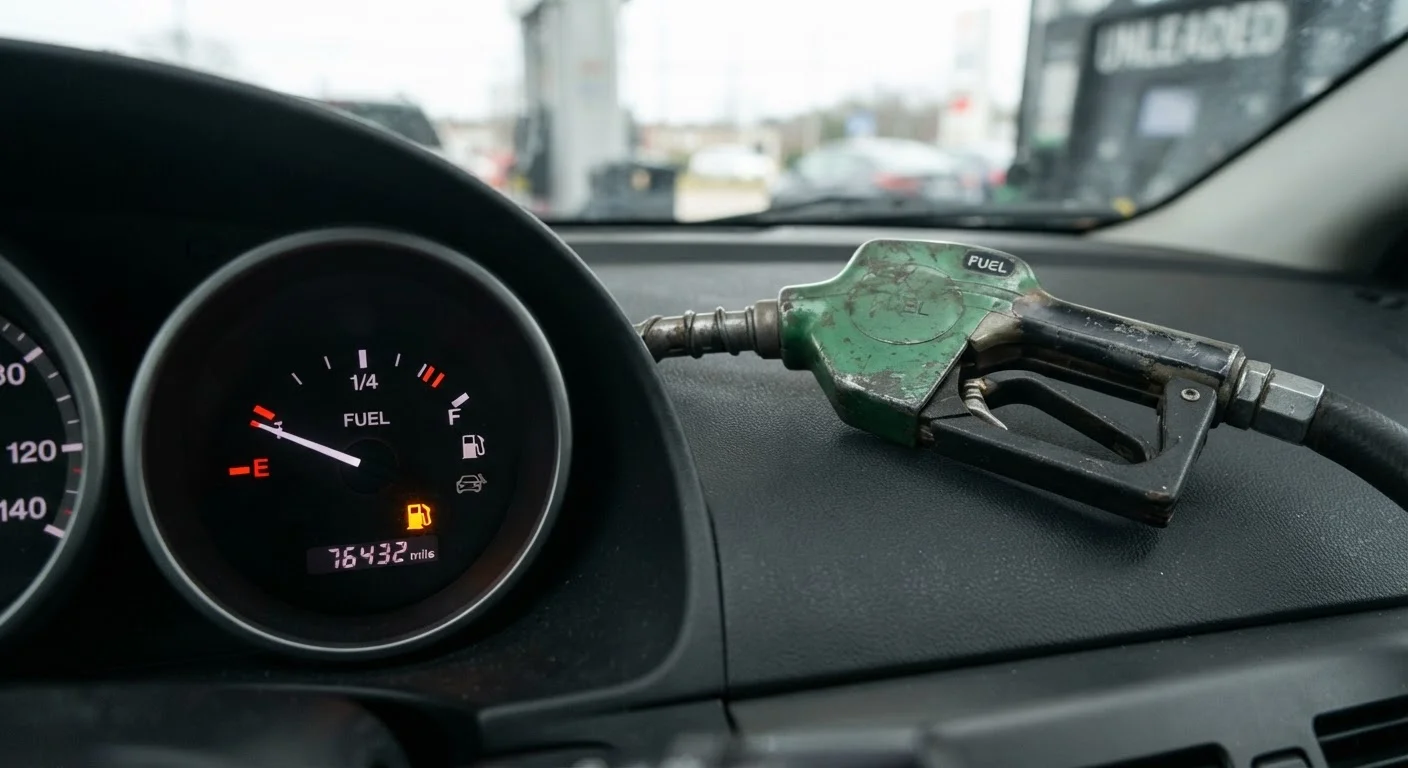
Why Fuel Myths Persist - and What They Cost You
Fuel economy advice spreads fast - from well-meaning family members, online forums, and decade-old car magazines. The problem is that much of it is either outdated, misunderstood, or simply wrong. Acting on bad information won't just fail to save you money; in some cases, it actively adds to your costs.
If you're trying to squeeze more out of every gallon, understanding what actually moves the needle is the place to start. For a broader look at where car ownership costs quietly pile up, see why your fuel bill is higher than it should be.
Myth
Using premium (higher-octane) gas in a standard engine makes it run better and more efficiently.
Fact
Premium fuel offers no performance or efficiency benefit in engines designed for regular-grade gasoline.
Octane rating measures a fuel's resistance to premature ignition (knocking), not its energy content or quality. Most everyday vehicles are engineered to run on regular 87-octane fuel. Unless your owner's manual says premium is required - not just recommended - you're paying a higher price per gallon for zero measurable gain. The U.S. Department of Energy states plainly that using a higher octane than required provides no benefit. Check your manual before spending more at the pump.
Myth
You should let your engine idle for several minutes to warm it up before driving, especially in cold weather.
Fact
Modern fuel-injected engines warm up faster and more efficiently by being driven gently, not by idling in the driveway.
Extended idling made sense for older carbureted engines, but today's vehicles use electronic fuel injection that reaches operating temperature much more quickly under light load. Idling burns fuel while moving nowhere, and in many states, extended idling in residential areas may also carry local ordinance restrictions. A brief 30-second idle in extreme cold is generally sufficient to allow oil to circulate - after that, driving gently is better for both the engine and your fuel economy. This myth is addressed in detail in our article on car maintenance myths that could be costing you money.
Myth
Rolling down your windows is always more fuel-efficient than using the air conditioner.
Fact
At highway speeds, open windows can increase aerodynamic drag enough to offset any A/C savings - the answer depends on your speed.
At low speeds (city driving, under roughly 45 mph), skipping the A/C and opening windows generally does save fuel because aerodynamic drag is minimal. At highway speeds, open windows significantly increase drag, and the fuel cost of that drag can equal or exceed the cost of running the A/C compressor. The most fuel-efficient approach at highway speeds is typically to use A/C set at a moderate temperature rather than rolling all windows down. The specific break-even speed varies by vehicle shape and A/C system efficiency, so neither answer is universally correct.
Myth
Topping off your tank after the pump clicks off gets you more fuel for your money.
Fact
Topping off can damage your vehicle's evaporative emissions system and doesn't meaningfully add usable fuel.
When the pump clicks off, the nozzle has detected that the tank is full. Continuing to pump forces fuel into the charcoal canister that's part of your car's evaporative emissions control (EVAP) system - a component designed to capture fuel vapors, not liquid fuel. Saturating it can cause the EVAP system to malfunction, potentially triggering a check engine light and requiring a repair that costs far more than any extra fuel gained. Stop at the first click.
Myth
Fuel-saving devices - magnetic fuel conditioners, ionizers, and similar gadgets - noticeably improve MPG.
Fact
Independent testing has not found credible evidence that aftermarket fuel-saving gadgets deliver meaningful, real-world fuel economy improvements.
The U.S. Environmental Protection Agency (EPA) has tested numerous fuel-saving devices over the years and found that the vast majority do not improve fuel economy and some may even damage the engine or emissions systems. Testimonials and marketing claims are not substitutes for independently verified, controlled testing. If a device's claims sound too good to be true, they almost certainly are. Save that money for maintenance items - like clean air filters or properly inflated tires - that have documented effects on efficiency.
Habits That Actually Improve Fuel Economy
Once the myths are cleared away, a few evidence-backed habits consistently make a meaningful difference:
- Maintain correct tyre pressure. Under-inflated tyres increase rolling resistance. The U.S. Department of Energy estimates that keeping tyres properly inflated can improve fuel economy by up to 3% - a small but real gain over time.
- Reduce unnecessary weight. Hauling heavy gear in your trunk when you don't need to costs fuel. Every extra 100 lbs can reduce fuel economy by roughly 1%, according to the DOE.
- Ease up on aggressive acceleration and braking. Smooth, anticipatory driving is consistently among the highest-impact fuel-saving behaviors, regardless of vehicle type.
- Use cruise control on highways. Maintaining a steady speed on open roads avoids the fuel cost of repeated acceleration.
These aren't dramatic fixes - but they're real, and they compound over thousands of miles. Pair them with staying on top of your vehicle's scheduled maintenance, and you'll get the most from every tank. Our guide on car maintenance on a budget breaks down which tasks matter most without unnecessary spending.
This article provides general automotive information for educational purposes. Always consult your vehicle's owner's manual or a qualified mechanic for guidance specific to your car.