What Each Option Actually Involves
An oil change is one of the most routine maintenance tasks a vehicle requires, but the two paths to getting it done differ significantly in what they demand from you.
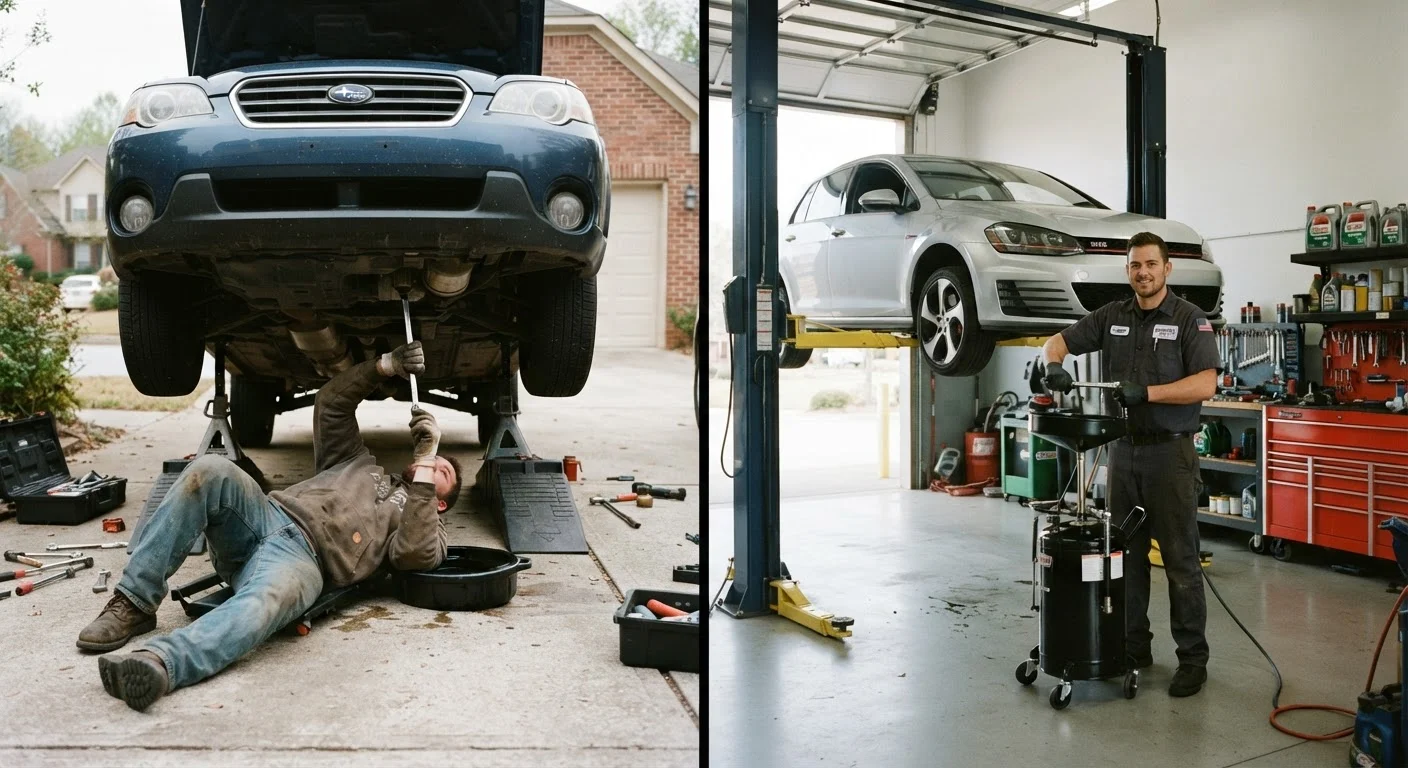
A DIY oil change means draining the old engine oil, swapping the oil filter, refilling with fresh oil to the correct specification, and disposing of the used oil responsibly. You'll need a floor jack and jack stands (or ramps), a drain pan, an oil filter wrench, the correct oil grade and quantity, and a new filter. The job typically takes 45-90 minutes for a first-timer and around 30 minutes once you're familiar with your vehicle's layout.
A professional garage service hands all of that off to a technician. You drop off the vehicle, they complete the drain, filter swap, refill, and a basic inspection, then hand it back - usually within 30 minutes. You're paying for labor, overhead, and convenience rather than doing any of the physical work yourself.
For broader context on which maintenance tasks are worth tackling yourself versus outsourcing, see our guide to car maintenance on a budget.
Breaking Down the Real Costs
Cost is usually the first reason drivers consider the DIY route - but the math isn't always straightforward.
| Criterion | DIY Oil Change | Professional Garage |
|---|---|---|
| Typical per-service cost | $25-$60 (oil + filter) | $60-$100+ |
| Upfront tool investment | $80-$150 (one-time) | None |
| Time required | 30-90 minutes | 20-30 minutes |
| Skill level needed | Basic mechanical ability | None |
| Workspace required | Driveway or garage with clearance | None |
| Used oil disposal | Your responsibility | Handled by garage |
| Error risk | Moderate without experience | Low, but not zero |
For a DIY change, expect to spend roughly $25-$60 on oil and a filter depending on whether your vehicle takes conventional or synthetic oil. That said, your first attempt carries a one-time tool cost: a quality jack, jack stands, and an oil filter wrench can run $80-$150 combined. If you do three or four oil changes a year, those tools typically pay for themselves within the first year or two.
Professional garage pricing varies by region, vehicle type, and oil specification, but a standard synthetic oil change commonly runs $60-$100 or more. The convenience is real - but it's reflected in the price.
One cost that's easy to overlook with DIY: used motor oil must be disposed of properly. Most auto parts retailers accept used oil for recycling at no charge, but factoring in that extra trip matters for your time calculation. To understand how neglecting this kind of regular maintenance can escalate expenses, our article on why skipping minor maintenance leads to major repair bills is worth a read.
Risks, Skill Level, and When to Step Back
Oil changes are beginner-friendly compared to most mechanical jobs, but errors do happen - and some are costly.
Common DIY mistakes include overtightening or cross-threading the drain plug, installing the wrong filter, underfilling or overfilling the oil, and forgetting to replace the drain plug before adding new oil. Any of these can cause engine damage or oil leaks. If you're methodical and follow your vehicle's owner manual carefully, these risks are manageable. If you're working under time pressure or on an unfamiliar vehicle, the margin for error narrows.
Garages aren't immune to errors either - a missing drain plug or a filter not fully seated can happen in a rushed shop environment. Either way, verifying the oil level with the dipstick after the job is good practice regardless of who performed the service.
It's also worth knowing that some newer vehicles - particularly those with oil life monitoring systems - may flag a warning if the service interval is reset incorrectly after a DIY change. Check your owner's manual for reset procedures specific to your model. For a look at how some common assumptions about oil changes can mislead drivers, see our piece on car maintenance myths that could be costing you money.
On the oil specification side, choosing between synthetic and conventional isn't just a matter of budget - your engine's design and operating conditions matter. Our synthetic oil vs. conventional oil comparison breaks down when each makes practical sense.
This article is for general informational purposes only. Always consult your vehicle's owner manual and, when in doubt, a qualified mechanic before performing maintenance tasks on your vehicle.