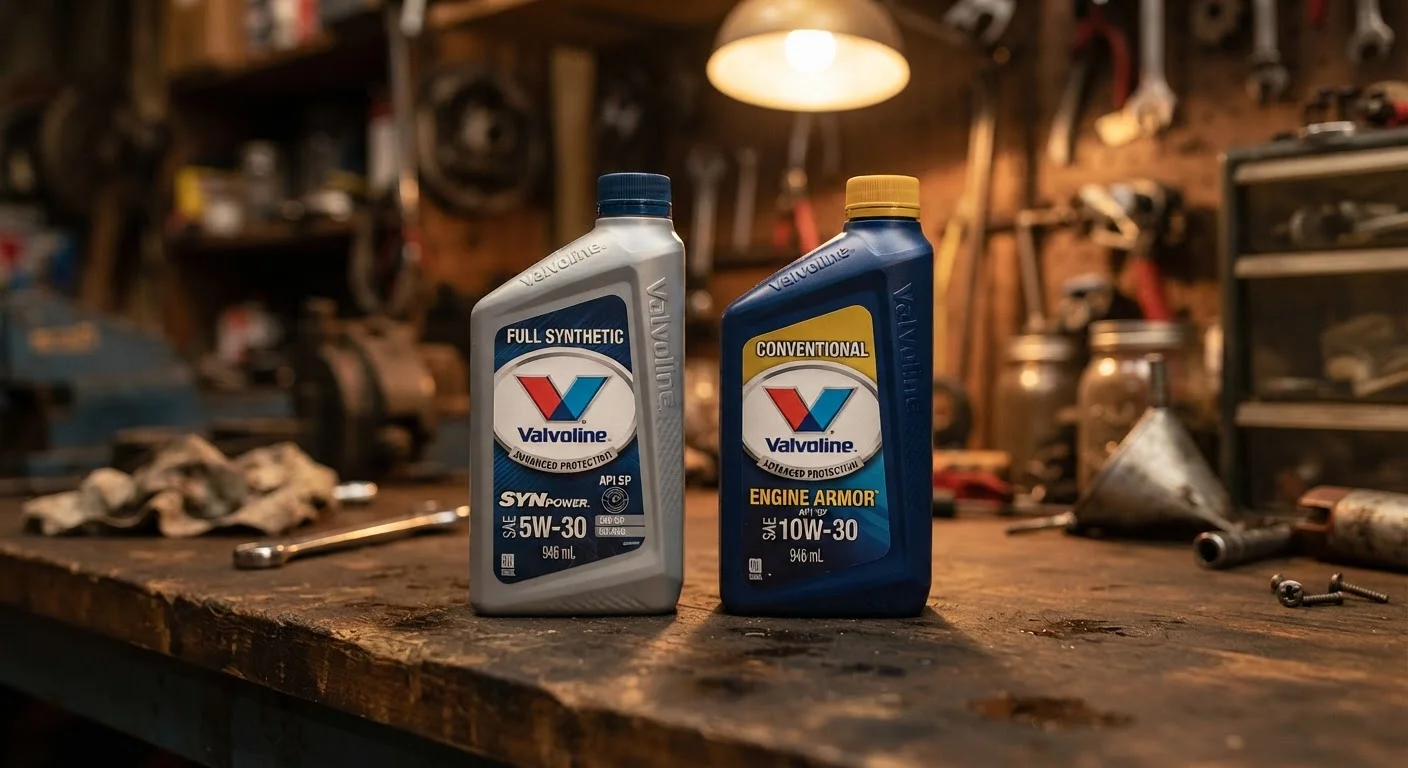
What Makes These Oils Different
Both synthetic and conventional motor oils lubricate your engine, reduce friction, and carry heat away from moving parts. What separates them is origin and structure.
Conventional oil is refined directly from crude petroleum. The refining process removes many impurities, but the resulting molecules still vary in size and shape, which affects how the oil behaves across a range of temperatures.
Synthetic oil is either built from chemical compounds designed specifically for lubrication (full synthetic) or blended from conventional and synthetic base stocks (synthetic blend). Because the molecules are more uniform, synthetic oil tends to flow more reliably in cold starts, resist breakdown longer under heat, and maintain viscosity more consistently over time.
This structural difference is why manufacturers of turbocharged engines, which run hotter and tighter tolerances than naturally aspirated engines, routinely specify full synthetic oil.
| Conventional Oil | Synthetic Blend | Full Synthetic | |
|---|---|---|---|
| Base stock origin | Refined crude petroleum | Mix of crude and synthetic | Engineered chemical compounds |
| Typical change interval | 3,000-5,000 miles | 5,000-7,500 miles | 7,500-15,000 miles |
| Cold-start performance | Thickens more in cold | Better than conventional | Best cold-flow properties |
| Heat and oxidation resistance | Breaks down faster under heat | Moderate resistance | Highest resistance to breakdown |
| Typical cost per quart | Lowest | Moderate | Higher |
| Best suited for | Older, simpler engines | Transitional or mixed use | Modern, turbocharged, high-mileage |
Change Intervals: Where the Cost Math Gets Interesting
One of the most persistent myths in car ownership is that every vehicle needs an oil change every 3,000 miles - a standard rooted in an era of older engine designs and conventional oil. Our breakdown of common car maintenance myths explains why that figure is often outdated for modern vehicles.
Typical change intervals look like this:
- Conventional oil: Roughly 3,000-5,000 miles, depending on vehicle age and driving conditions.
- Synthetic blend: Often 5,000-7,500 miles.
- Full synthetic: Many manufacturers recommend 7,500-10,000 miles, and some specify up to 15,000 miles under normal driving conditions.
If you drive 12,000 miles annually, that translates to two or three synthetic changes per year versus four to six conventional changes. The per-change price difference (synthetic typically costs more per quart) can narrow significantly or disappear once you account for fewer service visits and less oil used over time. Whether DIY or shop-based, weighing the real costs of a DIY oil change versus going to a garage can help you find the most affordable approach for your situation.
Important caveat: Always follow your owner's manual. Manufacturer specifications - not general rules of thumb - determine the correct interval for your vehicle.
Performance in Extreme Conditions
Engine oil faces two reliability tests that matter most to everyday drivers: cold starts in winter and sustained heat in stop-and-go traffic.
In cold temperatures, conventional oil can thicken more than synthetic, creating a brief period at startup when metal parts have less lubrication - a window when some engine wear can occur. Synthetic oil's more uniform molecular structure allows it to flow faster under cold conditions, getting to critical engine components more quickly after ignition.
Under sustained heat - towing, highway driving, or prolonged idling in summer - conventional oil can oxidize and break down into sludge faster than synthetic. Synthetic oil's chemical stability means it resists oxidation longer, staying effective closer to the end of its change interval.
For drivers in climates with harsh winters or very hot summers, this thermal stability difference is especially meaningful. It also matters for anyone driving an older, high-mileage vehicle where engine tolerances have loosened with wear. Owners of older cars may find that a high-mileage synthetic formulation - designed with seal conditioners - is worth exploring with their mechanic.
Which Oil Is Right for Your Vehicle?
The single most reliable guide is your vehicle's owner's manual. If it specifies full synthetic, using conventional oil voids the manufacturer's recommendation and may affect warranty coverage. If it permits conventional, synthetic is usually still acceptable - but you're paying for performance the manufacturer didn't engineer the vehicle to require.
A few practical rules of thumb:
- Turbocharged or direct-injection engines: Almost always require full synthetic.
- Older vehicles with high mileage: A high-mileage synthetic or synthetic blend may be a sensible choice, but discuss with a qualified mechanic before switching if the car has been on conventional for years.
- Low-mileage drivers on a tight budget: If your manufacturer allows conventional and you're driving fewer than 7,500 miles per year, conventional oil may be the more practical option - especially if you change it on schedule.
Viscosity grade (e.g., 5W-30) matters as much as oil type. Always match the grade specified in your manual regardless of which base oil you choose. Getting the grade wrong can affect fuel economy and engine protection - a point worth keeping in mind given how much common fuel economy myths already lead drivers to spend unnecessarily.
This article is for general informational purposes only. For guidance specific to your vehicle, consult a qualified mechanic or refer to your owner's manual.