Why These Three Commands Are the Foundation of Everything
Before you spend money on obedience classes or specialty gear, know this: sit, stay, and come are the building blocks that nearly every other training skill rests on. A dog who knows these three commands is safer in public, easier to manage at home, and - honestly - a lot more fun to live with.
These commands work because they tap into the same behavioral principles used by professional trainers worldwide. Rewarding a behavior immediately and consistently makes it more likely to repeat - that's the core of positive reinforcement training, and it costs you nothing but patience and a handful of kibble.
The good news for budget-conscious pet owners: dogs don't know whether their treat came from a gourmet pet boutique or your fridge. A tiny piece of cooked chicken or a cube of plain cheese is often more motivating than anything sold in a fancy foil bag. For more creative approaches to keeping training costs minimal, see our guide to pet training on a tight budget.
What you will need
What You Need Before You Begin
The beauty of this approach is that your supply list is short. Gather your treats, find a quiet corner, and commit to showing up for your dog every day. If you're unsure whether to use verbal cues alone or pair them with hand signals, our training signals reference guide can help you decide what combination suits your dog best.
Soft, small treats
Used to reward correct responses immediately after the behavior occurs - small size keeps sessions from overfeeding.
Treat pouch or small bowl
Keeps rewards accessible so you can deliver them within 1-2 seconds of the desired behavior.
A standard leash (4-6 ft)
Useful during the 'come' command to gently guide your dog toward you in early training stages.
Set up a distraction-free training zone
Choose a quiet indoor spot - a living room or hallway works perfectly. Remove toys, other pets, and anything competing for your dog's attention. Training in a low-distraction environment helps your dog focus and learn faster before you gradually introduce more challenging settings.
Teach the Sit command
Hold a treat close to your dog's nose, then slowly raise your hand upward. As the treat moves back over their head, their bottom will naturally lower toward the floor. The moment their rear touches the ground, say "Sit" clearly, then immediately give the treat and offer calm verbal praise like "Yes!" or "Good dog."
Repeat this 5-10 times per session. Never push your dog's hindquarters down - lure-based learning is faster and builds a positive association with the command.
Introduce the Stay command
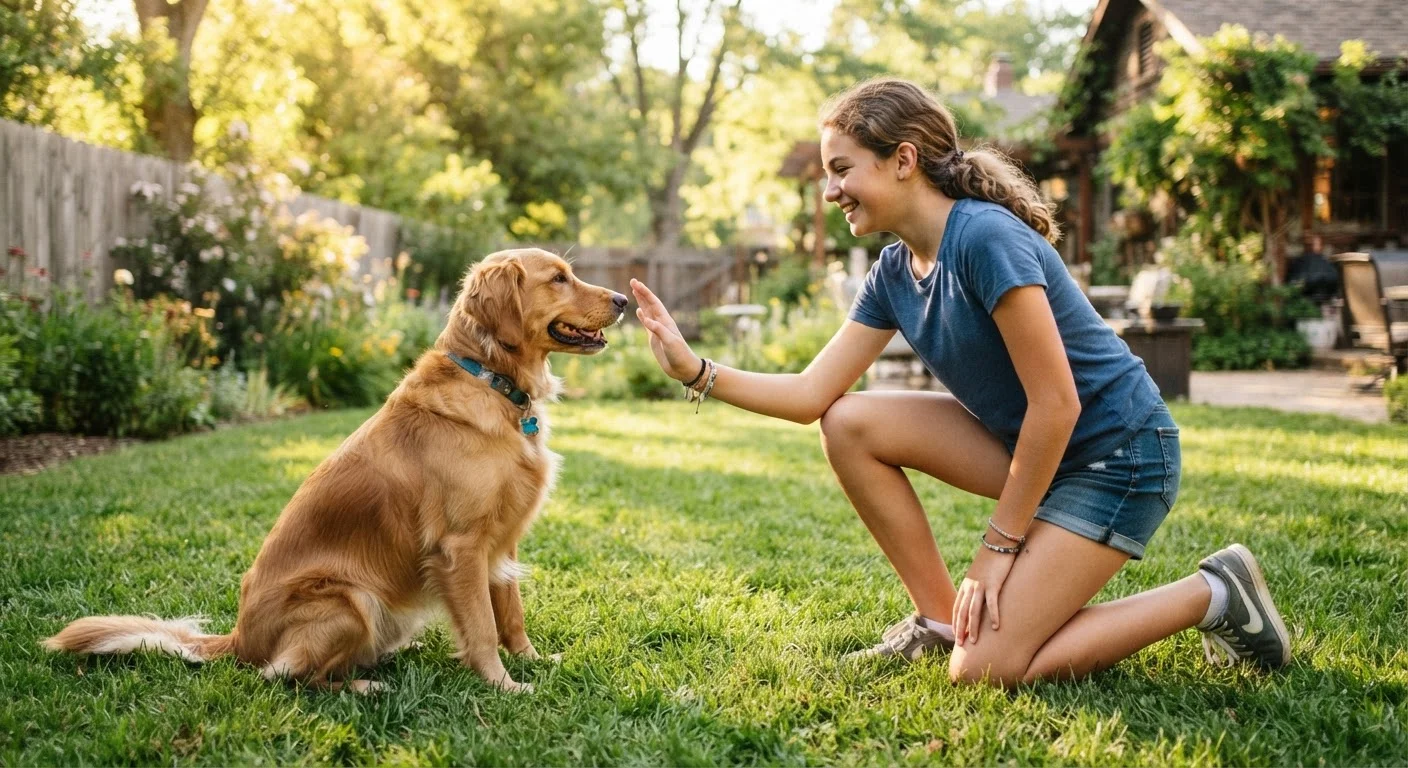
Ask your dog to sit. Once seated, open your palm toward them like a stop gesture and say "Stay" in a calm, firm tone. Take one small step backward. If they stay still for even 2-3 seconds, return, reward, and praise. Gradually increase the distance and duration over multiple sessions.
If your dog breaks position, simply reset without scolding - calmly guide them back to sit and try again with a shorter distance. Progress at your dog's pace.
Train the Come command
With your dog on a leash in your quiet training zone, crouch down to their level, open your arms wide, and say "Come" in an upbeat, inviting tone. Gently guide the leash toward you if needed. The moment they reach you, reward enthusiastically with a treat and exuberant praise.
Coming when called is one of the most critical safety skills a dog can have. Make it the most rewarding thing your dog does in any session - use your highest-value treat here.
Practice short sessions daily and build gradually
Aim for two to three 5-10 minute sessions per day rather than one long marathon. End every session on a success - even if you need to ask for something easy like sit - so your dog always finishes with a win and a reward.
After about a week of consistent indoor practice, start introducing mild distractions: practice near a window, in a different room, or with family members present. Gradually move to a quiet outdoor space once commands are solid indoors.
Troubleshooting Common Setbacks
Even with the best technique, you'll hit bumps. Here's how to handle the most common ones:
- Dog ignores the treat lure: Try a different food. Some dogs are pickier than others, and the treat needs to be genuinely motivating to work as a reward.
- Dog sits but won't stay: You've likely increased distance or duration too quickly. Go back to basics - one step back, one second of stay - and rebuild more slowly.
- Dog comes partway then stops: Your recall reward may not be exciting enough. Use your most irresistible treat exclusively for the come command to build a strong, reliable response.
- Dog seems bored or distracted: Session may be too long. Cut it to 3-5 minutes and always end while engagement is still high.
If you've been using only verbal cues and aren't getting traction, it's worth exploring whether a different approach might suit your dog better - clicker training vs. verbal cues breaks down the pros and cons of each method.
Training Is Not a Substitute for Veterinary Care
Behavioral issues can sometimes have underlying medical causes. If your dog shows sudden aggression, extreme fearfulness, or dramatic behavior changes, consult a licensed veterinarian before continuing training. This article provides general educational guidance only - it is not a substitute for professional behavioral or veterinary assessment.
For a broader framework that takes you well beyond these three foundational commands, the complete guide to training a well-behaved dog at home is a great next step once your dog has these basics locked in.
This article is for general informational and educational purposes only. It does not constitute veterinary or professional behavioral advice. If your dog displays concerning behaviors, please consult a licensed veterinarian or certified animal behaviorist.