Why the Science Actually Backs This Up
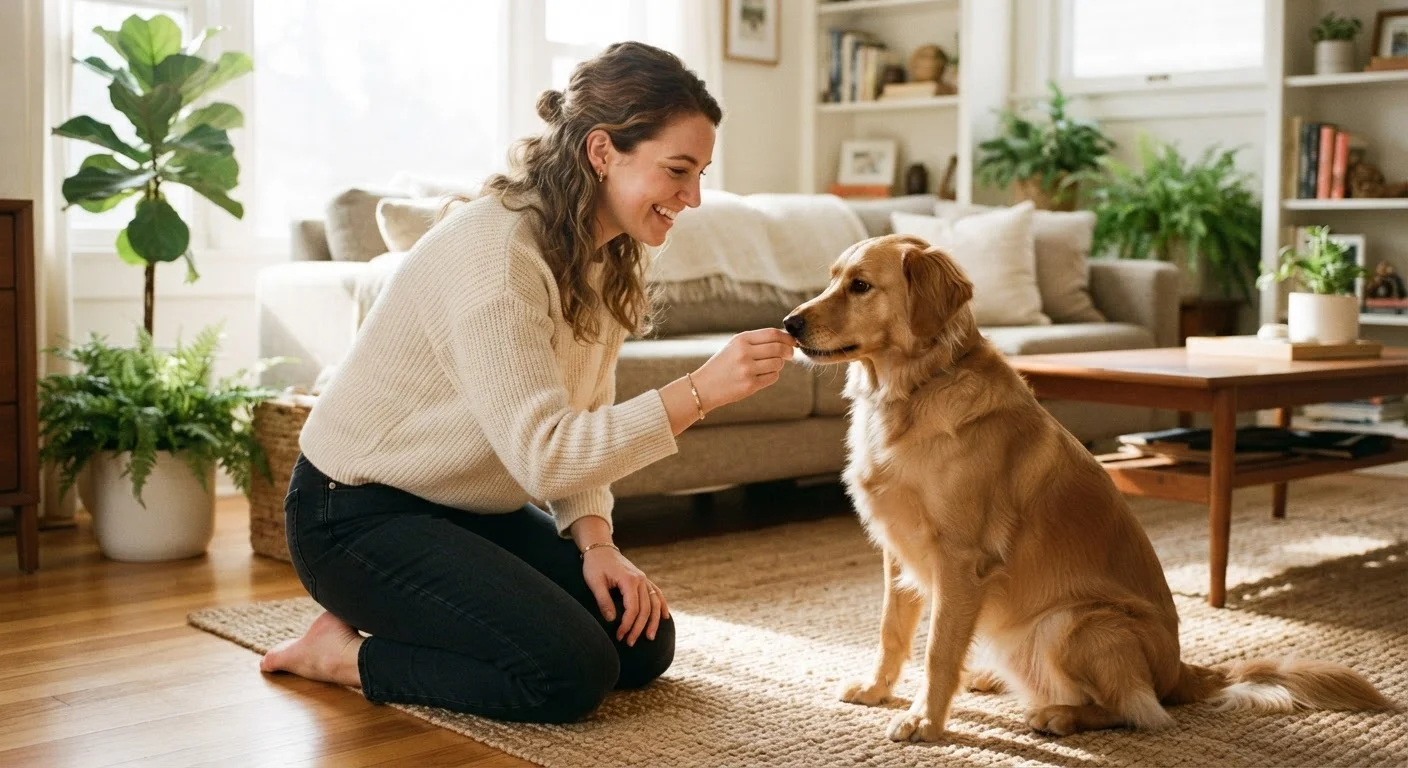
Positive reinforcement isn't a feel-good trend - it has roots in decades of rigorous research. The core principle comes from operant conditioning, a learning framework developed through controlled experiments showing that behaviours followed by positive outcomes are more likely to be repeated. Applied to pets, this means: do the thing, get the good stuff, do the thing again.
Major veterinary and animal behaviour organisations - including the American Veterinary Society of Animal Behavior - have published position statements supporting reward-based training and highlighting concerns about punishment-based alternatives. The evidence consistently shows that animals trained with positive reinforcement tend to be less stressed, more engaged, and better at generalising new skills to different environments.
It's also worth understanding what positive reinforcement is not. It doesn't mean ignoring unwanted behaviours forever, nor does it mean spoiling your pet. It simply means strategically building the behaviours you want by making them worth the animal's while.
“The most effective animal training is built on the simple principle that behaviour is shaped by its consequences. When we make desired behaviour rewarding and easy, animals choose it - not because they're forced to, but because it works for them.”
— Dr. Karen Overall, Veterinary behaviourist and author of clinical behaviour manuals
The Mechanics: Timing, Rewards, and Consistency
Three factors determine whether positive reinforcement actually works in practice:
- Timing: The reward must follow the desired behaviour within one to two seconds. Any longer, and the animal struggles to connect the action to the consequence. This is why a verbal marker like "yes!" or a clicker is so useful - it bridges the gap while you reach for the treat.
- Value: The reward has to matter to your pet. Some animals work hard for kibble; others need something higher-value, like a small piece of cooked chicken. Rotate rewards to keep motivation high. See our guide to DIY treats and free training resources for budget-friendly ideas.
- Consistency: Every person in the household should reward the same behaviours and ignore the same unwanted ones. Mixed signals slow learning significantly.
Short sessions - five to ten minutes - are generally more effective than long ones, especially for puppies, kittens, and easily distracted animals. End on a success to keep motivation high for next time.
Use Your Pet's Meal as Training Rewards
Instead of feeding your pet's entire meal in a bowl, use a portion of it as training rewards throughout the day. This keeps costs at zero, helps prevent overfeeding, and turns routine meals into multiple short training opportunities. Most dry kibble works well for this approach.
How It Works Across Different Pets
Positive reinforcement isn't a dogs-only approach. Its effectiveness across species is one of its greatest strengths.
73%
Dogs trained without aversives showing fewer stress behaviours
A study published in the journal Applied Animal Behaviour Science found that dogs trained using reward-based methods showed significantly lower rates of stress-related behaviours compared to those trained with aversive methods.
5-10 min
Recommended session length for most pets
Animal behaviour professionals generally recommend keeping individual training sessions brief to maintain attention and prevent frustration, particularly for puppies and cats.
1-2 sec
Maximum reward delay for effective reinforcement
Research in operant conditioning consistently shows that rewards delivered within one to two seconds of the target behaviour produce the strongest learning associations.
Dogs are typically highly food-motivated and social, making reward-based training very accessible. Sitting, staying, coming when called, and loose-leash walking are all well within reach using this method alone.
Cats respond particularly well when sessions are short (two to three minutes) and rewards are immediately appealing. Many owners are surprised to find cats can learn to sit, high-five, or use a scratching post reliably with consistent reward-based work.
Birds and small mammals - rabbits, guinea pigs, parrots - also learn through positive reinforcement. Professional animal trainers use these same principles to work with animals as large as elephants and as small as goldfish.
If you're curious about how different signalling methods compare, our article on clicker training vs. verbal cues walks through the practical differences. And if you're just getting started with a new pet, the first-time pet owner training guide is a great starting point.
Common Missteps - and How to Avoid Them
Even with the right intent, a few common errors can slow progress:
- Rewarding the wrong moment
- If your dog jumps up and you give attention to calm them down, you've inadvertently rewarded the jumping. Wait for four paws on the floor, then reward that.
- Phasing out rewards too fast
- Many owners stop rewarding a behaviour the moment it looks reliable. Gradually reducing treats (called a variable reinforcement schedule) actually makes behaviours more durable - but cutting rewards too abruptly can cause a behaviour to fade.
- Relying only on food
- Food is convenient, but praise, play, and access to something the pet wants (like going outside) are all valid reinforcers. Mixing reward types keeps training flexible and sustainable.
It's also worth reading up on common training myths - misconceptions like dominance theory and the idea that older pets can't learn can actively undermine a positive reinforcement approach.
For more on keeping your pet's broader wellbeing in check without stretching your budget, explore our budget pet care hub and pet health basics hub.
Socialisation also plays a major role in how well training takes hold - early and ongoing exposure shapes a pet's ability to stay calm and focused in new situations. Our article on socialising your pet explores why this matters.
This article is for general informational and educational purposes only. For specific concerns about your pet's health or behaviour, consult a qualified veterinarian or certified animal behaviour professional.