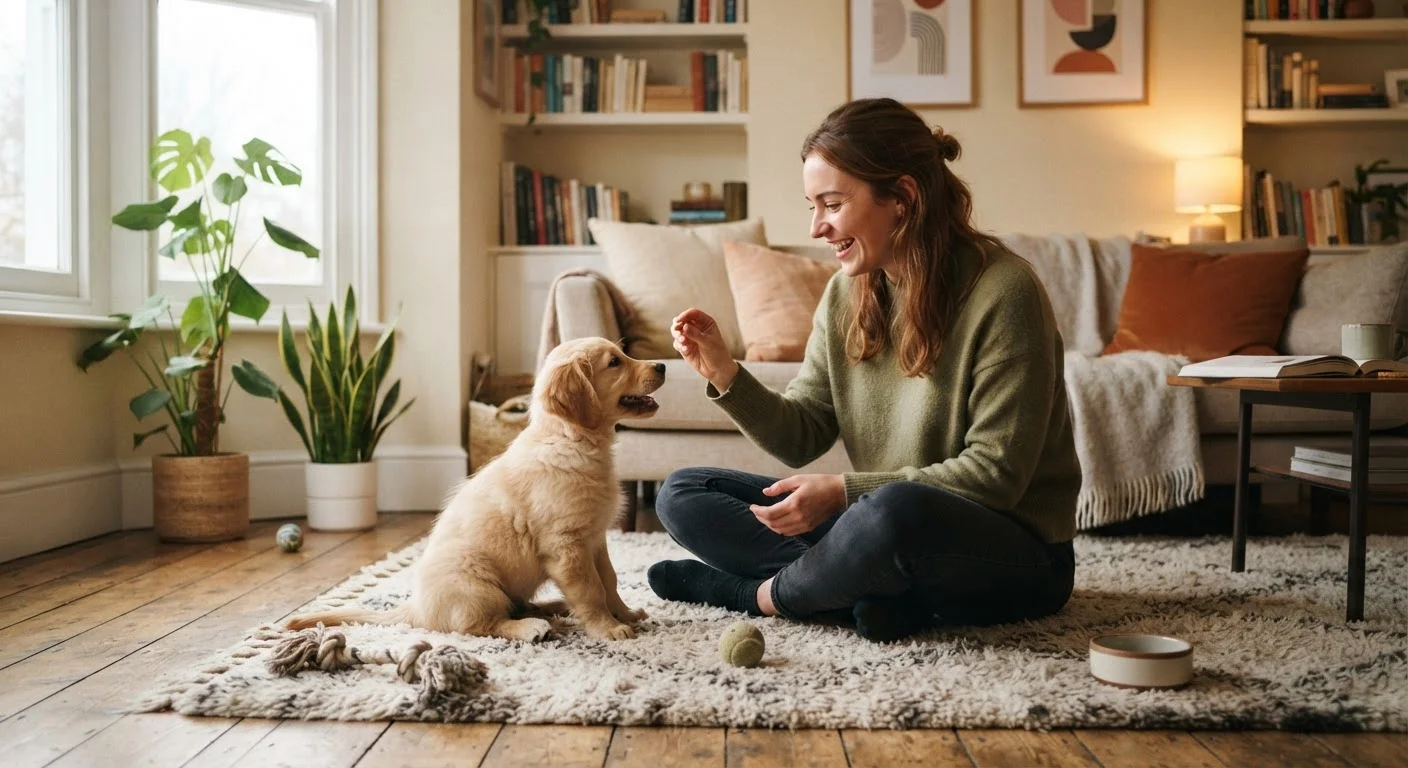
Why Day One Actually Matters
The moment your new pet crosses your threshold, learning begins - whether you intend it or not. Every experience your animal has in those first hours shapes how they interpret their new world. Waiting a week before "officially" starting training is a missed opportunity, because your pet is already forming habits based on how you respond to their behaviour right now.
This doesn't mean drilling commands before they've had a chance to sniff around. It means being intentional: deciding where your pet will sleep, what furniture they're allowed on, and how you'll react when they jump up or bark. Consistency from the start is far easier than reversing ingrained habits later. As part of responsible pet ownership, good training habits are just as foundational as nutrition or veterinary care.
Core Concepts Every New Owner Should Know
Before you start any training session, it helps to understand a few fundamental ideas that underpin how animals actually learn. These concepts aren't jargon - they're practical frameworks that will make your efforts far more effective.
Positive reinforcement
Rewarding a behaviour immediately after it happens to make that behaviour more likely to occur again. The reward can be a treat, praise, play, or anything your pet finds motivating.
Marker word or clicker
A precise signal - either a spoken word like "yes" or a click sound - used to pinpoint the exact moment your pet does something right, so they understand exactly what earned the reward.
Cue
A signal (word, hand gesture, or sound) that tells your pet which behaviour to perform. "Sit" is a verbal cue; a pointed finger can be a visual cue.
Generalisation
The process of your pet learning to perform a behaviour reliably in different places, with different people, and amid different distractions - not just in the spot where it was first taught.
Extinction burst
A temporary increase in an unwanted behaviour when you stop rewarding it, before the behaviour eventually fades. It can feel like things are getting worse before they get better - which is normal.
One important note: training is about communication, not control. Your goal is to help your pet understand what behaviours keep them safe and earn them good things - not to dominate or intimidate. Check out our preparation checklist for new pet owners to make sure your environment and mindset are set up for success before you dive in.
Building a Simple, Consistent Training Routine
Consistency is the single most important ingredient in pet training - more than any technique or tool. Pets learn through repetition and predictability. If "sit" sometimes earns a treat and sometimes earns nothing, the cue loses its meaning.
A practical routine for beginners looks like this:
- Morning session (5 minutes): Practice one or two cues your pet already knows before feeding them - meals are natural motivation moments.
- Midday session (5-10 minutes): Introduce a new concept or practise in a slightly different location to build generalisation.
- Evening session (5 minutes): End on a success - ask for something your pet does reliably so they finish feeling confident.
Puppies and kittens have very short attention spans. Three five-minute sessions beat one 30-minute slog every time. If your pet seems frustrated or disengaged, end the session early and try again later - pushing through rarely helps.
Training a puppy and training an adult dog also call for different pacing and expectations. Our article on puppy vs. adult dog training differences covers exactly how to adapt your approach based on your pet's age.
Free and Low-Cost Training Methods That Work
You don't need expensive classes or gear to build a well-behaved pet. The most effective training currency is your attention and your time.
Your Attention Is the Most Powerful Reward
Many pets are just as motivated by enthusiastic praise and a quick game of tug or chase as they are by food. Experiment to find what truly lights your individual animal up - that's your highest-value reinforcer. Rotating between food, play, and praise also keeps sessions feeling fresh and engaging for your pet.
Here are approaches that cost little to nothing:
- Luring
- Use a small, high-value treat to guide your pet into position (like moving a treat over a dog's nose to encourage a sit). Gradually reduce the treat lure once the behaviour is solid.
- Capturing
- Watch for your pet naturally performing a behaviour you want - like lying down - and immediately mark and reward it. No teaching required; you're just putting a name to what they already do.
- Shaping
- Reward incremental steps toward a goal behaviour. If you want your dog to go to their mat, reward them first for looking at it, then for stepping toward it, then for touching it, and so on.
A simple verbal marker word like "yes!" spoken the instant your pet does the right thing works just as well as a purchased clicker - free and always on hand. For a deeper dive into home training, our complete at-home dog training guide walks through commands, problem behaviours, and more. If you're also thinking about the broader financial picture of pet ownership, the first pet on a tight budget guide is a smart companion read.
Common Mistakes to Avoid From the Start
Even well-meaning owners trip over a few predictable pitfalls. Knowing them ahead of time puts you in a much stronger position.
- Inconsistent rules: If one household member lets the dog on the sofa and another doesn't, your pet can't figure out what the actual rule is. Align everyone in the home on expectations from day one.
- Delayed rewards: Timing matters enormously. A treat given five seconds after the behaviour is less effective than one delivered within one to two seconds. Your pet connects the reward to whatever they're doing right at that moment.
- Training when frustrated: Pets read emotional cues acutely. If you're irritated, your session will likely go sideways. It's always fine to take a break and return later.
- Skipping generalisation: A dog who sits perfectly in the kitchen may not sit on cue at the park - different locations, sounds, and smells are genuinely new learning contexts. Practise everywhere.
- Neglecting health foundations: A pet who seems untrainable may be unwell, anxious, or in pain. Make sure your animal's health basics are covered, including their vaccination schedule - see our guide on pet vaccinations for new owners for what to expect.
This article is for general informational and educational purposes only. For concerns about your pet's health, behaviour, or wellbeing, please consult a qualified veterinarian or certified animal behaviourist.