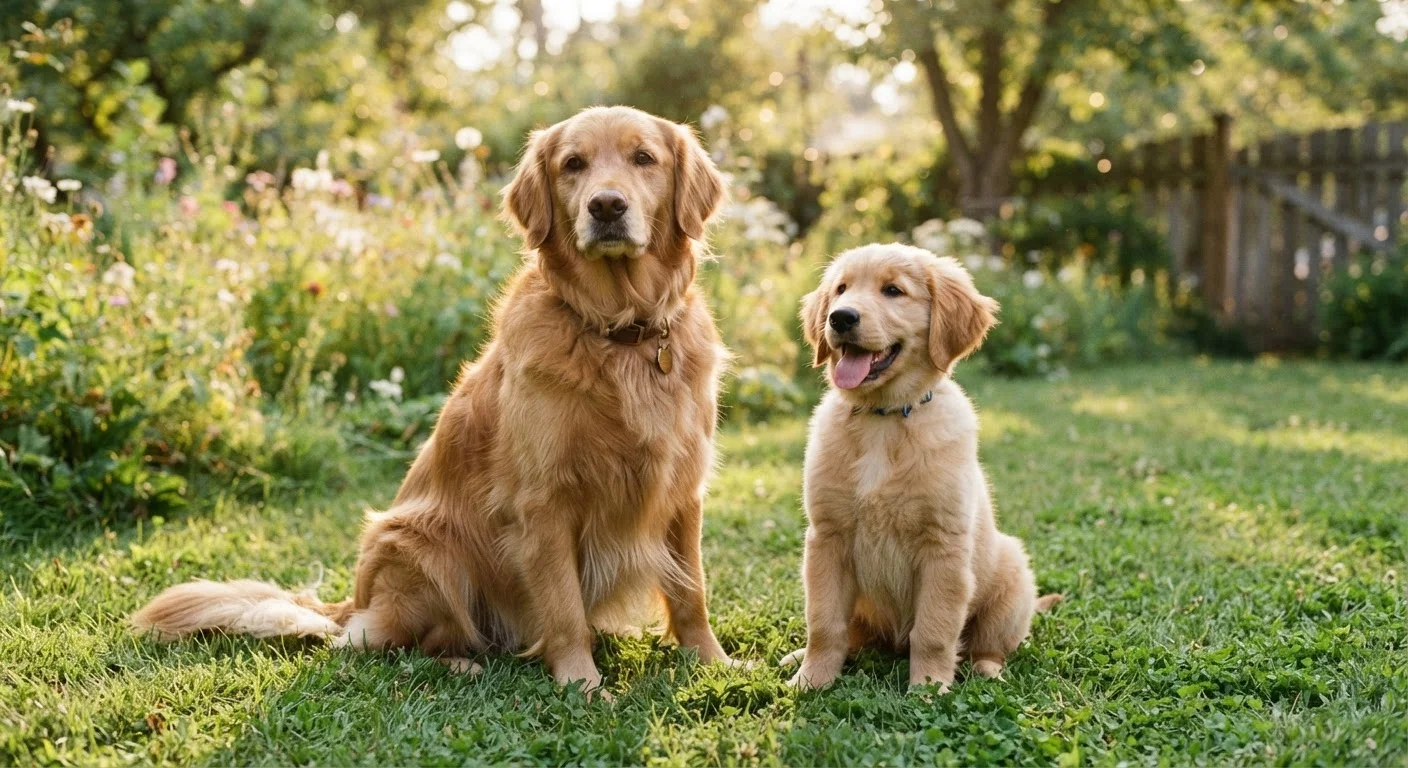
How Age Shapes a Dog's Learning Brain
One of the most important things to understand about dog training is that age isn't just a number - it reflects real differences in how a dog's brain processes new information. Puppies between roughly 3 and 16 weeks of age go through what behavioural scientists call the socialization window, a period when experiences are absorbed rapidly and leave lasting impressions. This makes early training especially powerful, but it also means mistakes during this phase can stick just as firmly as good habits.
Adult dogs, by contrast, have fully developed neural pathways. The idea that 'you can't teach an old dog new tricks' is one of the most persistent myths in pet ownership - and modern animal behaviour science firmly contradicts it. See our rundown of common training myths for more on this. Adult dogs absolutely can learn new behaviours; the difference lies in how that learning unfolds and what competing habits may already exist.
Puppy Training: Strengths, Challenges, and Strategies
Training a puppy is exciting precisely because you're building from the ground up. There's no history of reinforced bad behaviour to work around. However, puppies come with some real challenges:
- Short attention spans: Sessions longer than 5-10 minutes tend to lose effectiveness. Keep it brief and upbeat.
- Impulse control is undeveloped: Puppies aren't being stubborn - their prefrontal cortex is literally still forming. Patience is essential.
- Everything is a distraction: A leaf blowing by can derail a training moment entirely. Start in low-stimulation environments.
The good news? Puppies are highly motivated by treats, praise, and play, making positive reinforcement - rewarding desired behaviour immediately - extremely effective. Frequent, short sessions woven into daily life (before meals, after naps) work far better than scheduled hour-long training blocks.
For a full foundation checklist before your first session, see this preparation guide for new pet owners.
Tiny Treats Work Best for Puppies
When training a puppy, use pea-sized treat pieces rather than full-size rewards. Puppies get full quickly, which ends motivation early - and smaller treats also reduce caloric load during repeated training sessions. Soft treats that can be broken up easily are generally the most practical and budget-friendly option.
Adult Dog Training: What's Different and What to Expect
Bringing an adult dog into your life - whether through adoption or simply reaching that phase - means working with a dog who already has a behavioural history. Some of that history is helpful (a dog who's already house-trained, for example), and some may need gentle correction.
Adult dogs generally have longer attention spans and better impulse control than puppies, which means you can work on more complex commands and expect sessions of 10-20 minutes to remain productive. The main challenge is unlearning: if a dog has been rewarded (even accidentally) for jumping on guests for three years, that behaviour is well-reinforced and will require consistent, patient counter-conditioning.
The key principle here is that you're not punishing old behaviour - you're building new associations. Every time the dog sits calmly when a guest arrives and receives a treat, that new neural pathway strengthens. It takes more repetition than teaching a blank-slate puppy, but it works.
| Factor | Puppy (Under 6 Months) | Adult Dog (1+ Years) | |
|---|---|---|---|
| Attention span | Factor | 5-10 minutes per session | 10-20 minutes per session |
| Existing habits | Factor | Minimal - blank slate | May have ingrained behaviours |
| Impulse control | Factor | Low - brain still developing | Generally better developed |
| Motivation | Factor | Very high - treats and play | High - may be more food-focused |
| Socialization urgency | Factor | Critical - window closes fast | Still valuable, less urgent |
| Session structure | Factor | Frequent, very short bursts | Fewer, slightly longer sessions |
| Cost to start | Factor | Low - treats and routine | Low - same basics apply |
Shared Principles That Work at Any Age
Regardless of whether you're training a 10-week-old pup or a 5-year-old rescue, certain fundamentals apply universally:
- Consistency is non-negotiable. Everyone in the household should use the same cues and reward the same behaviours.
- Positive reinforcement outperforms punishment. This is supported by mainstream veterinary and behavioural science - reward what you want to see more of.
- Timing matters. Rewards must come within 1-2 seconds of the desired behaviour to be clearly associated with it.
- End on success. Closing a session on a win - even a simple 'sit' - keeps motivation high for next time.
For a broader look at building good habits from day one, our first-time pet owner training guide covers the foundational concepts in depth. And if you're weighing whether to work with a trainer or go it alone, our comparison of group classes vs. at-home training can help you decide what fits your budget and lifestyle.
Both puppies and adult dogs thrive when their owners show up consistently, keep sessions positive, and celebrate small wins. That's the real secret - and it costs nothing. For a complete, cost-conscious roadmap, see The Complete Guide to Training a Well-Behaved Dog at Home.