What You're Actually Comparing
When pet owners debate group classes versus at-home training, they're really weighing three things: cost, structure, and socialization. Group obedience classes - typically held at pet stores, community centers, or training facilities - run anywhere from a few sessions to multi-week courses led by a certified professional. At-home training, by contrast, means you're the teacher, working through commands during everyday moments using guides, videos, or books as your curriculum.
Neither approach has a monopoly on results. What matters most is that training happens - regularly, positively, and patiently. For a broader look at where training fits into your overall pet spending, see what you actually need to spend on pet care.
The Case for Group Classes
Group classes bring something genuinely difficult to recreate in your living room: controlled exposure to other dogs, unfamiliar people, and new environments. For puppies especially, this early socialization window is critical to developing a calm, adaptable temperament.
Structured socialization with dogs and strangers
Exposure to other animals and unfamiliar people in a controlled setting helps dogs develop confidence and reduce reactive behaviors - especially valuable during the puppy socialization window.
Real-time correction from a certified instructor
A trained eye can spot subtle handler errors - like off-timing rewards or inadvertently reinforcing bad habits - that are easy to miss when you're self-teaching.
Accountability and a structured curriculum
A scheduled class gives you a fixed commitment and a clear progression of skills, which helps owners who struggle with self-directed consistency.
Group energy can motivate distracted dogs
Some dogs respond well to the mild stimulation of a class environment, making them more engaged than they might be in a quiet living room.
A qualified instructor can also catch technique errors in real time - things like inconsistent timing of rewards or unintentionally reinforcing unwanted behaviors - that owners often miss on their own. If your dog is working through reactivity, leash pulling, or fear responses, that live feedback loop has real value. Keep in mind that your dog's age shapes which training environment suits them best; puppies and adult dogs learn differently, and classes are often designed with those differences in mind.
The Case for At-Home Training
The biggest practical advantage of training at home is cost. A quality multi-week group course can run $100-$250 or more, while a solid library of free tutorials, community forums, and low-cost e-books can get you surprisingly far without spending much at all. Our guide on pet training on a tight budget covers exactly where to find those no-cost resources.
Higher upfront cost than DIY training
Multi-week group courses often run $100-$250 or more depending on the facility and instructor credentials, which can strain a tight pet care budget.
Fixed schedule may not suit all owners
Classes run on the facility's timetable, not yours - evenings and weekends are typical, which can clash with work, family, or other commitments.
Group setting can overwhelm anxious dogs
Dogs with fear or reactivity issues may find a room full of strangers and other animals counterproductive, making learning harder rather than easier.
Skills may not transfer well to home environment
Dogs learn in context, so behaviors practiced in a training hall don't always generalize automatically to the backyard, park, or living room without deliberate practice at home too.
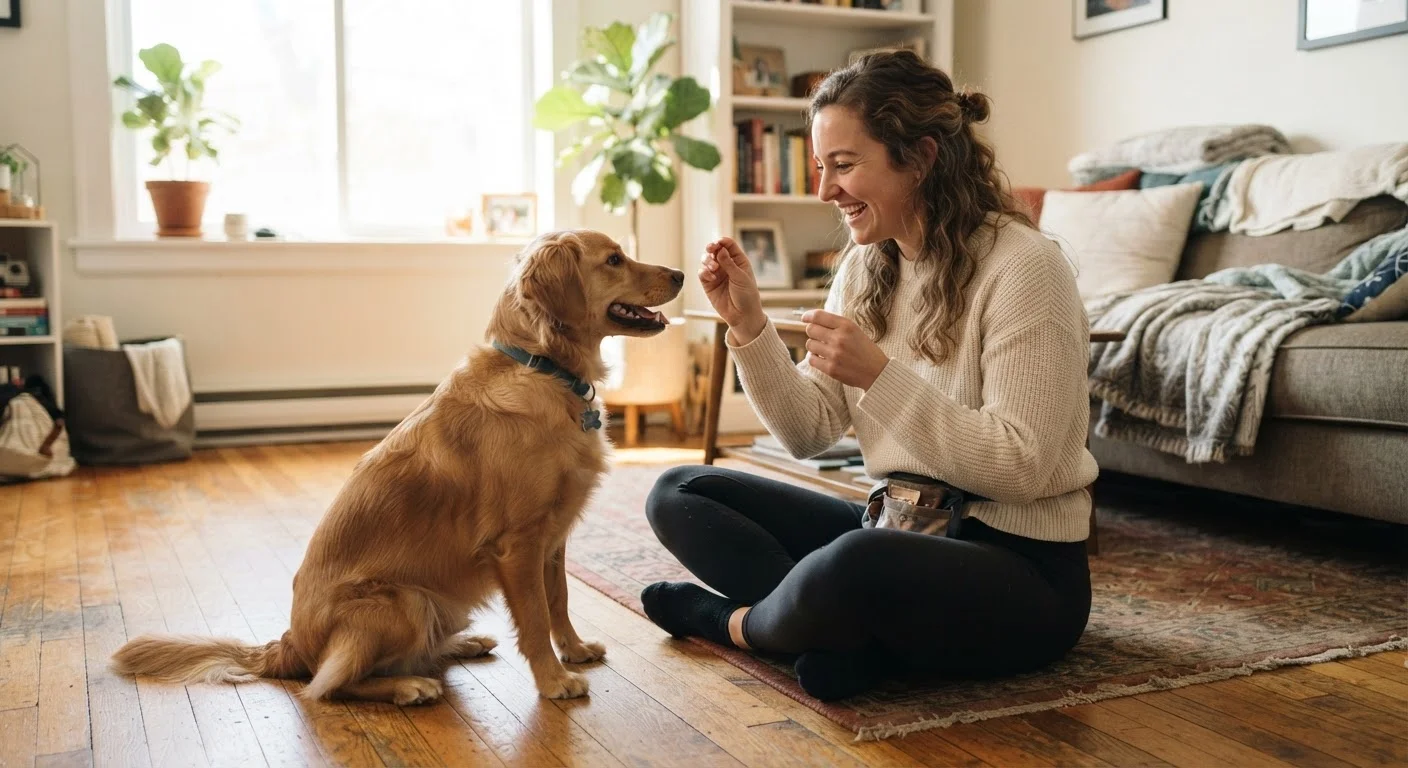
Home training also works on your schedule. Whether you have five minutes before work or a longer weekend session, you control the pace. For dogs that are anxious around strangers or other animals, starting in a familiar, low-stress environment can actually accelerate early progress. The trade-off, of course, is that you need to stay motivated and self-accountable - there's no instructor expecting you to show up.
Making the Hybrid Approach Work
Many experienced dog owners land on a practical middle ground: a single beginner group course to establish foundations and socialization, followed by consistent daily at-home practice. This approach captures the structured feedback of professional instruction without the ongoing cost of repeated classes.
Consistency Beats Setting Every Time
Research in animal learning consistently shows that short, frequent training sessions outperform occasional long ones, regardless of where they happen. Whether you're in a class or at home, aim for several brief sessions spread throughout the day rather than one marathon sit-down. Reinforcement timing - rewarding the desired behavior within a second or two - matters more than the environment you train in. Build the habit, and the results follow.
If you choose to train primarily at home, method consistency is everything. Whether you use clicker training or verbal cues, stick with one system and make sure everyone in the household uses it the same way. Mixed signals are one of the most common reasons home training stalls. For a comprehensive at-home plan, the complete guide to training a well-behaved dog at home is a good place to start.
This article is for general informational purposes only and is not a substitute for advice from a certified professional dog trainer or veterinary behaviorist. If your pet shows signs of aggression, severe anxiety, or other complex behavioral issues, please consult a qualified professional.