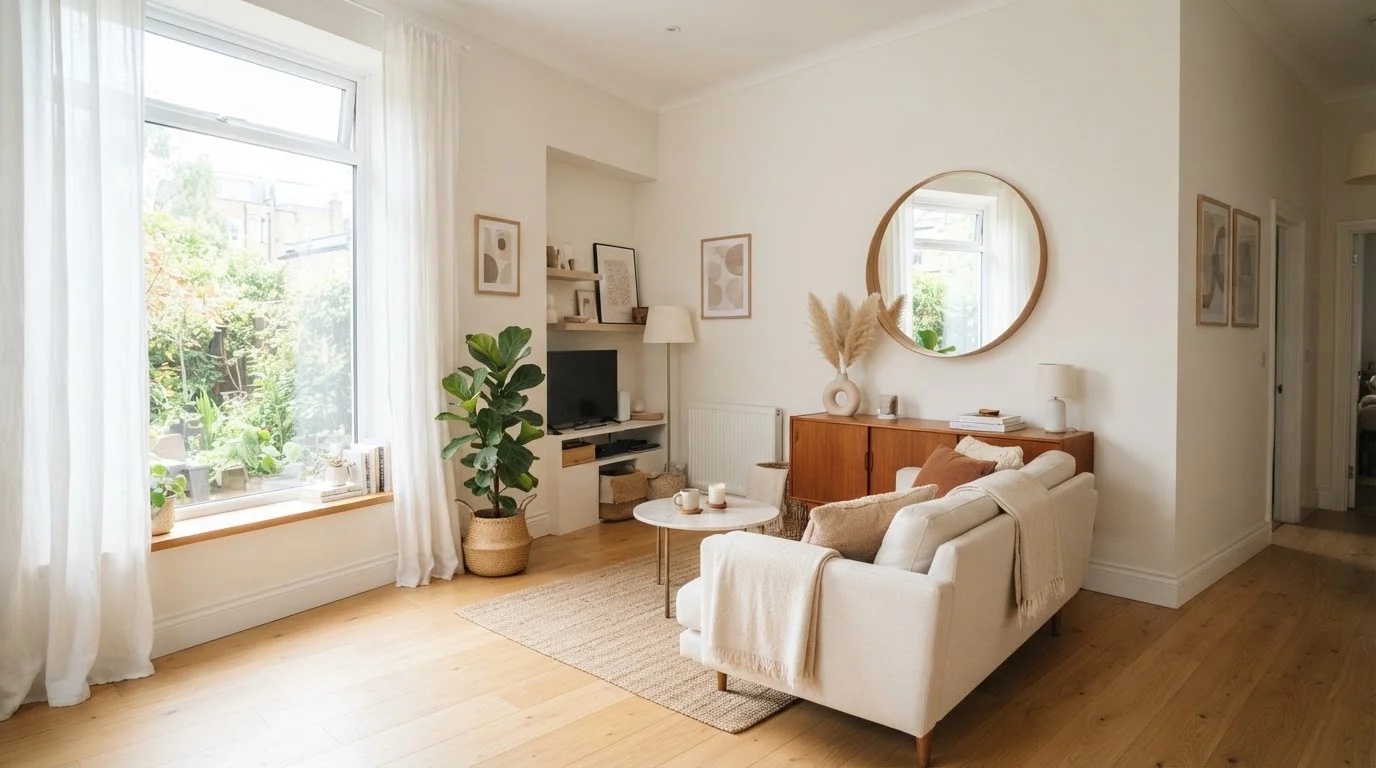
Why Small Rooms Feel Cramped (and How Design Fixes That)
Most compact rooms don't feel small because of their actual square footage - they feel small because of how they're arranged and what's in them. Visual clutter, dark surfaces, furniture that blocks sightlines, and low curtain placement all compress a room's perceived size. The good news: each of these is fixable without touching a single wall.
Understanding the mechanics behind spatial perception is useful before moving anything. Light bounces off pale surfaces and makes boundaries recede. Exposed floor space signals openness. Vertical lines pull the eye up and suggest height. These principles, covered in detail in The Principles Behind Affordable Interior Styling, are the foundation of every technique in this guide.
The steps below are ordered from highest impact to lowest cost, so you can stop at any point and still see meaningful results. Most require no tools beyond a measuring tape and a willingness to rearrange.
Use a Room Audit Before Buying Anything
Before purchasing new furniture or decor, do a full room audit. Remove everything non-essential for one week and notice which pieces you genuinely miss. This approach, detailed in our Budget Decorator's Room-by-Room Checklist, saves money and prevents clutter from creeping back in.
Tools and Materials You May Need
Most of the techniques here require little to no spending. Review what you already own before purchasing anything new - many items can be repurposed or relocated rather than replaced.
Measuring tape
Measure wall lengths, furniture dimensions, and clearance distances before rearranging.
Large mirror (at least 24" × 36")
Reflects light and creates the visual illusion of additional room depth.
Furniture risers or legs
Elevate low-profile sofas or beds to expose floor space and reduce visual heaviness.
Removable adhesive strips or hooks
Mount lightweight art or shelves without drilling, ideal for renters.
Light-colored or neutral paint
Reflects more light than dark tones, making walls appear farther apart.
What you will need
Renters: Check Before You Commit
Some techniques - like painting walls or mounting heavy shelving - may require landlord approval. Always review your lease and get written permission before making any permanent changes. Removable hooks, adhesive strips, and temporary wallpaper are safer options for rented spaces.
For renters looking to stretch their dollars further on home improvements, Saving on Utilities Without Major Renovations covers complementary cost-saving strategies that also don't require landlord approval.
Step-by-Step: Making Your Compact Room Feel Larger
Follow these steps in order. Decluttering first ensures you're not rearranging items you'll eventually remove anyway, and establishing your color palette before adding decor keeps everything cohesive.
Declutter and edit ruthlessly
A compact room filled with too many objects reads as chaotic regardless of color or furniture quality. Go through every item in the space and remove anything that doesn't serve a daily function or hold genuine sentimental value. Aim to keep surfaces 70-80% clear. Donate, store, or relocate what's left.
This is the single highest-impact step and costs nothing.
Choose a light, consistent color palette
Light colors - soft whites, warm creams, pale grays - reflect more natural and artificial light than darker tones, making walls feel farther apart. If repainting isn't possible, use light-colored textiles (throws, rugs, curtains) to introduce the same effect. Keep the palette consistent across the room; too many competing colors visually fragment the space.
For a deeper look at how color affects perception, see The Principles Behind Affordable Interior Styling.
Place mirrors strategically to add depth
Hang a large mirror on the wall directly opposite a window. It bounces natural light around the room and creates a convincing illusion of a second opening or extended space. Mirrors work best when they reflect something attractive - a window, a plant, or a clean wall - rather than clutter.
Leaning a large mirror against a wall rather than mounting it avoids drilling and is a renter-friendly alternative.
Scale and float your furniture
Oversized sofas or beds pushed flush against every wall actually make small rooms feel more cramped. Choose furniture with exposed legs - the visible floor underneath creates a sense of openness. Where possible, float one piece (such as a sofa) a few inches from the wall to break up the boxy feel without sacrificing floor area.
Opt for one or two larger anchor pieces rather than several small ones. A single well-sized sofa reads less cluttered than a sofa plus two matching armchairs in the same footprint.
Think vertically with storage and decor
When floor space is limited, go up. Tall, narrow bookshelves, wall-mounted shelves near ceiling height, and hanging plants all draw the eye upward, which makes ceilings appear higher. Mount shelving above doorways to capture otherwise dead space for storage.
This strategy pairs well with the full room makeover framework in Decorating a Room From Scratch.
Hang curtains high and wide
Mount curtain rods as close to the ceiling as possible and extend the rod 6-12 inches beyond the window frame on each side. When curtains hang from ceiling height and cover only wall space when open, the window appears taller and the room feels airier. Use sheer or light-filtering fabrics to preserve natural light.
Use a single, appropriately sized area rug
A rug that's too small makes a room feel disconnected and smaller. The front legs of all main seating should sit on the rug, anchoring the furniture grouping into a unified zone. In a bedroom, the rug should extend at least 18 inches beyond each side of the bed. One correctly sized rug reads as intentional and spacious; several small rugs feel scattered.
Avoid Overloading Walls With Anchors
When installing floating shelves or heavy mirrors, always locate wall studs or use appropriate drywall anchors rated for the load. Improperly mounted hardware can cause items to fall and damage walls or injure occupants. If you're unsure, consult a hardware professional or handyperson.
Once you've worked through these adjustments, run through the Budget Decorator's Room-by-Room Checklist to spot any remaining opportunities you may have missed.
Common Mistakes That Work Against You
Even well-intentioned decorating can backfire in small spaces. A few patterns consistently make compact rooms feel more closed in:
- Too many small decorative objects: A collection of tiny items scattered across shelves reads as noise. Group objects in threes or replace several small pieces with one larger statement item.
- Heavy window treatments: Floor-length blackout curtains in dark fabrics block light and weigh down the room visually. Light-filtering alternatives in natural tones are almost always a better fit.
- Ignoring the floor: A dark or busy rug can visually shrink a room just as much as dark walls. Solid, light-toned rugs in the correct size make floors feel more expansive.
- Matching everything perfectly: Overly coordinated rooms can feel flat. Slight variation in tone and texture adds depth without adding visual weight.
For a broader look at what doesn't work in budget decorating, Affordable Styling Myths That Keep Rooms Looking Unfinished separates common misconceptions from what the evidence actually supports.
If you want repeatable strategies that transfer across different room types, Styling on a Budget: Approaches That Consistently Work is worth reading alongside this guide.