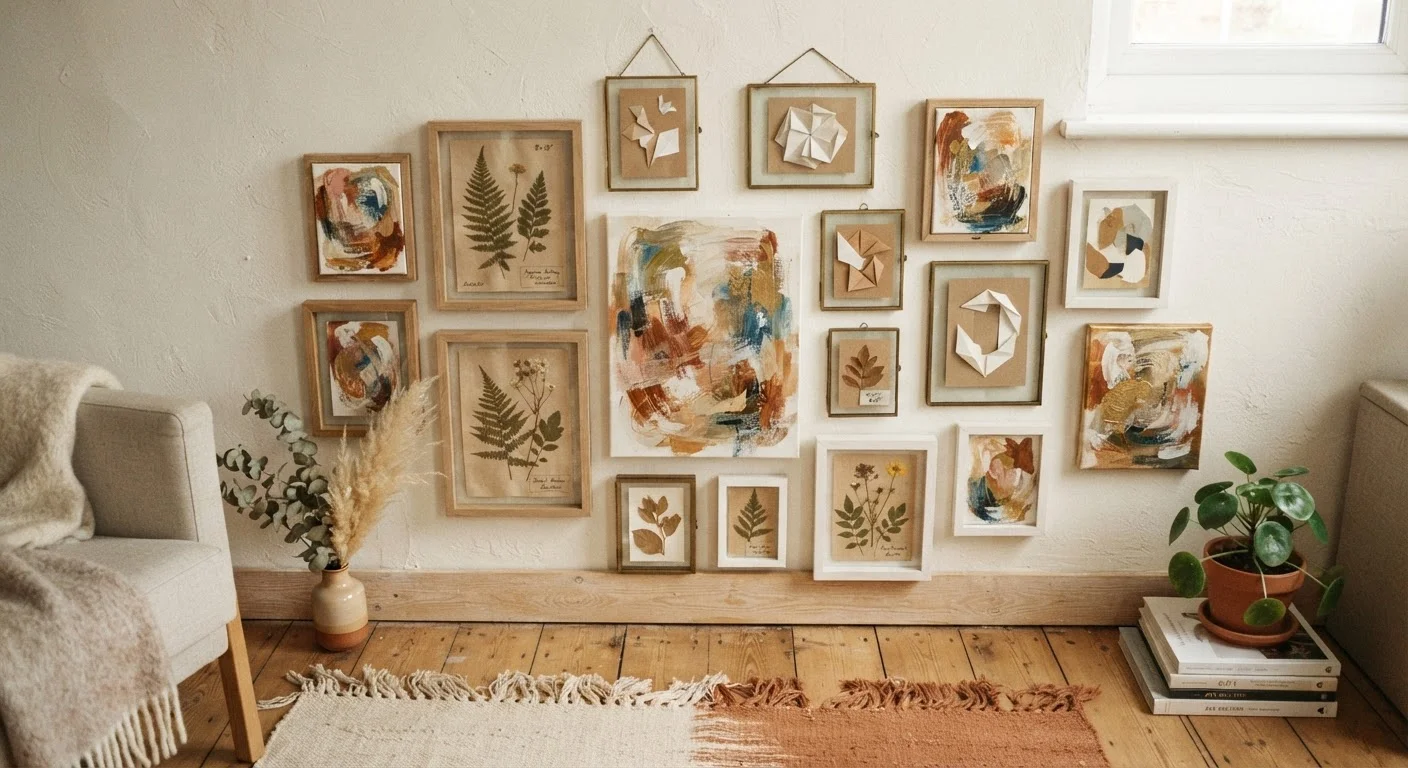
What DIY Wall Art Actually Involves
DIY wall art covers a wide range of approaches: painting on canvas, creating collage or mixed-media pieces, framing fabric or wallpaper samples, printing and matting your own photography, or assembling geometric shapes from craft store materials. The common thread is that you're producing the finished piece yourself rather than buying something ready to hang.
This matters because the trade-offs differ significantly by method. Painting a large abstract canvas and cutting a geometric paper mobile are not comparable in skill demand, time, or cost. Before weighing the pros and cons below, it helps to identify which type of project you're actually considering - that shapes how the balance tips for your situation. See proven budget decorating strategies for a broader framework on making design choices that hold up over time.
The Upsides of Making Your Own Art
There are solid, practical reasons DIY wall art has remained popular well beyond any single design trend.
Significantly lower cost than comparable purchased art
Basic supplies for a medium canvas painting typically cost $15-$30, while a framed print of similar dimensions often runs $60-$150 or more at mainstream home décor retailers.
Fully customizable to your existing room palette
You control every color and dimension, making it easier to produce something that integrates with your space rather than compromising on what's available in stores.
No two pieces are identical - genuinely unique
Handmade art adds a layer of individuality that mass-produced prints can't replicate, which matters if you're trying to make a rental or starter home feel more personal.
Low barrier to entry for simple formats
Abstract painting, fabric panel framing, and printed photography require minimal prior skill and can produce credible results on a first attempt with a little planning.
Scales well for large wall coverage
Covering a large blank wall with purchased art can cost hundreds of dollars; DIY approaches like a grid of small canvases or a fabric installation can achieve comparable coverage for far less.
The cost advantage is real but conditional. Basic acrylic paints, a stretched canvas, and a brush set can be sourced for under $25 at most craft retailers - a sum that wouldn't buy a framed print of comparable size in most décor stores. The savings compound if you already own supplies or can repurpose materials like thrifted frames or leftover fabric.
The Downsides You Should Factor In
DIY wall art isn't a guaranteed win. Several common pitfalls trip up even enthusiastic first-timers.
Time investment is easy to underestimate
A single painted canvas can take several hours including drying time between coats, plus additional time for framing and hanging - a real cost when you're already managing a busy schedule.
Skill gap shows more than expected
Techniques that look straightforward on tutorial videos often require practice to execute well; a piece that doesn't meet your vision can end up feeling like a waste of both time and materials.
Materials cost can creep up on ambitious projects
Complex or large-scale DIY art requiring specialty supplies - quality brushes, stretched frames, archival papers - can approach the cost of simply buying a finished piece.
Results may not match the room's quality level
A visibly unpolished DIY piece can drag down the overall look of an otherwise well-styled room, particularly if the surrounding furniture and textiles are at a higher quality tier.
Less portable than purchased art
Large handmade pieces - especially unstretched canvases or mixed-media work - are more vulnerable to damage during moves, making them less practical for renters who relocate frequently.
The risk of a piece that looks visibly homemade - in a way that reads as unfinished rather than charming - is worth taking seriously. Budget décor choices that undermine a room's look often share the same root cause: execution that doesn't match the surrounding space's quality level. A DIY piece hung next to well-chosen furniture can look out of place if the craftsmanship isn't there.
When Purchased Art May Be the Smarter Call
If you're renting short-term, frequently moving, or simply don't enjoy hands-on craft work, inexpensive printed art from discount retailers or online print shops can be a more practical solution. The goal is a room that looks considered and cohesive - DIY is one path to that, not the only one. Check styling myths that keep rooms looking unfinished for perspective on when budget shortcuts backfire.
When DIY Wall Art Actually Makes Sense
The question isn't whether DIY art is good or bad in the abstract - it's whether it fits your specific situation. Here's a practical framework:
- You have a defined color palette. DIY art made to match your existing room colors integrates better than purchased art you're trying to make work after the fact.
- The format is forgiving. Abstract painting, dip-dye fabric panels, and large-scale printed photography are all relatively beginner-friendly. Detailed figurative work or complex installation pieces are not.
- You're not moving soon. Large or fragile DIY pieces don't always survive moves intact, which erodes the cost advantage quickly.
- You're mixing, not going all-in. One strong DIY piece anchoring a wall, flanked by a couple of inexpensive purchased prints, often reads better than an entirely DIY gallery wall.
If you're uncertain whether DIY suits your space, common styling myths that keep rooms looking unfinished offers useful perspective on where budget decorating assumptions tend to go wrong.
Tips for Better Results If You Go DIY
A few practical habits separate DIY wall art that enhances a room from art that becomes an afterthought:
- Invest in framing. A clean, properly sized frame elevates almost any DIY piece. Thrift stores and discount retailers often carry frames that can be spray-painted to match your scheme.
- Scale appropriately. A piece that's too small for its wall will always look underwhelming, regardless of quality. Measure the wall space first and work to that scale.
- Finish edges and backs. Unfinished canvas edges, fraying fabric, or exposed staples signal amateur work. A few extra minutes of finishing makes a noticeable difference.
- Hang with care. Use a level, appropriate wall anchors for the weight, and proper hanging hardware. Crooked or damaged walls undermine even good art. The weekend wall prep checklist covers wall surface prep that applies here too.
DIY wall art is one of the lower-risk categories of home improvement - no permits, no structural concerns, no licensed trades required. That makes it a reasonable place to experiment, provided you go in with realistic expectations about both effort and outcome.