Why the Balkans Make Financial Sense for US Travelers
The Balkans - broadly defined as Albania, Bosnia and Herzegovina, Croatia, Kosovo, Montenegro, North Macedonia, Serbia, and Slovenia - occupy a stretch of southeastern Europe where the cost of living remains significantly lower than in France, Germany, or Scandinavia. For a US traveler accustomed to comparing overseas costs, the gap is meaningful: a sit-down meal that costs $25 in Paris can cost $6-$10 in Sarajevo or Skopje.
That gap exists for structural reasons: lower average wages, younger tourism infrastructure, and in several countries, currencies that are not tied to the euro. It's not a temporary deal - it reflects underlying economics that have remained stable for years. Compare this to how Eastern and Western Europe stack up broadly, and the Balkans consistently sit at the affordable end of that spectrum.
The region also offers genuine variety within a compact geography: Ottoman-era bazaars, Adriatic beaches, UNESCO-listed medieval towns, and Dinaric Alps hiking trails are all reachable within a single multi-week trip. Crowd levels at most sites remain low compared to Dubrovnik or Prague, meaning you spend less on tourist-zone markups and more time actually experiencing places.
$40-$60
Typical daily budget in Bosnia or Serbia (USD)
Based on general traveler-reported spending covering accommodation, food, local transport, and one attraction.
~50%
Lower daily cost vs. Western Europe average
Cost-of-living indices such as Numbeo consistently place Balkan capitals well below Western European counterparts.
8+
Countries accessible in one overland trip
The Balkans contain over eight distinct countries within a geographic area roughly the size of Texas.
Country-by-Country Cost Snapshot
Not all Balkan countries are equal in price. Here's a working framework for daily budgets, covering accommodation, food, local transport, and one or two paid attractions:
- Albania: Arguably Europe's lowest-cost destination. Budget travelers report daily spend of $30-$45. The Albanian lek means you're not on the euro. Coastal towns like Sarandë and Vlorë are gaining visitors but remain affordable.
- North Macedonia: Skopje and Ohrid offer strong value. Expect $35-$55 per day. Lake Ohrid is a UNESCO World Heritage site with guesthouses in the $20-$35/night range.
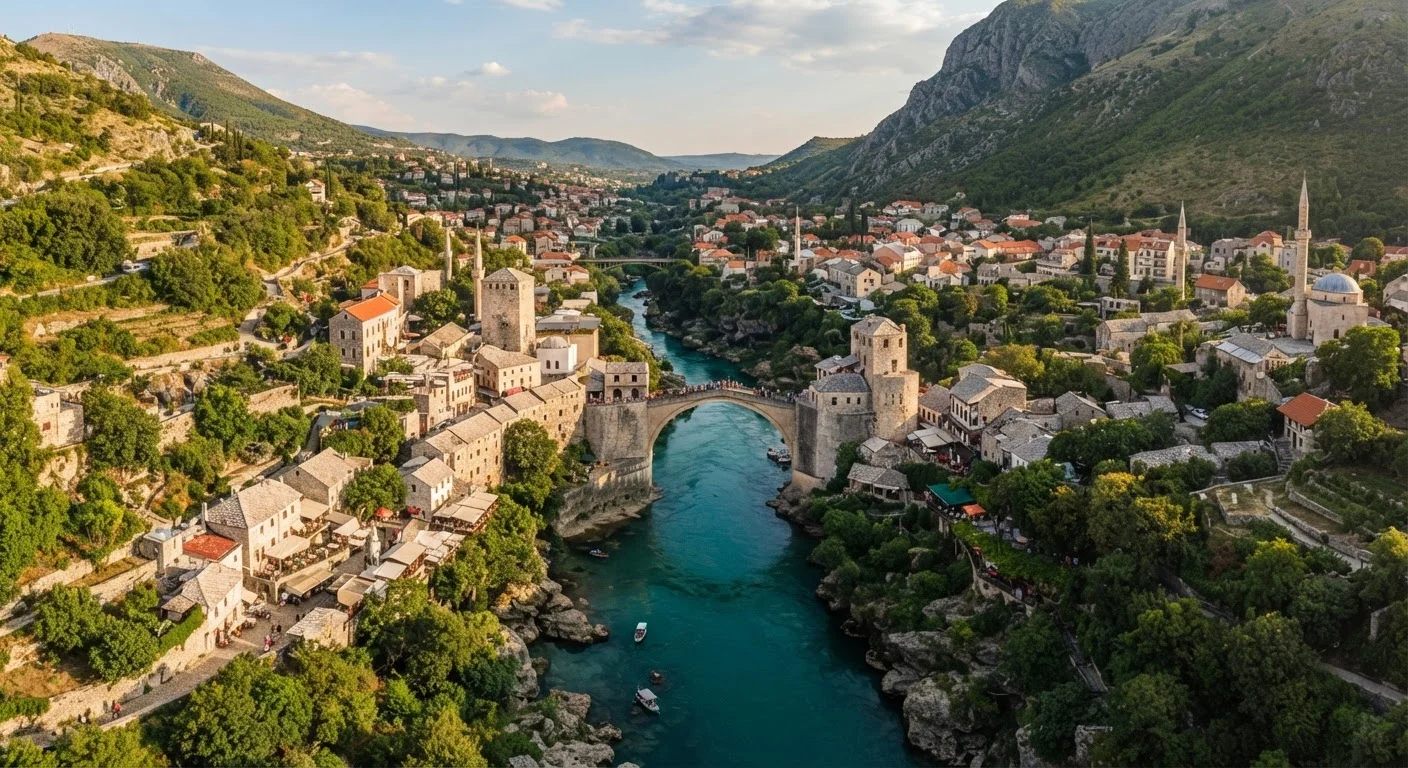
- Bosnia and Herzegovina: Sarajevo's café culture and Mostar's famous bridge come at a fraction of Croatian prices - $40-$60 daily is realistic.
- Serbia: Belgrade is one of Europe's liveliest capitals at a mid-range budget of $45-$65/day. Strong public transport and a dense hostel scene help.
- Montenegro: The Adriatic coast here is pricier in summer (especially Kotor), but the inland areas around Durmitor National Park reset costs considerably.
- Croatia: The most expensive Balkan country, particularly the Dalmatian coast in July-August. Worth knowing upfront so it doesn't skew your overall budget assumptions.
- Kosovo: Pristina is one of Europe's least-visited capitals and one of its most affordable, with daily costs often under $40.
For a useful parallel on what low-cost regional travel looks like elsewhere, see our guide to budget travel in Southeast Asia - the strategic logic of moving between affordable neighbors applies directly here.
Getting There and Moving Around
Flights from major US hubs to Balkan entry points - typically Zagreb, Belgrade, Tirana, or Dubrovnik - generally involve one connection through a European hub. Fares vary significantly by season and booking lead time; this article doesn't guarantee any price, and conditions change. Check government and airline sources for current entry requirements.
Once in the region, flying between countries is rarely necessary and often counterproductive. A dense network of buses and minibuses (called furgons in Albania) connects most cities and border crossings for $5-$20 per leg. Overnight buses between Belgrade and Sarajevo, or Tirana and Skopje, are common and save a night's accommodation.
Build your itinerary around bus departure schedules, not the reverse. Major Balkan routes have fixed departure windows - often early morning or late evening - and planning backwards from those times prevents costly overnight stays in transit towns.
Bus networks are the primary inter-city infrastructure in most of the region; working with schedules rather than against them saves both time and accommodation costs.
In Albania and North Macedonia especially, ask locally about furgon or shared minibus departure points rather than relying on formal bus terminal listings, which are often incomplete or outdated online.
Informal shared transport fills gaps between formal services and is often faster and cheaper, but departure points shift and aren't consistently listed on international booking platforms.
Renting a car makes sense for specific routes - reaching Durmitor in Montenegro, driving the Albanian Riviera, or exploring rural Bosnia - but international car rental rules and cross-border permissions vary by company and country. Confirm policies in writing before booking. Road conditions in mountain areas can be challenging; drive to local conditions, not GPS expectations.
Where to Stay Without Overspending
Hostels in Sarajevo, Skopje, and Belgrade regularly list dorm beds at $12-$20/night. Private rooms in locally-run guesthouses - particularly in smaller towns and rural areas - often undercut larger hotel chains significantly while providing more local character.
Apartment rentals through various platforms can reduce costs for stays of three or more nights, especially for pairs or small groups splitting the rate. In coastal areas during peak summer, book well in advance; in shoulder season, walk-in rates at family-run sobe (rooms) in Croatia, Montenegro, and Bosnia are negotiable.
Coastal Croatia Is a Different Budget Category
If your itinerary includes Dubrovnik or Split in July or August, budget separately - prices here rival Western European resort destinations. Treating Croatia's peak-season coast as representative of Balkan costs will lead to significant budget miscalculation. Consider visiting the Croatian coast in May or October, or allocating a distinct higher daily budget for that segment.
Camping is possible and legal in many national park areas, though rules differ by country and park. Always verify current regulations with the relevant park authority before pitching a tent.
Food, Culture, and Daily Life Costs
Balkan cuisine is built on grilled meats (ćevapi, pljeskavica), fresh salads, dairy products like kajmak, and burek (savory filled pastry). A full meal at a local restaurant - called a kafana in Serbia - typically costs $4-$9. Street food and bakeries bring that lower. Tourist-facing restaurants near major sights charge more; a short walk off the main square usually corrects this.
Paid attractions are generally affordable: national park entry fees run $3-$10; museum admissions $2-$6. Many historical and religious sites (mosques, Orthodox monasteries, Ottoman bazaars) have no entry charge, though respectful dress is expected and small donations are appropriate.
For readers building a first international budget trip, the foundational decisions covered in our budget travel from scratch guide apply cleanly to a Balkans itinerary: timing, accommodation type, and food strategy together determine the majority of what you spend. Our broader cost-reduction strategies guide covers where trade-offs matter least.
If you're weighing the Balkans against other underrated regions, Central America's overlooked countries offer a comparable mix of affordability and variety for a different traveler profile.
Planning Practicalities and Safety Framing
Entry requirements for US citizens across the Balkans are generally straightforward - most countries allow visa-free stays of 30-90 days - but rules change and vary by passport. Always verify current visa, entry, and health requirements with official government sources (the US Department of State's travel pages and each country's embassy) before booking anything.
UXO Risk in Rural Areas
Parts of Bosnia and Herzegovina, Kosovo, and southern Serbia contain areas affected by unexploded ordnance from 1990s conflicts. This risk is real and localized. Stay on marked trails and paved roads in rural and forested areas, and do not enter zones marked with warning signs or skull-and-crossbones symbols. Consult the BHMAC (Bosnia and Herzegovina Mine Action Centre) or equivalent national authority for current maps before hiking off established routes.
Travel insurance is strongly advisable for any international trip. Ensure your policy covers medical evacuation, as healthcare infrastructure in rural areas varies. This article does not constitute insurance advice; review policy terms with your provider.
The Balkans are generally considered safe for independent travelers, though standard urban precautions apply. Some border regions and areas contain unexploded ordnance (UXO) from 1990s conflicts - particularly parts of Bosnia, Kosovo, and southern Serbia. Stick to marked paths in rural areas and do not enter areas marked with warning signs. Check current US State Department travel advisories for each country before your trip.
Currency: Serbia uses the dinar, Albania the lek, Bosnia uses the convertible mark (pegged to the euro), while Montenegro and Kosovo use the euro directly. ATMs are available in cities; carry some local cash for rural areas and smaller towns.
Seasonality matters practically, not just for cost. Summer (June-August) brings heat, crowds, and higher coastal prices. Spring and autumn offer moderate weather, lower rates, and fewer tourists at major sites - a genuine operational advantage, not just a savings tip.
This article provides general travel information for educational purposes. Prices, visa rules, safety conditions, and entry requirements change frequently. Always verify current conditions with official government sources and your travel provider before making plans or purchases. Travel Smart Editorial Team does not guarantee specific costs, availability, or outcomes.