Why These Three Countries Get Skipped
Costa Rica's national parks and Belize's barrier reef dominate the Central America conversation, and for fair reasons - both are well-developed for tourism and English-friendly. But they come at a price. A mid-range traveller can spend $80-$120 per day in Costa Rica without trying hard. The countries sitting between Mexico and Panama - particularly Nicaragua, Honduras, and Guatemala - typically run $30-$60 per day for similar comfort levels, depending on your travel style.
That gap exists partly because fewer travellers go, which keeps local pricing competitive and crowds manageable. It also means infrastructure is spottier and English less common, so these destinations reward some preparation. As we've covered before, low prices on paper can hide expensive realities, so go in with clear expectations rather than just a bargain-hunting mindset.
Below are five specific draws across these three countries that rival - and in some cases outdo - what their more famous neighbours offer.
Granada, Nicaragua - Colonial Architecture Without the Crowds
Granada is one of the oldest continuously inhabited European-founded cities in the Americas, and its central grid of colonial buildings, painted in ochre and terracotta, is genuinely comparable to Cartagena or Antigua - two cities now flooded with tourists. Granada's waterfront sits on Lake Nicaragua, the largest lake in Central America, and day trips to the Isletas (a cluster of small islands formed by a volcanic eruption) run around $15-$20 per person by boat.
Guesthouses in the historic center regularly list for $20-$40 per night, and sit-down meals at local restaurants come in well under $10. The overall daily cost for a careful traveller can realistically sit around $40-$55, though this depends heavily on accommodation choice and activities.
Granada's colonial streetscape rivals Cartagena at a fraction of the daily cost.
Roatán and the Bay Islands, Honduras - Reef Diving at Lower Rates
Belize's barrier reef gets most of the press, but Honduras sits on the same Mesoamerican Barrier Reef System. Roatán, the largest of the Bay Islands, has a well-established dive infrastructure with numerous PADI certification courses and guided dive operations. Open-water certification courses on Roatán have historically been among the more affordable in the hemisphere, often running $250-$300 compared to $400+ in Belize or Caribbean island destinations.
Budget accommodation exists alongside resort options; the island has developed significantly over the past decade, so costs vary widely depending on where you stay. The western end of the island (West End and West Bay) is the most tourist-developed but also the most competitive for pricing. Verify current rates directly with operators, as pricing fluctuates with season and demand.
Roatán sits on the same reef system as Belize but has historically offered lower dive certification costs.
Antigua, Guatemala - Mayan Culture and Volcano Access in One Base
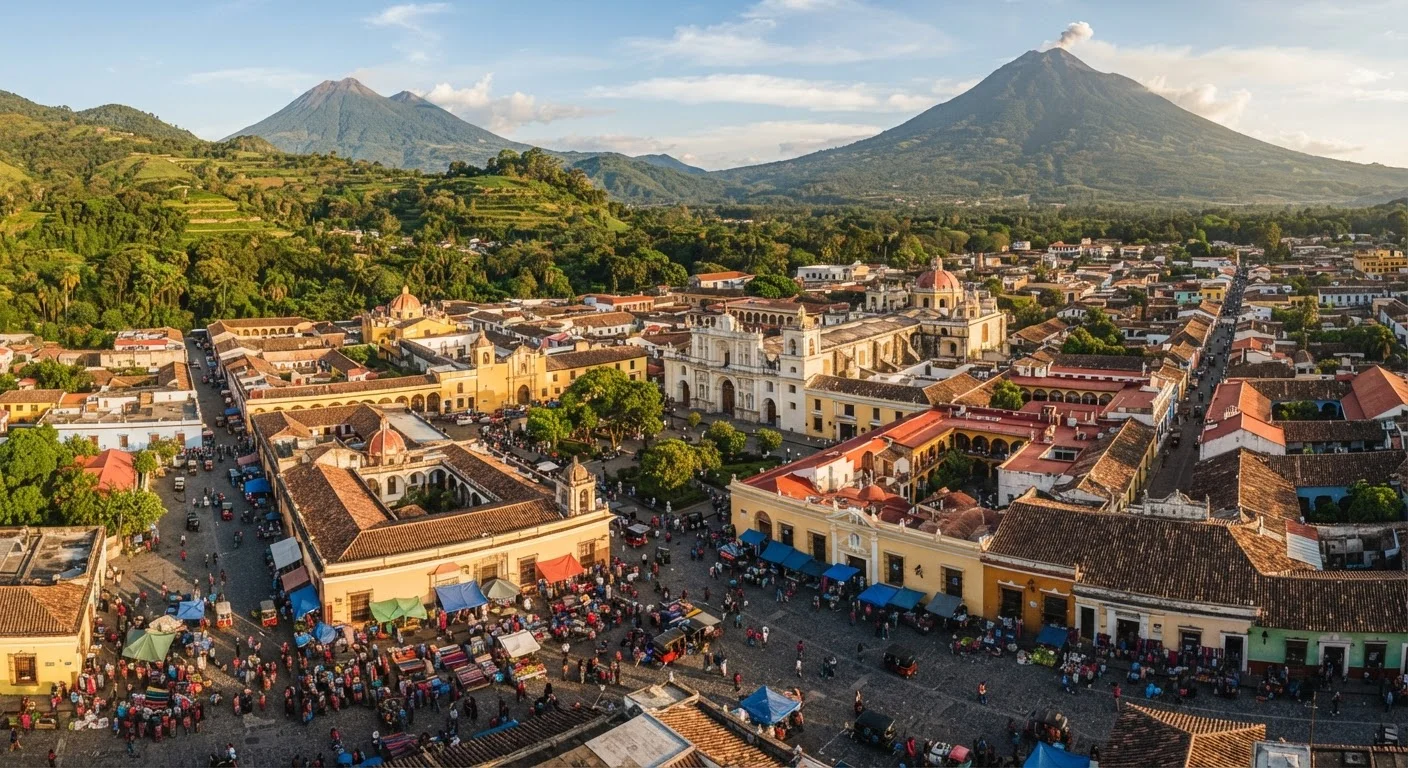
Antigua is the most tourist-developed entry on this list, but it earns its place because it functions as a practical hub for two distinct experiences: Spanish colonial heritage and Mayan cultural tourism. From Antigua, travellers can access the market town of Chichicastenango (known for one of the largest indigenous markets in Central America), Lake Atitlán, and guided hikes on active volcanoes including Acatenango.
Acatenango overnight hikes - which include views of the active Fuego volcano erupting at close range - typically run $35-$60 through local guide companies, making it one of the more dramatic and affordable multi-day outdoor experiences available anywhere in the region. Antigua itself runs pricier than rural Guatemala, but it's still noticeably cheaper than comparable colonial cities in Mexico or Colombia.
Acatenango volcano overnight hikes offer dramatic scenery for $35-$60, a fraction of comparable adventure costs elsewhere.
Lake Atitlán, Guatemala - The Scenery That Draws Comparisons to Anywhere
Lake Atitlán sits in a volcanic caldera and is ringed by indigenous Mayan villages, each with its own character, market days, and weaving traditions. It's the kind of destination that generates superlatives from almost everyone who visits, yet it remains far less crowded than comparable scenic lakes in Europe or Southeast Asia.
Smaller villages around the lake - Santiago Atitlán, San Marcos La Laguna, San Juan La Laguna - offer budget guesthouses for $15-$25 per night. Lanchas (small passenger boats) connect villages for around $2-$5 per trip, making it easy to explore without renting transport. The lake is genuinely accessible for travellers working with tight daily budgets, though quality of accommodation varies significantly at the lower price points.
Lake Atitlán's villages are connected by $2-$5 boat rides, keeping multi-day exploration remarkably affordable.
Ometepe Island, Nicaragua - Two Volcanoes, One Island, Almost No Queues
Ometepe is a figure-eight-shaped island formed by two volcanoes rising out of Lake Nicaragua. It's one of the more unusual landscapes in Central America - farmland and jungle wrapped around volcanic peaks - and it sees a fraction of the visitors that Costa Rica's Arenal volcano region attracts, despite offering a broadly similar combination of hiking, wildlife, and dramatic scenery.
A ferry from the mainland town of San Jorge costs around $2-$4 each way, and basic guesthouses on the island can be found for $15-$30 per night. The island has limited ATM availability, so arriving with sufficient local currency (Nicaraguan córdobas, though US dollars are widely accepted) is advisable. Hiking the volcanoes requires guides for the more technical routes - this is a safety requirement in some cases, not just a tourist upsell.
Ometepe's twin-volcano landscape rivals Costa Rica's Arenal region with almost none of the crowds.
Planning Realistically for These Destinations
Each of these countries carries a mixed safety profile that varies significantly by region, time of year, and type of travel. Blanket statements about danger or safety in either direction mislead more than they help. Always check your government's current travel advisory (the U.S. State Department publishes country-specific pages) and review entry requirements, as visa rules and health requirements shift. Some areas require specific vaccinations - consult a travel medicine clinic well before departure.
Use Chicken Buses Strategically
In Guatemala and Honduras, repurposed US school buses (locally called chicken buses) are the primary local transport and cost a fraction of tourist shuttles - sometimes $1-$3 versus $15-$25 for the same route. They're slower, more crowded, and stop frequently, but for shorter routes between towns they're entirely practical. Save shuttle buses for long hauls, night travel, or when you're carrying significant luggage.
Internal transport can erode your budget faster than accommodation if you're moving between multiple countries or regions. Shuttle buses marketed to tourists cost more than local chicken buses but are faster and more predictable. Factor both options into your planning. For a broader look at how transport costs quietly blow travel budgets, see our piece on how travellers misread 'affordable' and end up overspending abroad.
If Central America isn't quite the fit, similar dynamics play out in other overlooked regions - the Balkans offer medieval towns and Adriatic coastlines at a fraction of Western European prices, and Mexico's interior regions stay far cheaper than its resort zones.
This article provides general travel information only. Prices, safety conditions, visa requirements, and health recommendations change frequently. Verify all details with official government sources and qualified travel health professionals before making any bookings.