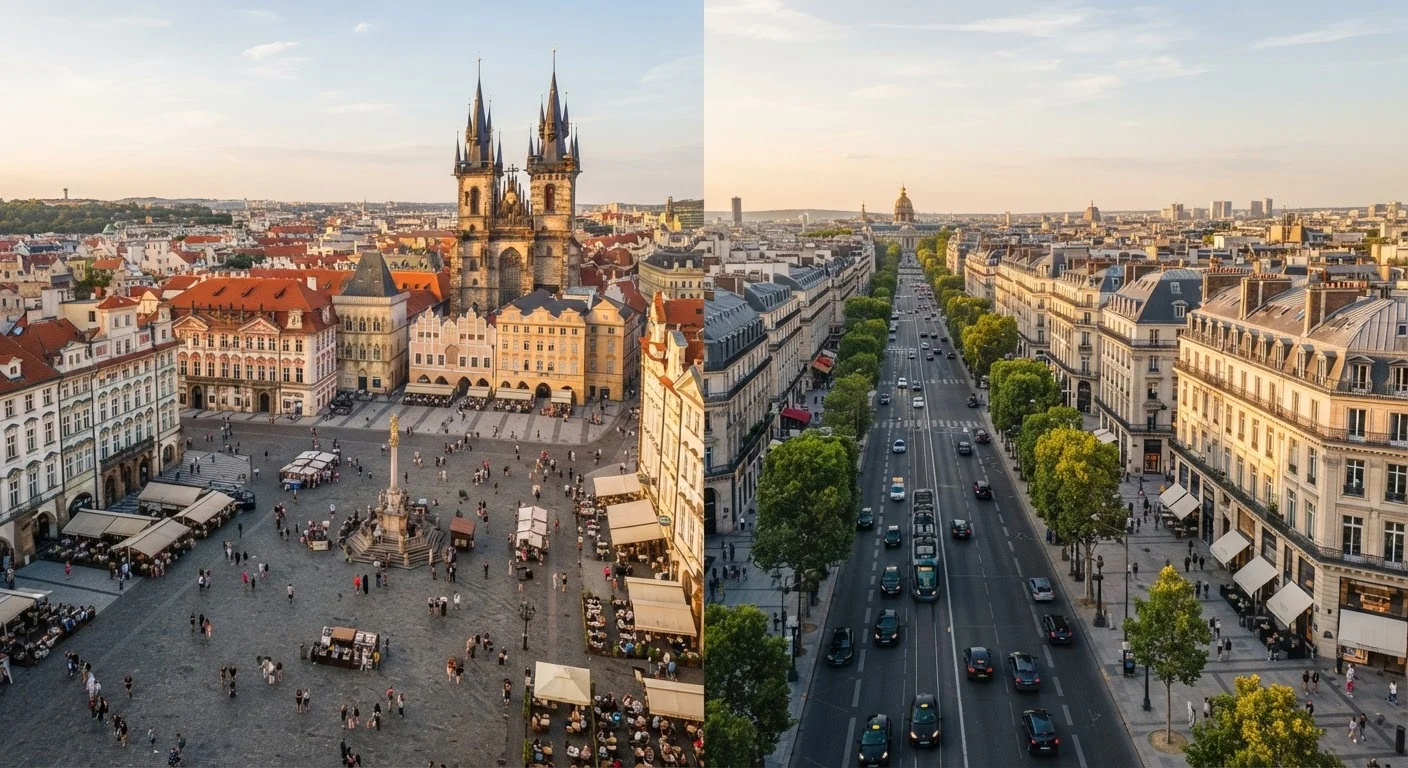
The Core Cost Gap: What the Numbers Actually Show
The cost difference between Eastern and Western Europe is real, consistent, and significant - but it's not uniform. A useful starting frame is the COLI data published by organizations like Numbeo, which tracks crowdsourced consumer prices across cities. By that measure, cities like Warsaw, Budapest, and Bucharest routinely come in 40-60% less expensive than London, Paris, or Zurich on everyday spending categories.
For a US traveler converting dollars, that gap is meaningful. A sit-down lunch that runs $25-35 in central Paris might cost $8-12 in Kraków. A private room in a mid-range guesthouse in Tallinn often lists for less than a hostel dorm in Amsterdam during peak season. These aren't cherry-picked exceptions - they represent the general pattern across most categories.
That said, Western Europe has its own internal variation. Portugal and Greece are considerably more affordable than Scandinavia or Switzerland. See our breakdown of Portugal vs. Spain travel costs for an example of how much Western Europe varies within itself.
| Criterion | Eastern Europe | Western Europe |
|---|---|---|
| Avg. budget daily spend | ~$40-70/day | ~$90-160/day |
| Mid-range private room | $35-60/night | $80-150/night |
| Sit-down lunch (local restaurant) | $5-12 | $15-28 |
| 24-hour city transit pass | $3-6 | $12-22 |
| Currency | Mixed (zloty, forint, leu, etc.) | Mostly euro |
| English-language accessibility | Moderate (varies by country) | High in tourist areas |
| High-speed rail network | Limited | Extensive |
| Crowd levels at major sites | Lower outside peak season | High year-round in top cities |
Accommodation, Food, and Transport: Category by Category
Accommodation is where Eastern Europe's advantage is most dramatic. In major Western European capitals, budget private rooms rarely fall below $80-100/night without sacrificing location or cleanliness. In cities like Prague, Vilnius, or Sofia, comparable quality typically runs $35-60. For longer trips, that difference compounds fast. Our guide to hostels vs. budget hotels covers the trade-offs worth considering in both regions.
Food shows a similar pattern. Street food and local restaurants in Eastern Europe are priced relative to local wages, which are lower - so a filling meal at a non-tourist restaurant in Bucharest or Bratislava can cost under $5. In Western Europe, even a casual café lunch rarely drops below $12-15 outside of student neighborhoods.
Local transport - trams, metros, buses - is generally subsidized and inexpensive across Eastern Europe. Budapest's 24-hour transit pass costs roughly $3-5; a comparable pass in Paris runs closer to $20. Long-distance travel is where Western Europe gains ground: its high-speed rail network is more extensive, and point-to-point connections are often faster. Budget airlines operate across both regions, so air travel is roughly competitive if booked in advance.
For a broader look at how location selection shapes overall spend, see our article on how location choice shapes total travel costs.
Currency Dynamics and What They Mean for US Travelers
Most of Western Europe uses the euro, which simplifies budgeting and eliminates currency conversion friction between countries. Eastern Europe is more fragmented: Poland uses the zloty, Hungary the forint, Romania the leu, and many Balkan countries have their own currencies. This isn't a disadvantage so much as a variable to manage. Exchange rates fluctuate, and the US dollar's relative strength against several Eastern European currencies has historically amplified purchasing power for American travelers.
One practical note: ATM withdrawal fees and dynamic currency conversion charges can quietly erode savings if you're not using a fee-friendly bank card. This is true in both regions but matters more in Eastern Europe, where card acceptance can be less consistent in rural areas or smaller towns.
A Note on Cost Estimates
All cost figures cited in this article are approximate ranges drawn from publicly available travel cost indices and traveler-reported data. Actual costs vary by season, city, accommodation type, and individual spending habits. Eastern European capitals like Prague and Budapest are noticeably pricier than smaller cities in the same region, and the same applies within Western Europe - Lisbon and Athens are far more affordable than Zurich or Copenhagen. Use these figures as directional guides, not guarantees.
For a structured reference on daily budgets and currency context across common travel regions, our currency and cost reference guide is worth bookmarking before you plan.
Where Eastern Europe Wins - and Where It Doesn't
Eastern Europe's value proposition is strongest for travelers who are flexible, comfortable with less English-language signage, and willing to do a bit more logistical legwork. The payoff is real: medieval old towns with a fraction of the tourist density of Prague's western rivals, Adriatic coastlines that cost a quarter of the Italian equivalent, and local restaurant scenes that haven't been priced up for tourism. The Balkans region guide covers some of the continent's most underrated value destinations in detail.
Where Eastern Europe underperforms: infrastructure reliability can be lower outside major cities, visa and entry rules for US citizens differ by country and should always be verified against official government sources before travel, and healthcare access in remote areas may be more limited. Western Europe's tourist infrastructure is mature and largely predictable, which has genuine value for first-time international travelers or those with specific accessibility needs.
The honest answer is that neither region is uniformly better. Eastern Europe wins on cost, authenticity, and crowd levels. Western Europe wins on infrastructure, language accessibility, and iconic landmark density. Most experienced budget travelers end up doing both - entering from the west and spending the bulk of their days in the east, or vice versa, making the most of budget airlines to bridge the gap.
Prices and conditions described in this article are general estimates based on publicly available travel data and are subject to change. Always verify entry requirements, visa rules, and safety advisories through official government sources before traveling.