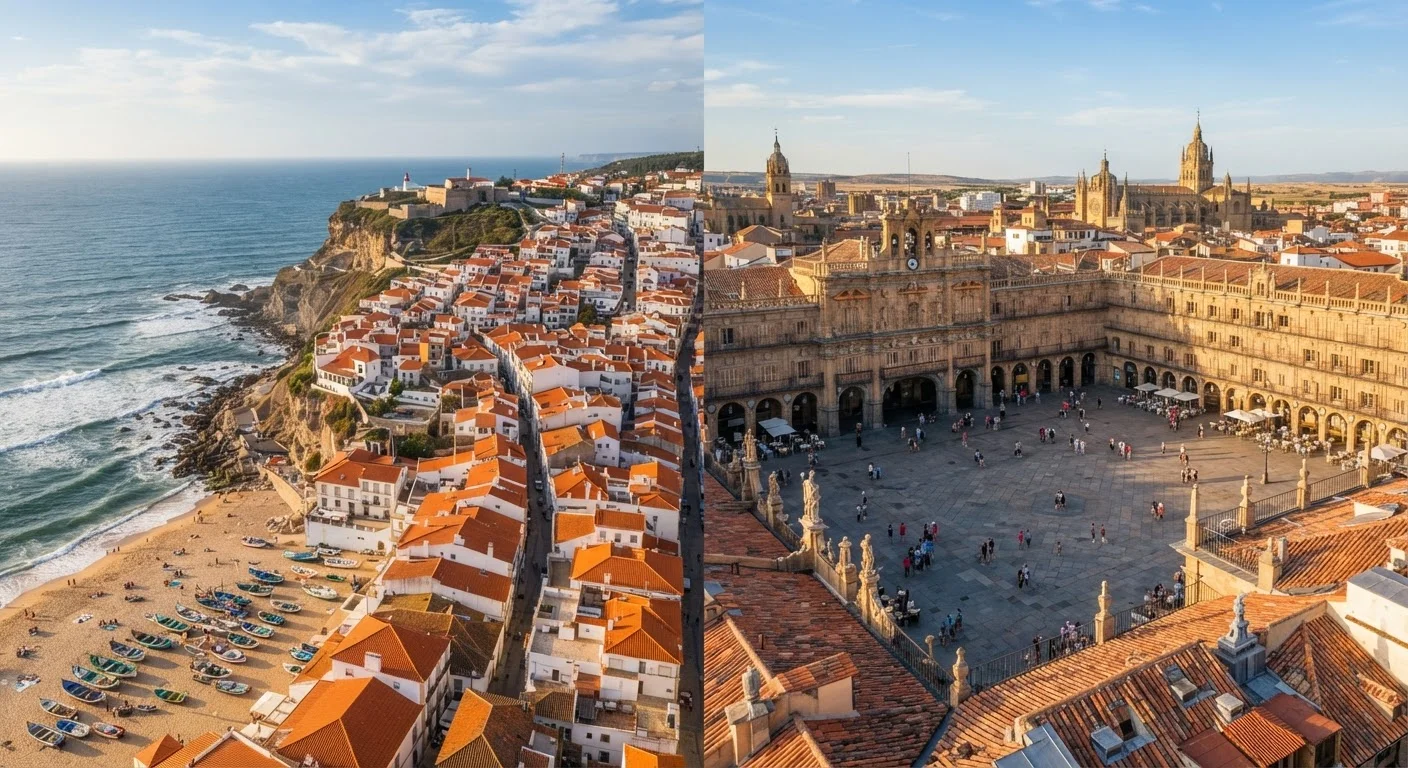
The Price Gap at a Glance
Portugal and Spain share the Iberian Peninsula and the euro, but their daily travel costs tell different stories. Budget travelers typically report spending roughly $60-$85 per day in Portugal (covering a hostel dorm or guesthouse, meals, and local transit) versus $75-$110 per day in Spain under comparable conditions. Those figures shift considerably based on city choice - Lisbon and Porto have seen significant price increases over the past several years, while inland Portuguese towns remain among Europe's most affordable. In Spain, Madrid and Barcelona sit at the expensive end; cities like Seville, Valencia, and Cáceres run meaningfully cheaper.
Both countries benefit from a robust café culture where a full sit-down lunch with wine - the menú del día (Spain) or menu do dia (Portugal) - can cost $12-$18 per person at a non-tourist establishment. This is one of the best structural savings available to visitors in either country. See how travelers commonly misread affordability to avoid assuming low sticker prices mean low total spend.
| Category | Portugal | Spain | |
|---|---|---|---|
| Budget daily spend (est.) | $60-$85 | $75-$110 | |
| Hostel dorm (capital city) | $20-$30/night | $28-$45/night | |
| Fixed lunch menu | $10-$15 | $13-$18 | |
| Espresso at a café | ~$1.00 | $1.20-$1.50 | |
| Intercity bus (medium route) | $8-$15 | $10-$25 | |
| City metro single ride | $1.50-$2.00 | $1.50-$2.50 | |
| Rail network coverage | Moderate | Extensive | |
| Rural/secondary city savings | High (Alentejo, Algarve interior) | High (Extremadura, Aragon) |
Accommodation: Where the Gap Is Most Pronounced
Hostel dorm beds in Lisbon and Porto average around $20-$30 per night; comparable spots in Madrid or Barcelona run $28-$45. Private rooms in guesthouses show a similar spread. Outside capital cities, both countries become substantially cheaper - a private room in Évora (Portugal) or Salamanca (Spain) can drop to $40-$60 per night at a modest guesthouse.
Portugal's rural interior - the Alentejo region especially - offers some of Europe's most under-visited value. Spain's equivalent pockets include Extremadura and inland Aragon. Where you stay within a destination shapes costs just as much as which country you choose. For a detailed breakdown of lodging trade-offs, see hostels vs. budget hotels.
Food and Drink: Menus, Markets, and Supermarkets
The fixed-price lunch menu is your most reliable cost control in both countries. In Portugal, a two-course menu do dia with a drink typically runs $10-$15; in Spain, the equivalent menú del día averages $13-$18, though quality and portion size often scale with price. Dinner is generally pricier in both countries unless you lean on tapas (Spain) or petiscos (Portugal) - small plates that can function as a full meal for $15-$20 with drinks.
Grocery shopping follows a similar pattern: supermarket staples cost slightly less in Portugal, though the gap at this level is modest. Coffee is notably cheap in both - an espresso at a Portuguese café rarely exceeds $1.00, while Spain averages $1.20-$1.50. These small differences compound over a two-week trip. For a broader cost-of-living reference across European travel regions, consult this currency and cost reference.
Getting Around: Transport Cost Comparison
Spain's high-speed rail (AVE) network is extensive but not cheap - a Madrid-Seville ticket booked last-minute can exceed $60. Booked several weeks in advance, the same route can fall to $25-$35. Regional trains and intercity buses in Spain offer slower but cheaper alternatives. Portugal's intercity rail is more limited; Lisbon-Porto by fast train runs roughly $20-$35, but many regional routes are better served by bus, often at $8-$15 for medium distances.
Within cities, both countries offer affordable metro and bus networks - single rides typically cost $1.50-$2.50. Lisbon's transport passes offer solid value for multi-day visitors. Spain's larger cities have more extensive metro systems, which can reduce the need for taxis or ride-shares. If you're comparing both peninsulas against Eastern alternatives, Eastern vs. Western Europe transport costs provides useful context. For strategies to keep these costs from creeping up, see practical cost-reduction strategies.
Note: Prices cited are general estimates based on publicly available travel data and may vary by season, booking timing, and specific location. Always verify current prices through official provider sources before traveling.