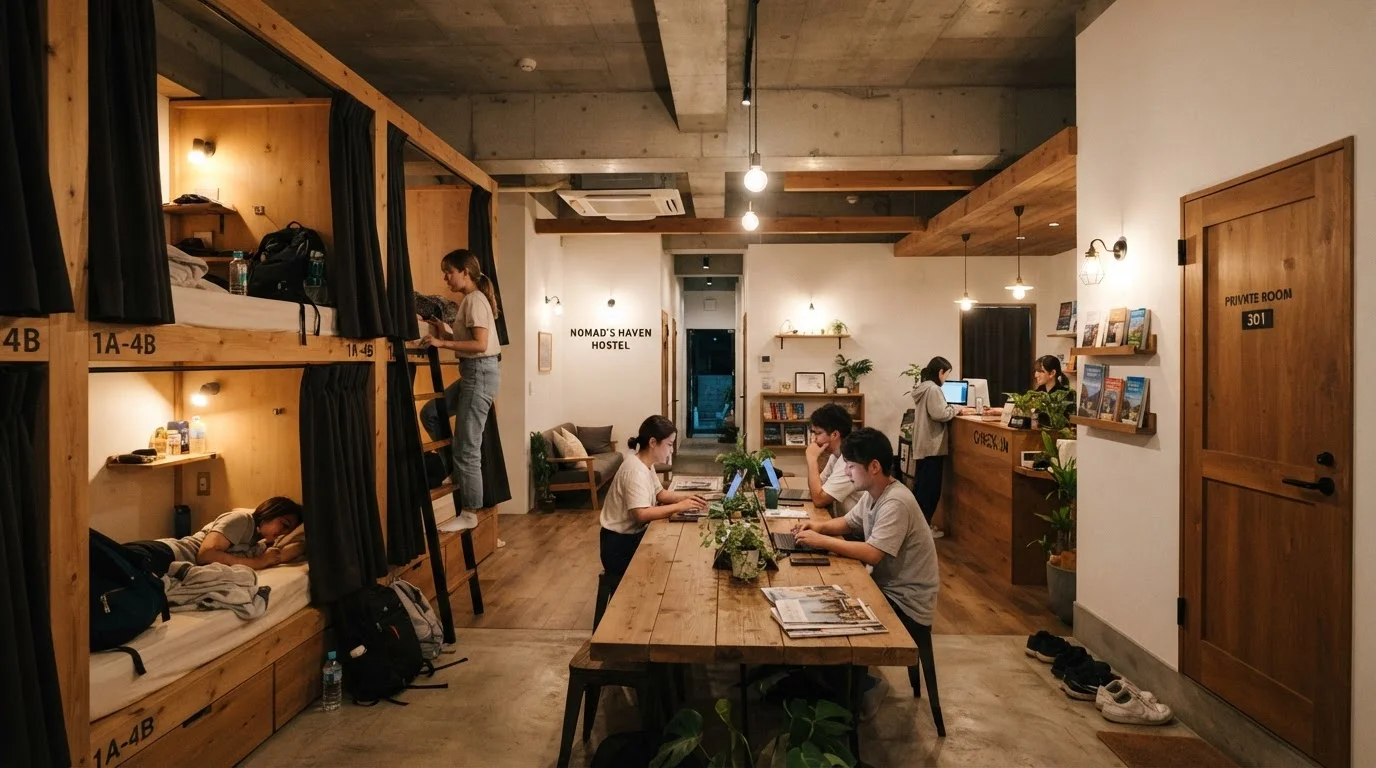
The Real Price Difference
The sticker price is the obvious starting point. In most mid-range travel destinations across the US, Europe, and Southeast Asia, a dorm bed in a hostel runs roughly $15-$40 per night, while a private room in a comparable budget hotel typically falls between $50-$100. That gap - anywhere from 40% to 70% savings - is real and meaningful over a multi-week trip.
But the headline number doesn't tell the whole story. Many hostels charge separately for linen ($2-$5), lockers ($1-$3/day), towels, and private bathroom access. Add those up over a week and you've trimmed the savings considerably. Budget hotels, meanwhile, usually bundle Wi-Fi, a private bathroom, and basic breakfast into the rate - making the effective value gap narrower than it first appears.
The clearest way to compare: add up your actual total spend per night including every expected add-on, then divide by the number of people in your group. For solo travelers, hostels almost always win on price. For two people splitting a budget hotel double room, the per-person cost can land surprisingly close to a dorm bed. See our guide to stretching a travel budget for a broader framework on evaluating accommodation trade-offs.
| Criterion | Hostels | Budget Hotels |
|---|---|---|
| Typical nightly cost (solo) | $15-$40 (dorm bed) | $50-$100 (private room) |
| Privacy | Shared dorm, no lock | Private room, lockable |
| Bathroom access | Usually shared, often queued | En suite or private |
| Kitchen access | Commonly available | Rarely available |
| Social opportunities | High - built-in common areas | Low - independent stay |
| Sleep reliability | Variable - noise, light disruption | Consistent, controlled |
| Security for valuables | Lockers (often extra cost) | Room safe or lockable room |
| Best group size | Solo travelers | Couples or small groups |
Comfort, Privacy, and Sleep Quality
A budget hotel room, even a spartan one, gives you a locked door, a bed that's yours for the night, and control over lighting and temperature. That's not a luxury - it's a baseline that directly affects how rested you are and how much you enjoy the next day.
Hostel dorms introduce variables you can't fully control: a roommate's 2 a.m. return, phone alarms set for different time zones, snoring, and shared bathrooms with queues in the morning. Quality varies enormously between properties - a well-managed 6-bed dorm with curtained pods and individual power outlets is a genuinely different experience from a 12-bed room with thin mattresses. Reading reviews specifically about noise levels and bathroom wait times is worth doing before booking either type.
For trips longer than four or five nights in one location, most travelers report that the accumulated sleep debt from dorm life starts to outweigh the savings. For one- or two-night stays while passing through a city, it matters far less. Consider your itinerary structure before committing to either format across a whole trip - mixing both is a common and sensible approach.
What You Actually Get Beyond the Room
Hostels offer something budget hotels rarely match: built-in social infrastructure. Common kitchens cut food costs meaningfully - cooking even a few meals per week instead of eating out can save more than the nightly price difference between accommodation types. Shared lounges, organized pub crawls, and bulletin boards for ride-shares create a network effect that solo travelers especially find valuable.
Budget hotels offer predictability and quiet. You won't stumble into a travel companion, but you also won't have to negotiate morning bathroom time or listen to someone else's Netflix. For travelers who already have company or who actively prefer downtime between sightseeing, the social angle of hostels isn't a selling point - it's background noise.
Security is another practical distinction. Budget hotels give you a room you can lock and leave valuables in with reasonable confidence. Hostels require more active management of your belongings - using lockers, carrying your own padlock, and keeping valuables on your person. It's manageable, but it adds friction. For a fuller look at how lodging types compare across the board, see our breakdown of accommodation options.
~55%
Average nightly savings: hostel dorm vs. budget hotel
Based on general pricing patterns observed across popular backpacker destinations in Europe and Southeast Asia; actual figures vary by city and season.
6-12
Typical beds in a standard hostel dorm room
Smaller 4-bed dorms and larger 16-bed rooms both exist; bed count directly correlates with noise risk and bathroom wait times.
$10-$15
Estimated daily food savings using a hostel kitchen
Cooking two meals per day instead of eating out can offset a meaningful portion of the accommodation price difference over a week-long stay.
How to Decide - Without Overthinking It
The choice between a hostel and a budget hotel comes down to three questions: How much does privacy affect your daily functioning? Who are you traveling with? And what's the actual per-person nightly difference after fees?
If the price gap is less than $15 per person per night once you factor in add-ons, many travelers find the privacy of a budget hotel worth it without hesitation. If it's $30 or more, the hostel case gets much stronger - especially for trips under a week where dorm fatigue hasn't set in.
Destination matters too. In cities like Lisbon, Budapest, or Bangkok, hostel infrastructure is mature and quality is high. In smaller towns or regions with less backpacker traffic, budget hotel options may actually be more plentiful and better maintained than local hostels. Our cost breakdown of Eastern vs. Western Europe illustrates how destination choice can shift the math on every accommodation decision.
Neither option is objectively better - each is the right call under different conditions. The mistake is choosing by habit rather than by what actually fits the trip you're on. For more context on making these trade-offs work across an entire trip, see our practical strategies for keeping travel costs down.