Why Southeast Asia Is Structurally Cheap - Not Just Cheaply Priced
The affordability of Southeast Asia isn't a travel hack or a lucky exchange rate window. It's structural. Countries like Vietnam, Cambodia, and Laos have lower wage baselines and operating costs, which means that locally produced goods and services - food, guesthouse beds, local transport - are priced for local incomes. Foreign travelers with US dollars benefit directly from this gap.
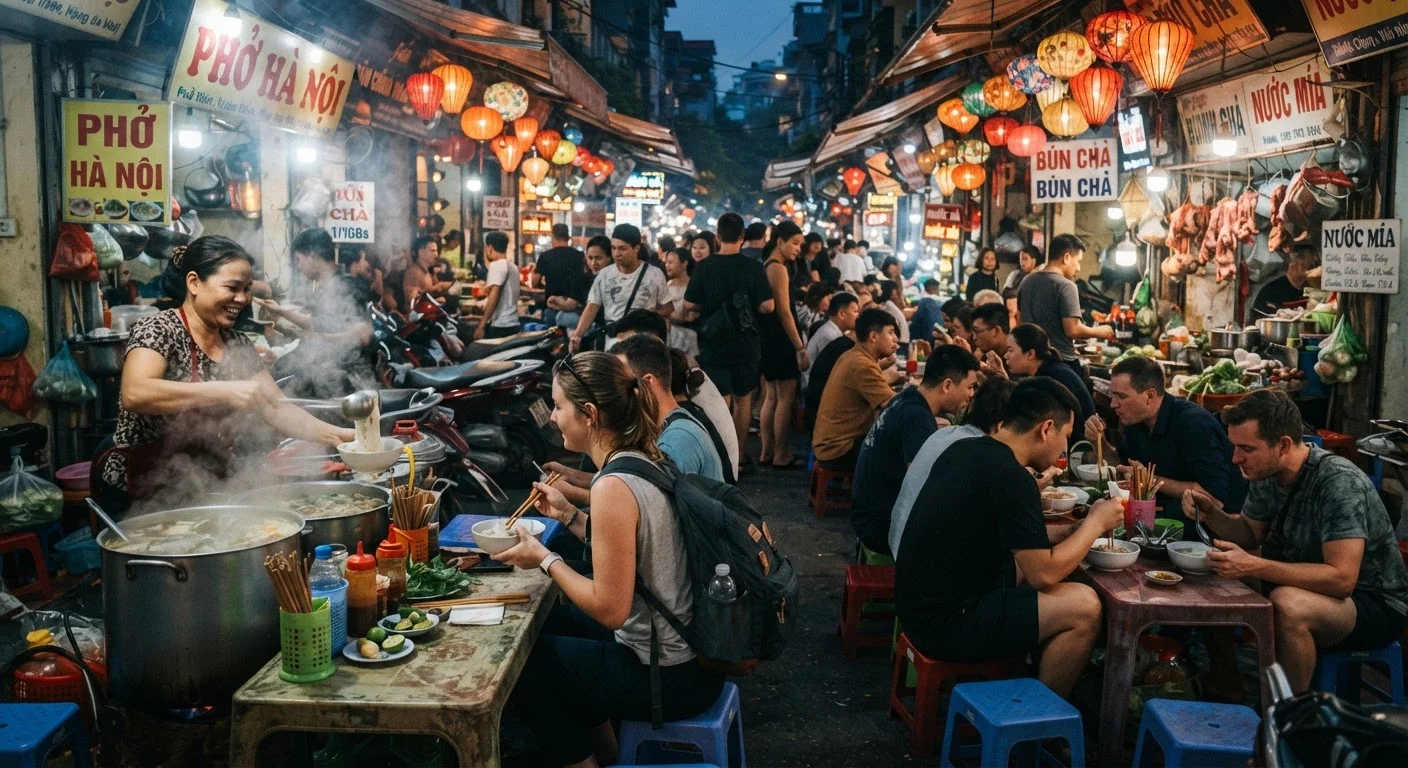
This is purchasing power parity in practice. A bowl of pho in Hanoi costs less not because someone is subsidizing it for tourists, but because the entire cost chain - ingredients, labor, rent - reflects a different economic reality. That dynamic doesn't exist in the same way in Western Europe or Japan, where prices are calibrated to much higher local incomes.
The practical result: in many parts of the region, a full meal, a clean guesthouse bed, and a local bus ride can all be obtained for less than the price of a single meal at a mid-range US restaurant. That's not an exaggeration - it's the baseline experience for most budget travelers who move thoughtfully through the region.
$30-$50
Typical daily budget in Vietnam or Cambodia
Commonly reported by independent travelers staying in guesthouses and eating street food; individual results vary by location and spending habits.
~$1-$4
Cost of a full street food meal in Vietnam or Thailand
Based on widely reported traveler and cost-of-living data for local market and street stall meals in major cities.
11 countries
Nations that make up Southeast Asia
Each country has a distinct cost profile - from Singapore's high-income economy to Cambodia's lower-cost baseline.
The Real Levers: Food, Accommodation, and Transport
Three categories determine whether a Southeast Asia trip is genuinely affordable or quietly expensive: food, accommodation, and transport. Each has a clear low-cost path that doesn't require deprivation.
Food
Street food and local markets are where the real value lives. In countries like Thailand and Vietnam, roadside stalls and market vendors serve full, freshly cooked meals for $1-$4. Shifting even half of daily meals to these sources compresses food costs dramatically. For practical strategies on eating well without overspending, see eating well on a tight travel budget.
Accommodation
Guesthouses and hostels across the region offer private rooms and dormitory beds at prices that reflect local land costs rather than tourist-zone premiums. Staying one or two neighborhoods back from major tourist strips - in Siem Reap, Hoi An, or Chiang Mai, for example - often cuts accommodation costs without meaningfully changing access to attractions.
Transport
Overnight sleeper buses and trains between cities eliminate one night's accommodation cost while covering distance. Local songthaews, tuk-tuks, and motorbike taxis handle short hops at low cost. The regional low-cost airline market also makes country-hopping more affordable than it was a decade ago, though flying always costs more than surface travel for the same route.
Where Costs Cluster: Not All of the Region Is Equal
Southeast Asia is not a monolith. Costs vary significantly between and within countries, and treating the region as uniformly cheap leads to budget miscalculations.
Singapore is a developed, high-income city-state. Expecting Vietnam-level prices there will result in immediate sticker shock. Thailand's popular tourist trail - Bangkok, Chiang Mai, Koh Samui - is more expensive than less-visited neighbors like Laos or Cambodia, though still far cheaper than Western equivalents. The Philippines has affordable food and accommodation in many areas, but inter-island transport costs add up fast.
The practical lesson: research cost levels by specific country and city, not by broad regional reputation. A traveler who moves from Vietnam into Cambodia and then Laos will likely find costs staying low. One who spends the same time in Bangkok and island resorts will spend considerably more. Building an itinerary around cost curves - not just geography - is one of the most effective planning strategies available. Durable principles for stretching any travel budget apply here just as much as anywhere else.
For travelers curious how the region compares to other affordable destinations globally, the Balkans offer a comparable value proposition in Europe - with very different character.
Build Your Itinerary Around Cost Curves
Before finalizing a Southeast Asia route, look up approximate daily costs for each country you plan to visit - not just the region as a whole. Moving from lower-cost countries (Cambodia, Laos, Vietnam) to higher-cost ones (Thailand's resort islands, Singapore) at the end of a trip lets you preserve budget for the pricier segments. Reversing that order often leads to overspending early and scrambling later.
Planning Decisions That Shape What You Actually Spend
The gap between a $40-a-day trip and an $80-a-day trip in Southeast Asia is almost never about luck. It's almost always about planning decisions made before departure.
Multi-country itineraries spread the fixed cost of international airfare across more days in region, reducing the per-day cost of getting there. Shoulder season travel - avoiding peak tourist months, which vary by country and climate zone - lowers accommodation rates and reduces crowd premiums at popular sites. Booking accommodation for the first night only and then negotiating or choosing in person for subsequent nights often yields better value than locking in rates months out.
Visa costs are also a real line item. Some countries charge $25-$50 per entry, and multi-country trips can accumulate several of these. Factoring visa fees into the total budget, rather than treating them as incidentals, prevents false confidence in daily spending figures.
If you're building a first low-cost trip, starting from scratch with a budget travel framework covers the foundational decisions in sequence. And once on the road, practical strategies for keeping costs down without sacrificing experience offer a reliable ongoing reference.
This article provides general travel information for educational purposes only. Prices, visa rules, safety conditions, and entry requirements change frequently. Always verify current details through official government sources and the relevant embassies before traveling.