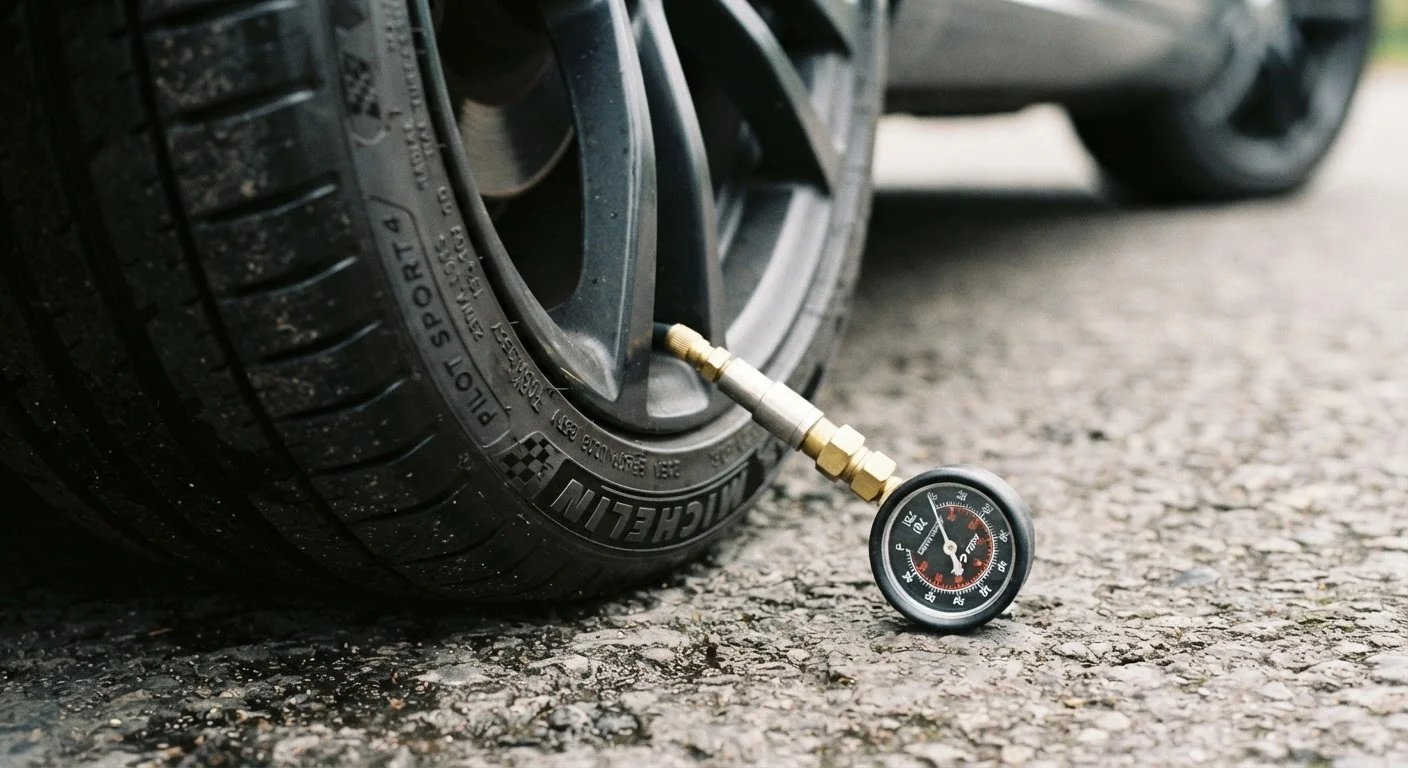
Tyre Pressure: The Numbers That Matter
Tyre pressure is measured in PSI, and the correct figure for your vehicle is printed on a sticker inside the driver's door jamb - not on the tyre sidewall, which shows the maximum pressure the tyre can hold, not the target for daily driving. Most passenger cars fall between 30 and 36 PSI, though light trucks and SUVs often run higher.
Check pressure when tyres are cold - meaning the car has been parked for at least three hours or driven fewer than one mile. Heat from driving temporarily raises PSI by 4-8 points, which can make an underinflated tyre appear normal. A quality dial or digital gauge costs just a few dollars and is worth keeping in the glovebox.
Underinflation is the more common and costly problem. It increases rolling resistance, cuts fuel economy, and causes uneven shoulder wear. Overinflation stiffens the tyre's contact patch, wearing out the centre tread faster and reducing grip. Both conditions shorten tyre life and affect handling. Check pressure at least once a month and before long trips.
| Typical passenger car PSI range | 30-36 PSI (Owner's manual / door jamb sticker for your specific vehicle) |
| US legal minimum tread depth | 2/32 inch (Federal Motor Vehicle Safety Standards) |
| Recommended replacement threshold | 4/32 inch (Widely cited by tyre safety organisations) |
| Recommended rotation interval | Every 5,000-7,500 miles (General industry guideline; check owner's manual) |
| Pressure check frequency | At least monthly and before long trips (General best practice) |
| Penny test result indicating replacement needed | Lincoln's head fully visible (Corresponds to ≤2/32 inch tread depth) |
Tread Depth: Knowing When to Replace
Tread channels water away from the contact patch so the tyre can grip the road. As tread wears down, wet-weather stopping distances increase significantly. In the US, the legal minimum tread depth is 2/32 of an inch, but most safety experts recommend replacing tyres at 4/32 of an inch - especially in wet or wintry climates - because braking performance degrades noticeably before the legal limit is reached.
The quickest field check is the penny test: insert a penny into a tread groove with Lincoln's head pointing down. If you can see the top of his head, the tread is at or below 2/32 inch and replacement is overdue. Use a quarter for the 4/32 threshold - if the top of Washington's head is visible, consider shopping for replacements soon.
For a more precise reading, inexpensive tread-depth gauges are widely available at auto parts stores and give a direct measurement in 32nds of an inch. Check multiple grooves across the tyre's width; uneven readings point to alignment or inflation issues. Worn edges alone often signal chronic underinflation, while a worn centre strip suggests consistent overinflation.
For a fuller picture of how tyre habits affect your budget, see tyre maintenance habits that protect safety and your wallet.
Rotation: Intervals and Patterns
Tyres wear at different rates depending on their position. Front tyres on a front-wheel-drive vehicle typically wear faster because they handle both steering and power delivery. Rotation moves tyres between positions so wear is shared more evenly, extending the overall set life.
A general guideline is to rotate every 5,000 to 7,500 miles, though your owner's manual may specify a different interval. Many drivers align rotations with oil changes to simplify scheduling. The rotation pattern - front-to-back, cross, or X-pattern - depends on whether your tyres are directional (designed to spin one way) or non-directional. Directional tyres can only move front-to-back on the same side; swapping sides requires dismounting and remounting the tyre on the wheel.
If your vehicle has a full-size spare that matches the other four tyres, ask your mechanic whether including it in a five-tyre rotation pattern makes sense - it can stretch the life of the entire set.
Rotation is also a natural opportunity for a mechanic to inspect brake components. Our guide on extending brake life explains what those inspections typically cover. For broader maintenance context, car maintenance on a budget outlines which tasks deliver the most value per dollar.
This article provides general vehicle maintenance information for educational purposes. Always consult your owner's manual and a qualified mechanic for guidance specific to your vehicle.